10 Things to Consider Before Installing Solar at Your Home
Thinking about going solar? You’re making a smart move — but before you call an installer or sign a quote, there are several things to consider before installing solar that most homeowners don’t think about until it’s too late. A rooftop solar system is a 25-year investment, and getting the planning right upfront saves you money, hassle, and disappointment down the line.
This guide walks you through the 10 most important things to consider before installing solar at your home, based on real installation experience and common mistakes homeowners make. Whether you’re comparing quotes or just starting your research, this checklist will help you make a confident, well-informed decision.
1. Your Roof's Condition and Age
Before anything else, check your roof. Solar panels last 25+ years, so installing them on a roof that will need repair or replacement in 5-10 years is a costly mistake. If your roof is older or showing wear, it’s worth repairing or reinforcing it before installation rather than after. This is one of the most overlooked things to consider before installing solar, and skipping it often leads to expensive re-installation costs later
2. Roof Orientation and Shading
South-facing roofs (in the Northern Hemisphere, including India) receive the most consistent sunlight and generate the highest output. Shading from trees, water tanks, or neighboring buildings — even for a few hours a day — can meaningfully reduce your rooftop solar system’s performance. A proper site survey should map shadow patterns across all four seasons, not just the day of installation.
3. Available Roof Space
A typical 1kW of solar capacity needs roughly 80-100 sq. ft. of shadow-free space. Before deciding on system size, measure your usable roof area honestly, accounting for water tanks, staircases, and other rooftop structures. This directly affects how large a rooftop solar system you can realistically install.
4. Your Actual Electricity Consumption
Many homeowners install a system based on budget alone, not consumption data. Pull out your last 12 months of electricity bills and calculate your average monthly usage in units (kWh). This is the single most important number for right-sizing your system — oversized systems waste money, undersized ones underdeliver on savings.
Ready to switch to Solar?
solar solutions with Anya Green Energy and discover how you can reduce your electricity bills.
Contact Us5. Solar Installation Cost and Financing Options
Understanding the real solar installation cost upfront prevents surprises later. Costs vary based on system size, panel type (monocrystalline vs polycrystalline), and inverter quality. Beyond the sticker price, ask about available subsidies, low-interest solar loans, and EMI options — many homeowners reduce their effective solar installation cost by 30-40% through government incentives alone.
6. Net Metering Policy in Your State
Net metering allows you to export excess solar power to the grid and receive credit on your bill. Policies — including approval timelines, capacity limits, and compensation rates — vary significantly by state and electricity board. Before finalizing your solar panel installation, confirm your local net metering process, as delays here are one of the most common causes of frustration after installation.
7. Quality of Equipment and Warranty Terms
Not all solar panel installation components are equal. Compare panel efficiency ratings, inverter brands, and warranty periods carefully. Reputable installers offer 25-year panel performance warranties and 5-10 year inverter warranties. Cheaper components may lower upfront cost but often lead to higher maintenance costs and faster performance degradation.
8. Installer Reputation and After-Sales Support
A solar system is only as good as the company installing and servicing it. Check installer reviews, ask for references from past customers, and specifically ask about after-sales support — including maintenance response times and warranty claim processes. This is one of the most important things to consider before installing solar, since a poor installer can turn a good system into a years-long headache.
9. Battery Storage Needs
Decide early whether you need battery backup or plan to rely solely on grid net metering. Battery storage adds significant upfront cost but provides power during outages and maximizes self-consumption. For areas with frequent load-shedding, this is a critical factor; for areas with stable grid supply, it may be an unnecessary expense initially — one that can often be added later.
10. Long-Term Maintenance Requirements
While solar panels are low-maintenance, they’re not maintenance-free. Factor in periodic cleaning, annual inspections, and occasional component replacement (inverters typically need replacement once in the system’s lifetime) into your long-term cost planning. Use a simple solar installation checklist to track maintenance schedules once your system is live, so performance stays optimal year after year.
Putting It All Together: Your Solar Installation Checklist
Here’s a quick-reference solar installation checklist summarizing everything above:
| # | Factor | Why It Matters |
|---|---|---|
| 1 | Roof condition & age | Avoid costly re-installation later |
| 2 | Orientation & shading | Directly impacts energy output |
| 3 | Available roof space | Determines maximum system size |
| 4 | Electricity consumption | Right-sizes your system |
| 5 | Solar installation cost | Budget and financing planning |
| 6 | Net metering policy | Affects savings and approval timeline |
| 7 | Equipment quality & warranty | Long-term reliability |
| 8 | Installer reputation | After-sales support quality |
| 9 | Battery storage needs | Backup power during outages |
| 10 | Maintenance planning | Keeps system performing optimally |
As one solar industry expert commonly puts it in installer guides: “The biggest solar regrets don’t come from the technology — they come from skipping the planning.” That’s exactly why working through these things to consider before installing solar before you sign a quote matters so much.
Final Thoughts: Is Your Home Ready for Solar?
Going through these 10 things to consider before installing solar doesn’t just protect your investment — it ensures you actually get the savings and performance you’re expecting. A well-planned solar panel installation, backed by accurate consumption data, quality equipment, and a reliable installer, consistently outperforms a rushed one.
If you’re ready to move from research to action, Anya Green Energy offers free home assessments covering every item on this solar installation checklist — roof survey, consumption analysis, and a personalized system recommendation, at no cost and no obligation.
FAQ Section
Q1: What are the most important things to consider before installing solar?
The most critical things to consider before installing solar are your roof’s condition, available space, actual electricity consumption, and your state’s net metering policy — these four factors determine both feasibility and long-term savings.
Q2: How much does solar installation cost for an average home?
Solar installation cost varies by system size and location, but after subsidies, a typical 3-5kW residential system in India ranges significantly — a free site assessment gives the most accurate, personalized figure.
Q3: How do I know what size rooftop solar system I need?
Your ideal rooftop solar system size depends on your average monthly electricity consumption (in units/kWh) and available shadow-free roof space — both should be assessed together, not separately.
Q4: What should be included in a solar installation checklist?
A complete solar installation checklist should cover roof condition, shading analysis, consumption data, financing options, net metering registration, equipment warranties, and a maintenance plan.
Q5: How long does solar panel installation take from start to finish?
Physical solar panel installation typically takes 1-3 days, but the full process — including site survey, approvals, and net metering registration — can take 4-8 weeks depending on your local electricity board’s processing time.
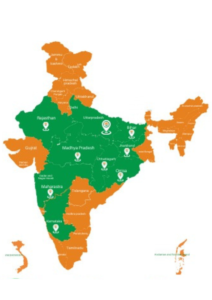
Trusted by 50000+ Customers
Anya Green Energy is a leading solar company and Solar Energy service provider established in 2013. We are recognized by startup India and customer best choice award 2022.
Our Achievements :
Recognized by Startup India.
Purvanchal’s first solar company to operate exclusively with solar products.
Certified by well-known institutions such as MSME, IndiaMart, and Just Dial and many more.
Winner of the Best Customer Choice Award 2022.
Over 50,000 happy customers across India.