Solar Energy Advantages and Disadvantages: The Complete 2026 Guide Before You Switch
Thinking about going solar but not sure if it’s the right move? You’re not alone. Every day, thousands of homeowners and business owners search for one thing: a clear, honest breakdown of solar energy advantages and disadvantages before they sign on the dotted line. And that’s exactly what this guide gives you — no sales pitch, no sugar-coating.
Solar power has grown from a niche green choice to one of the most talked-about renewable energy sources in India and globally. But like every technology, it comes with trade-offs. In this guide, we’re laying out the real benefits of solar energy, the genuine disadvantages of solar power, and helping you decide if switching makes sense for your home or business in 2025.
Understanding Solar Energy Advantages and Disadvantages: A Complete Overview
Before diving into specifics, it helps to understand why so many people are researching solar energy advantages and disadvantages right now. With electricity prices rising 8–10% annually across most Indian states, and government subsidies making rooftop solar more affordable than ever, the conversation has shifted from “if” to “when.” But a smart decision needs both sides of the picture — which is exactly what we’ll cover below.
Let’s start with the good news — the benefits of solar energy that are driving this adoption wave.
The Benefits of Solar Energy: Why Millions Are Making the Switch
1. Lower Electricity Bills
This is the number one reason people switch. A well-sized rooftop system can cut monthly electricity bills by 70–90%, depending on your consumption and sunlight exposure. Over a 25-year panel lifespan, the benefits of solar energy on your wallet add up to lakhs of rupees in savings — especially as grid electricity rates continue climbing.
2. Environmental Impact
Every unit of solar electricity generated replaces electricity that would otherwise come from coal or gas. A typical 5kW residential system offsets roughly 6-7 tonnes of CO2 emissions annually — equivalent to planting over 100 trees every year.
3. Energy Independence
With net metering and battery storage options, solar reduces your dependency on grid supply and protects you from tariff hikes and load-shedding in many regions.
4. Low Maintenance Requirements
Solar panels have no moving parts. Beyond periodic cleaning and an annual inspection, there’s very little upkeep required — panels typically come with 25-year performance warranties.
5. Government Incentives and Subsidies
Central and state subsidy schemes, accelerated depreciation benefits for businesses, and low-interest solar loans have made the upfront cost significantly more manageable than it was even five years ago.
6. Increased Property Value
Homes and commercial properties with installed solar systems often see higher resale value, as buyers increasingly factor in long-term utility savings.
Of course, no technology is perfect. The benefits of solar energy are real, but to get the full picture of solar energy advantages and disadvantages, we need to talk honestly about the downsides too.
The Disadvantages of Solar Power: What Sales Reps Won't Tell You
Let’s be honest about the disadvantages of solar power — because an informed decision is a good decision.
1. High Upfront Investment
Even with subsidies, the initial cost of a solar installation can run into lakhs of rupees. This is the single biggest barrier, and it’s a real part of the disadvantages of solar power conversation that often gets glossed over in sales pitches.
2. Weather and Seasonal Dependency
Solar output drops during monsoon, heavy cloud cover, and shorter winter days. Without battery backup, this means fluctuating generation throughout the year.
3. Space Requirements
A typical residential system needs 80-100 sq. ft. of shadow-free roof space per kW. Homes with limited or shaded rooftops may not achieve optimal output.
4. Energy Storage Challenges
Batteries remain expensive relative to the solar panels themselves, meaning most residential systems still rely on grid net metering rather than true energy independence.
5. Roof Compatibility Issues
Older roofs may need reinforcement or repair before installation, adding unplanned cost and complexity to the project timeline.
6. End-of-Life Panel Recycling
Solar panels last 25+ years, but disposal and recycling infrastructure for old panels is still developing in India, raising long-term environmental questions.
By now you’ve seen both sides of solar energy advantages and disadvantages — the savings and sustainability on one hand, the upfront cost and dependency factors on the other.
Solar Panel Pros and Cons: Quick Comparison Table
Sometimes the easiest way to compare solar panel pros and cons is a simple side-by-side table.
| Pros | Cons |
|---|---|
| Reduces electricity bills by 70-90% | High upfront investment |
| Low maintenance, 25-year warranty | Weather-dependent output |
| Reduces carbon footprint significantly | Requires adequate roof space |
| Government subsidies available | Battery storage still costly |
| Increases property value | Recycling infrastructure still developing |
| Energy independence with net metering | Roof reinforcement may be needed |
Weighing Solar Energy Advantages and Disadvantages for Your Home or Business
The honest answer to “is solar worth it?” is: it depends on your context. Consider these factors before deciding:
- Roof orientation and shading: South-facing, shadow-free roofs get the best ROI
- Monthly electricity consumption: Higher bills mean faster payback periods
- Available subsidy and net metering policy in your state
- Upfront budget vs. financing options (solar loans, EMI plans)
- Long-term plans for the property (10+ year ownership typically sees best returns)
For most urban Indian households with electricity bills above ₹3,000/month and unshaded roof access, the solar panel pros and cons calculation tips firmly in favor of switching within 4-6 years of payback period.
Solar vs Other Renewable Energy Sources: How Does It Compare?
Solar is just one of several renewable energy sources available today, alongside wind, hydro, and biomass. Compared to these alternatives, solar has a unique advantage: it’s the only renewable energy sources option that can be deployed at individual household scale without massive infrastructure. Wind and hydro require large-scale, location-specific projects, while solar panels can be installed on virtually any suitable rooftop — making it the most accessible renewable technology for everyday consumers.
As one industry analyst put it in a recent clean energy report: “The real question isn’t whether solar works — it’s whether your specific roof, budget, and usage pattern make the solar energy advantages and disadvantages work in your favor.” That’s the mindset every smart buyer needs to adopt.
Final Verdict: Do Solar Energy Advantages and Disadvantages Favor You?
After weighing both sides, the solar energy advantages and disadvantages picture is clear: for the majority of Indian homeowners and businesses with reasonable electricity consumption and roof access, the long-term financial and environmental benefits outweigh the upfront costs and limitations.
That said, solar energy advantages and disadvantages aren’t one-size-fits-all. Your decision should be based on your roof, your budget, your state’s subsidy policy, and your long-term plans — not just a generic sales pitch.
If you’re ready to see exactly how the numbers work out for your specific property, Anya Green Energy offers free site assessments and personalized ROI calculations — so you can make this decision with real data, not guesswork.
FAQ Section
Q1: What are the main solar energy advantages and disadvantages?
The main solar energy advantages and disadvantages come down to: lower electricity bills, environmental benefits, and government incentives on the plus side, versus high upfront cost, weather dependency, and space requirements on the downside.
Q2: What are the biggest benefits of solar energy for homeowners?
The top benefits of solar energy are reduced electricity bills (70-90% savings), low maintenance, increased property value, and protection from rising grid tariffs.
Q3: What is the biggest disadvantage of solar power?
The most commonly cited disadvantages of solar power are the high upfront installation cost and dependency on weather/sunlight availability, which can reduce output during monsoon and winter months.
Q4: How do solar panel pros and cons compare to traditional electricity?
When you weigh solar panel pros and cons against grid electricity, solar wins on long-term cost savings and environmental impact, while grid power wins on lower upfront investment and consistent availability regardless of weather.
Q5: Is solar energy a reliable renewable energy source compared to others?
Yes — among all renewable energy sources, solar is considered one of the most reliable and accessible for individual households, since it doesn’t require large-scale infrastructure like wind or hydro projects do.
Trusted by 50000+ Customers
Anya Green Energy is a leading solar company and Solar Energy service provider established in 2013. We are recognized by startup India and customer best choice award 2022.
Our Achievements :
Recognized by Startup India.
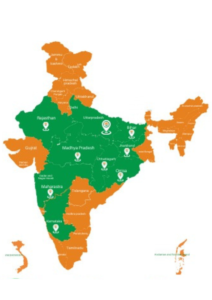
Purvanchal’s first solar company to operate exclusively with solar products.
Certified by well-known institutions such as MSME, IndiaMart, and Just Dial and many more.
Winner of the Best Customer Choice Award 2022.
Over 50,000 happy customers across India.