
Is Solar Worth It in India? The Real Numbers Behind the 2025 Decision
Is solar worth it in India?” is probably the single most-asked question by anyone who’s gotten a solar quote in the last year. You’ve seen the pitch — lower bills, government subsidies, environmental benefits — but is it actually worth the upfront cost, or is it oversold?
This guide skips the sales talk and gets straight to the numbers: real solar panel cost in India, actual solar payback period data, available solar subsidy in India schemes, and the honest return on investment solar systems deliver. By the end, you’ll have a clear, numbers-backed answer to whether solar makes sense for your specific situation
Why Everyone's Asking "Is Solar Worth It in India" Right Now
Electricity tariffs in India have risen 8-12% annually across most states over the past five years, while solar panel cost in India has dropped by nearly 70% over the past decade due to manufacturing scale and technology improvements. This crossover — rising grid costs and falling solar costs — is exactly why “is solar worth it in India” has become such a commonly searched question. The math that didn’t work a decade ago often works very differently today.
But “worth it” isn’t a yes/no answer for everyone — it depends on your consumption, location, roof, and financing approach. Let’s break down each factor.
Ready to switch to Solar?
solar solutions with Anya Green Energy and discover how you can reduce your electricity bills.
Contact UsUnderstanding Solar Panel Cost in India: What You're Actually Paying For
Before answering is solar worth it in India, you need to understand what drives solar panel cost in India. Total system cost typically includes:
- Solar panels (largest single cost component, 40-50% of total)
- Inverter (converts DC to AC electricity, 10-15% of total)
- Mounting structure and wiring (10-15% of total)
- Installation labor (10-15% of total)
- Net metering and approval charges (varies by state/discom)
For a typical residential 3-5kW rooftop system, solar panel cost in India before subsidy generally falls in a predictable range depending on panel quality and brand — monocrystalline and half-cut cell panels sit at the higher end, while standard polycrystalline panels are more budget-friendly but slightly less efficient per square foot.
Solar Subsidy in India: How Much Can You Actually Save Upfront?
This is where the math shifts significantly in favor of going solar. Under current central government schemes, solar subsidy in India for residential rooftop systems can cover a meaningful percentage of system cost — directly reducing your upfront investment, not just offering a tax rebate later.
Many state governments layer additional solar subsidy in India incentives on top of the central scheme, along with accelerated depreciation benefits for commercial and business installations. When you combine central and state-level solar subsidy in India programs, effective system cost for many households drops by 30-40% compared to the sticker price quoted before incentives.
This is precisely why answering “is solar worth it in India” requires asking your installer for the post-subsidy cost, not just the base quote — the difference changes the entire payback calculation.
Solar Payback Period: How Long Until Solar Pays for Itself?
The solar payback period — the time it takes for electricity savings to equal your upfront investment — is the single most important number in deciding is solar worth it in India.
For most Indian households with moderate-to-high electricity consumption (₹3,000+ monthly bills) and good sunlight exposure, the typical solar payback period ranges between 4 and 7 years, depending on system size, subsidy amount, and local electricity tariffs. Since solar panels carry 25-year performance warranties, this means 18-21 years of essentially free electricity after the solar payback period ends.
Compare this to other long-term investments: few home improvements offer a defined payback window followed by nearly two decades of ongoing financial benefit. This payback math is central to why is solar worth it in India so often resolves to “yes” for households with reasonable consumption and roof access.
Return on Investment Solar Systems Deliver Over 25 Years
Looking beyond payback period, return on investment solar systems deliver is substantial when measured over their full lifespan. A well-installed 5kW system, after recovering its cost within the payback period, continues generating savings for another 15-20+ years with minimal additional investment (beyond occasional maintenance and a possible inverter replacement).
When you calculate return on investment solar systems provide across 25 years — factoring in rising electricity tariffs that increase the value of each unit of solar power generated — total savings often reach 4-6 times the original investment. Few retail financial products offer this kind of return on investment solar energy consistently delivers, which is a major reason the “is solar worth it in India” conversation has shifted so strongly in solar’s favor over the past five years.
Factors That Can Make Solar Less Worth It
To keep this analysis honest, is solar worth it in India isn’t a universal “yes.” Several situations reduce the value proposition:
- Low electricity consumption (under ₹1,500/month) — smaller bills mean smaller absolute savings and longer solar payback period
- Heavily shaded or north-facing roofs — reduced output extends payback significantly
- Short-term property ownership (planning to sell within 2-3 years) — may not capture full return on investment solar systems need time to deliver
- Unreliable net metering processes in certain discoms — delays can push back when savings actually begin
- Poor installer quality — cheap installations with low-grade components often underperform, undermining the entire ROI calculation
Being realistic about these factors is part of answering is solar worth it in India honestly, rather than assuming it’s automatically the right choice for every household.
Solar Worth It in India: Residential vs Commercial Comparison
The “is solar worth it in India” answer also differs between residential and commercial installations:
| Factor | Residential | Commercial/Business |
|---|---|---|
| Typical solar subsidy in India | Central + state subsidy on system cost | Accelerated depreciation (up to 40% in year one) |
| Typical solar payback period | 4-7 years | 3-5 years (due to higher consumption + tax benefits) |
| Return on investment solar | 4-6x over 25 years | Often higher due to depreciation + GST input credit |
| Electricity consumption pattern | Moderate, evening-weighted | High, daytime-weighted (aligns well with solar generation) |
Commercial properties often see an even stronger case for is solar worth it in India, since daytime-heavy consumption aligns naturally with solar generation hours, and depreciation benefits accelerate the return on investment solar delivers for businesses specifically.
A Realistic Example: Running the Numbers
Consider a household with a monthly electricity bill of ₹4,000, installing a 5kW rooftop system. After applying central and state solar subsidy in India programs, the effective solar panel cost in India for this household drops substantially from the base quote. With consistent sunlight and minimal shading, this household can expect:
- Monthly savings of roughly 80-90% on electricity bills
- A solar payback period of approximately 5-6 years
- Total return on investment solar delivers over 25 years reaching several times the original investment, even after accounting for one inverter replacement around year 12-15
This kind of realistic, numbers-based example is exactly what should guide your own “is solar worth it in India” decision — not generic percentages, but your actual bill, roof, and location run through the same calculation.
As one solar finance analyst summarized in a recent industry report: “The question has stopped being whether solar saves money — it almost always does. The real question is how fast it pays for itself, and that depends entirely on your household’s numbers.”
How to Calculate If Solar Is Worth It for Your Specific Home
To answer is solar worth it in India for your own situation, gather these four numbers before speaking to any installer:
- Average monthly electricity bill over the last 12 months
- Available roof space that’s unshaded for most of the day
- Post-subsidy quote (not the base price) from at least two installers
- Your local discom’s net metering approval timeline (ask directly, don’t assume)
With these four data points, any reputable installer can calculate your specific solar payback period and projected return on investment solar will deliver — turning “is solar worth it in India” from a general question into a personal, numbers-backed decision.
Final Verdict: Is Solar Worth It in India?
For the majority of Indian households and businesses with reasonable electricity consumption, decent roof access, and a realistic understanding of solar subsidy in India programs, the answer to “is solar worth it in India” is a well-supported yes — particularly when evaluated over the full 25-year system lifespan rather than just the upfront cost.
That said, the real value depends on your specific consumption, roof, and local approval processes — which is why a personalized assessment matters more than any generic percentage you’ll find online.
If you want to see exactly where you land, Anya Green Energy offers a free, no-obligation ROI calculation — covering your actual solar panel cost in India, applicable solar subsidy in India programs, and projected solar payback period based on your real electricity bill and roof.
FAQ Section
Q1: Is solar worth it in India for an average middle-class household?
For most households with monthly electricity bills above ₹2,500-3,000 and decent roof access, is solar worth it in India resolves to yes, with typical payback periods of 4-7 years followed by 15-20+ years of significant savings.
Q2: What is the average solar panel cost in India after subsidy?
Solar panel cost in India varies by system size and panel quality, but combined central and state solar subsidy in India programs typically reduce effective cost by 30-40% compared to the base quoted price.
Q3: How is the solar payback period calculated?
The solar payback period is calculated by dividing your total post-subsidy system cost by your average annual electricity bill savings — most Indian households see this period fall between 4 and 7 years.
Q4: What return on investment can I expect from solar over its lifetime?
Over a full 25-year system lifespan, return on investment solar systems deliver typically ranges from 4-6 times the original investment, particularly as electricity tariffs continue rising over time.
Q5: Does solar subsidy in India apply to both residential and commercial installations?
Yes, though differently — residential installations typically receive direct solar subsidy in India on system cost, while commercial installations benefit more from accelerated depreciation and tax incentives rather than a direct subsidy.
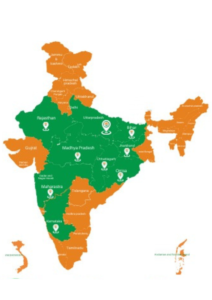
Trusted by 50000+ Customers
Anya Green Energy is a leading solar company and Solar Energy service provider established in 2013. We are recognized by startup India and customer best choice award 2022.
Our Achievements :
Recognized by Startup India.
Purvanchal’s first solar company to operate exclusively with solar products.
Certified by well-known institutions such as MSME, IndiaMart, and Just Dial and many more.
Winner of the Best Customer Choice Award 2022.
Over 50,000 happy customers across India.