The Complete Rooftop Solar Guide for Indian Homeowners

If you’re just starting to explore solar for your home, you’ve probably realized how overwhelming the research can get — costs, subsidies, panel types, installation steps, it’s a lot. This rooftop solar guide is designed to fix that. It brings together everything a homeowner needs to understand before going solar, in one place, written in plain language.
Think of this as your starting point. Whether you’re months away from installing or just curious about what’s involved, this rooftop solar guide will walk you through the full journey — from understanding how a rooftop solar system works, to navigating rooftop solar subsidy schemes, to what happens on installation day and beyond.
What Is a Rooftop Solar System?
A rooftop solar system converts sunlight into usable electricity for your home using solar panels mounted on your roof, connected to an inverter that converts the generated DC power into AC power your home appliances can use. Most residential systems in India are grid-connected, meaning any excess electricity generated gets exported to the grid through net metering, and you draw from the grid when your system isn’t producing enough (such as at night).
This rooftop solar guide focuses primarily on grid-connected residential systems, since they represent the vast majority of Indian home installations, though off-grid and hybrid systems (with battery backup) are also covered briefly later on.
Ready to switch to Solar?
solar solutions with Anya Green Energy and discover how you can reduce your electricity bills.
Contact UsWhy Homeowners Are Choosing Rooftop Solar
Rising electricity tariffs combined with falling equipment costs have made rooftop solar panels significantly more financially attractive than they were even five years ago. Beyond cost savings, homeowners are drawn to:
- Reduced electricity bills — often 70-90% depending on system size and consumption
- Environmental impact — a typical 5kW system offsets several tonnes of CO2 annually
- Energy independence — less reliance on grid supply and protection from tariff hikes
- Government incentives — central and state rooftop solar subsidy programs reducing upfront cost
- Increased property value — homes with installed systems often see stronger resale appeal
This rooftop solar guide assumes you already understand the “why” broadly — so let’s move into the practical “how.”
Types of Rooftop Solar Panels
Not all rooftop solar panels are the same, and understanding the differences matters when comparing installer quotes.
Monocrystalline panels offer the highest efficiency and perform best in limited roof space, making them a popular premium choice. Polycrystalline panels are more budget-friendly with slightly lower efficiency, suitable for homes with more available roof area. Half-cut cell panels, an increasingly standard upgrade, improve efficiency and reduce shading-related losses by splitting cells in half to reduce internal resistance.
When comparing rooftop solar panels across quotes, always check the efficiency rating (%) and the warranty terms (typically 25 years for performance), rather than comparing price alone.
Understanding Rooftop Solar Subsidy Schemes
One of the most important parts of this rooftop solar guide is understanding how rooftop solar subsidy programs actually work, since this directly affects your final cost.
At the central level, government schemes offer subsidy support for residential rooftop installations up to a certain system capacity, typically structured as a percentage of benchmark cost. Many states layer additional rooftop solar subsidy incentives on top of this, along with simplified application processes through state-run portals.
To access rooftop solar subsidy benefits, homeowners generally need to:
- Choose an empanelled/registered installer recognized by the subsidy scheme
- Complete the application through the relevant state or central portal
- Complete installation and inspection
- Receive subsidy disbursement, typically directly to the homeowner’s bank account
Always confirm current rooftop solar subsidy amounts and eligibility directly with your state’s renewable energy department or your installer, since scheme details are periodically updated.
The Rooftop Solar Installation Process, Step by Step
Understanding what happens during rooftop solar installation helps set realistic expectations for timeline and process.
Step 1: Site Survey and Assessment
An installer visits your home to assess roof condition, orientation, shading, and available space — this determines what size rooftop solar system your roof can realistically support.
Step 2: System Design and Quotation
Based on the survey, the installer proposes a system size, panel type, and inverter configuration, along with a detailed quote reflecting post-subsidy pricing.
Step 3: Subsidy Application and Approvals
Before physical rooftop solar installation begins, the required subsidy application and net metering registration paperwork typically needs to be filed with your local discom.
Step 4: Physical Installation
Actual mounting of rooftop solar panels, inverter setup, and wiring typically takes 1-3 days for a standard residential system, depending on size and roof complexity.
Step 5: Inspection and Net Metering Activation
After installation, your local electricity board inspects the system before activating net metering, which allows you to start exporting excess power to the grid.
Step 6: System Goes Live
Once net metering is activated, your rooftop solar system begins generating savings — this full process, from survey to activation, typically takes 4-8 weeks depending on your local discom’s processing speed
How Much Does Rooftop Solar Installation Cost?
Rooftop solar installation cost depends on system size, panel quality, and inverter brand, but generally includes panels (40-50% of cost), inverter (10-15%), mounting structure and wiring (10-15%), and labor (10-15%). After applying central and state rooftop solar subsidy programs, many households see effective costs drop by 30-40% from the base quoted price.
Most residential systems pay for themselves within 4-7 years through electricity bill savings, followed by 15-20+ years of significantly reduced ongoing costs, since panels typically carry 25-year performance warranties.
Choosing the Right Direction and Roof Space
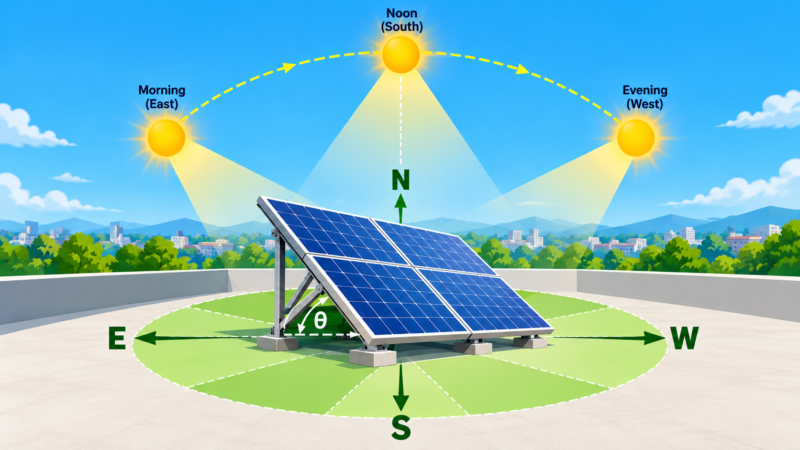
A critical but often overlooked part of any rooftop solar guide is orientation. South-facing roofs in India generally receive the most consistent sunlight, maximizing output from your rooftop solar panels. If true south isn’t available, east- or west-facing roofs remain viable options, typically delivering slightly lower but still strong performance. Shading from trees, water tanks, or neighboring structures should be mapped across all seasons during the site survey — not just assessed on the day of the visit.
Maintenance: What Rooftop Solar Systems Actually Need
A rooftop solar system requires minimal but not zero maintenance. Periodic cleaning (every 2-4 weeks depending on dust and local conditions) helps maintain output efficiency, while annual professional inspections catch wiring or mounting issues before they affect performance. Inverters typically need replacement once during a system’s 25-year lifespan, which should be factored into long-term cost planning.
Battery Storage: Do You Need It?
Not every rooftop solar system needs battery storage. For homes with reliable grid supply, net metering alone often provides sufficient value through bill credits for exported power. For homes in areas with frequent load-shedding, battery backup adds meaningful value by providing power during outages, though it increases upfront cost. Many homeowners choose systems designed to add battery storage later, rather than committing to it during the initial rooftop solar installation.
Common Mistakes to Avoid
This rooftop solar guide wouldn’t be complete without flagging the most common mistakes homeowners make:
- Skipping a proper site survey and relying on rough visual estimates for roof suitability
- Comparing quotes by price alone, ignoring panel quality, efficiency, and warranty terms
- Not confirming post-subsidy pricing before committing to an installer
- Underestimating net metering approval timelines, especially near subsidy deadline periods
- Choosing an installer without checking after-sales support and maintenance response history
Avoiding these mistakes is often the real difference between a rooftop solar system that performs as projected and one that disappoints.
As one renewable energy consultant commonly notes in industry explainer content: “The technology rarely fails homeowners — the planning does. A good rooftop solar guide should help you ask the right questions before you sign, not just after something goes wrong.”
Rooftop Solar Guide: Quick Reference Checklist
| Stage | Key Action |
|---|---|
| Before installation | Check roof condition, orientation, and shading |
| Choosing a system | Compare panel type, efficiency, and warranty — not just price |
| Financing | Confirm post-subsidy cost and explore loan/EMI options |
| Installation | Confirm timeline including net metering approval |
| After installation | Schedule periodic cleaning and annual inspection |
Final Thoughts: Your Next Steps
This rooftop solar guide covered the full journey — from understanding how a rooftop solar system works, to navigating rooftop solar subsidy programs, to what rooftop solar installation actually involves, and how to maintain your rooftop solar panels once they’re up and running.
The most important takeaway: going solar is no longer a complicated or risky decision when approached with the right information. A proper site survey, realistic subsidy expectations, and a reliable installer are the foundation of a system that performs well for 25 years.
If you’re ready to move from research to a personalized plan, Anya Green Energy offers free home assessments covering everything in this rooftop solar guide — roof suitability, subsidy eligibility, and system recommendations tailored to your home.
FAQ Section
Q1: What does a complete rooftop solar guide need to cover?
A thorough rooftop solar guide should cover system types, panel options, subsidy programs, the installation process, costs, maintenance needs, and common mistakes — giving homeowners a full picture before they commit.
Q2: How does a rooftop solar system actually work?
A rooftop solar system captures sunlight through panels, converts it to usable electricity via an inverter, and typically connects to the grid through net metering to export excess power and draw power when needed.
Q3: How much rooftop solar subsidy can I get in India?
Rooftop solar subsidy amounts vary by central and state schemes and system size, but combined incentives often reduce effective system cost by 30-40% from the base quoted price.
Q4: How long does rooftop solar installation take from start to finish?
Physical rooftop solar installation usually takes 1-3 days, but the complete process including survey, subsidy application, and net metering activation typically takes 4-8 weeks.
Q5: What type of rooftop solar panels should I choose?
The best rooftop solar panels for your home depend on available roof space and budget — monocrystalline and half-cut cell panels suit limited space with higher efficiency, while polycrystalline panels suit larger roofs on a tighter budget.
Trusted by 50000+ Customers
Anya Green Energy is a leading solar company and Solar Energy service provider established in 2013. We are recognized by startup India and customer best choice award 2022.
Our Achievements :
Recognized by Startup India.
Purvanchal’s first solar company to operate exclusively with solar products.
Certified by well-known institutions such as MSME, IndiaMart, and Just Dial and many more.
Winner of the Best Customer Choice Award 2022.
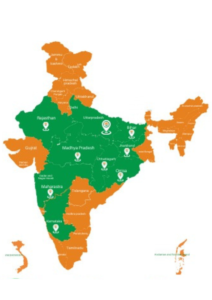
Over 50,000 happy customers across India.