Do Solar Panels Work in Bad Weather? The Honest Answer on Rain, Winter & Clouds

It’s one of the most common hesitations we hear: do solar panels in bad weather actually keep producing power, or does a cloudy sky basically shut the whole system down? It’s a fair concern, and the honest answer deserves more than a quick “don’t worry about it.”
This guide gives you the real, data-backed picture of how solar panels in bad weather actually perform — covering solar panel performance in winter, what happens to solar panels during monsoon, how much cloudy day solar output really drops, and whether solar panel efficiency in cold weather is something you should genuinely worry about.
The Short Answer: Yes, But With Variation
To directly answer the core question — yes, solar panels in bad weather continue generating electricity, just at reduced output compared to clear, sunny days. Panels don’t require direct, intense sunlight to function; they generate power from any available daylight, including diffused light passing through clouds. The real question isn’t whether they work, but by how much output changes — and that’s where the useful detail actually lives.
Ready to switch to Solar?
Solar solutions with Anya Green Energy and discover how you can reduce your electricity bills.
Contact UsHow Solar Panels Actually Generate Power
Solar cells generate electricity through the photovoltaic effect, triggered by photons of light hitting the cell surface — not heat, and not direct sun exposure specifically. This is exactly why solar panels in bad weather still produce meaningful power on overcast days: diffused sunlight still contains usable photons, even when clouds block direct light.
Solar Panel Performance in Winter: The Real Numbers
Solar panel performance in winter involves two opposing factors working against and for each other simultaneously. Shorter daylight hours and a lower sun angle reduce total daily energy capture — often by 20-30% compared to peak summer output, depending on latitude and local conditions.
On the other hand, cooler ambient temperatures actually help. Panels are less efficient in extreme heat, with performance typically peaking around 25°C and declining as temperatures climb due to increased electrical resistance. This means solar panel efficiency in cold weather is often slightly higher per hour of actual sunlight than on a scorching summer afternoon — even though total daily output is lower simply because winter days are shorter.
The net effect: reduced solar panel performance in winter comes mainly from shorter days, not from the cold itself hurting the panels.
Solar Panels During Monsoon: What Actually Happens
Solar panels during monsoon season see the most noticeable seasonal dip among all weather conditions. During heavy, sustained rainfall with thick cloud cover, output can drop 40-60% compared to clear-sky generation, since dense clouds block most direct light from reaching the panel surface.
But solar panels during monsoon also benefit from an underrated side effect — rain naturally washes dust and debris off the panel surface, often improving efficiency once skies clear, compared to a dusty, unwashed panel during dry months. Monsoon season also isn’t continuous rain; most regions see a mix of rainy stretches and sunny intervals, meaning total monthly output rarely drops as dramatically as a few heavy rain days might suggest.
Cloudy Day Solar Output: How Much Does It Really Drop?
Understanding cloudy day solar output requires separating light cloud cover from heavy, dense overcast conditions. On days with light to moderate clouds, cloudy day solar output typically drops just 10-25% compared to clear skies, since a meaningful amount of diffused sunlight still reaches the panels. On days with thick, dense cloud cover, output can fall 50% or more.
Importantly, even on the cloudiest days, cloudy day solar output rarely drops to zero — except in extreme conditions like dense fog or very dark storm clouds — meaning your system keeps contributing to your energy needs even through extended overcast stretches.
Solar Panel Efficiency in Cold Weather: Debunking a Myth
A persistent myth suggests cold weather damages or significantly impairs solar output. This isn’t accurate. Solar panel efficiency in cold weather is generally strong, since cooler temperatures actually improve electrical performance compared to extreme heat, as covered earlier.
The real cold-weather consideration for most Indian regions isn’t temperature-related efficiency loss at all — it’s simply reduced daylight duration during winter months. For almost all of India, solar panel efficiency in cold weather concerns are overstated compared to the much more relevant factor of shorter days.
Annual Performance: How It All Balances Out
Despite seasonal dips from solar panels during monsoon and reduced solar panel performance in winter, system sizing already accounts for these natural variations. Installers calculate system size using full-year regional sunlight data — not just peak summer conditions — so a properly sized system is designed to meet your expected annual savings even with these fluctuations built in.
| Season | Typical Output vs. Peak Summer | Primary Cause |
|---|---|---|
| Summer (clear skies) | 100% (baseline) | Maximum daylight, high sun angle |
| Monsoon (heavy rain) | 40-60% reduction on rainy days | Dense cloud cover |
| Winter (clear days) | 70-80% of summer daily output | Shorter days, lower sun angle |
| Cloudy days (moderate) | 75-90% of clear-day output | Partial diffused light captured |
| Cloudy days (heavy/dense) | 40-50% of clear-day output | Minimal light penetration |
This table shows exactly why solar panels in bad weather aren’t a dealbreaker — the dips are predictable, measurable, and already factored into how systems are designed from day one.
Tips to Maximize Performance During Low-Sunlight Seasons
- Keep panels clean — dust buildup compounds output loss, especially right before monsoon
- Trim nearby vegetation that could add extra shade during already-reduced winter sun angles
- Monitor your system’s app during seasonal transitions to catch any unexpected dips in cloudy day solar output
- Schedule annual inspections before monsoon season to confirm wiring and connections are weatherproofed, protecting performance through solar panels during monsoon
- Consider adjustable tilt mounting if available, to optimize for the lower winter sun angle and improve solar panel performance in winter
As one solar engineering consultant explained in a recent industry Q&A: “People ask if solar panels work in bad weather like it’s a yes-or-no question, but your system is actually designed around the full year’s weather patterns from day one — the dips in monsoon and winter are already priced into your expected savings.”
Final Thoughts: Should Weather Concerns Stop You From Going Solar?
The honest answer is simple: solar panels in bad weather continue working reliably, with predictable, manageable variation that professional system design already accounts for. Solar panels during monsoon see the biggest dips due to dense cloud cover, solar panel performance in winter is affected more by shorter days than temperature, and cloudy day solar output continues even through extended overcast stretches — while solar panel efficiency in cold weather remains consistently strong.
Weather variation is a normal, expected part of how solar panels in bad weather perform — not a flaw, and not a reason to delay installation. A properly sized system, built around your region’s full-year weather data, delivers reliable annual savings regardless of seasonal ups and downs.
If you’re unsure how your specific area’s weather patterns would affect performance, Anya Green Energy offers free assessments using local, full-year sunlight data to set realistic, season-by-season expectations before you install.
FAQ Section
Q1: Do solar panels in bad weather still generate meaningful electricity?
Yes — solar panels in bad weather continue producing power, just at reduced levels; they rarely stop generating electricity entirely, even during heavy rain or thick cloud cover.
Q2: How much does solar panel performance in winter typically drop?
Solar panel performance in winter usually drops 20-30% compared to summer, primarily due to shorter daylight hours and a lower sun angle, not due to cold temperatures.
Q3: How do solar panels during monsoon handle heavy rainfall?
Solar panels during monsoon see output drops of 40-60% during heavy rain, but benefit from natural dust-cleaning, and total monthly output stays higher than expected due to sunny intervals between rain.
Q4: What’s the real cloudy day solar output compared to clear skies?
Cloudy day solar output drops 10-25% with light to moderate clouds, and up to 50% with dense cloud cover, but rarely reaches zero even on the cloudiest days.
Q5: Does solar panel efficiency in cold weather get worse in low temperatures?
No — solar panel efficiency in cold weather is actually strong, since panels perform better in cooler temperatures than in extreme heat; the real factor affecting winter output is shorter daylight hours.
Trusted by 50000+ Customers
Anya Green Energy is a leading solar company and Solar Energy service provider established in 2013. We are recognized by startup India and customer best choice award 2022.
Our Achievements :
Recognized by Startup India.
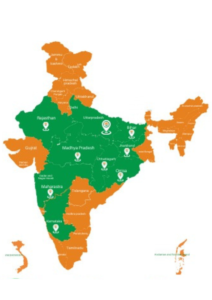
Purvanchal’s first solar company to operate exclusively with solar products.
Certified by well-known institutions such as MSME, IndiaMart, and Just Dial and many more.
Winner of the Best Customer Choice Award 2022.
Over 50,000 happy customers across India.