Long Duration Energy Storage in 2026: Technologies, Trends, and Why It Matters Now
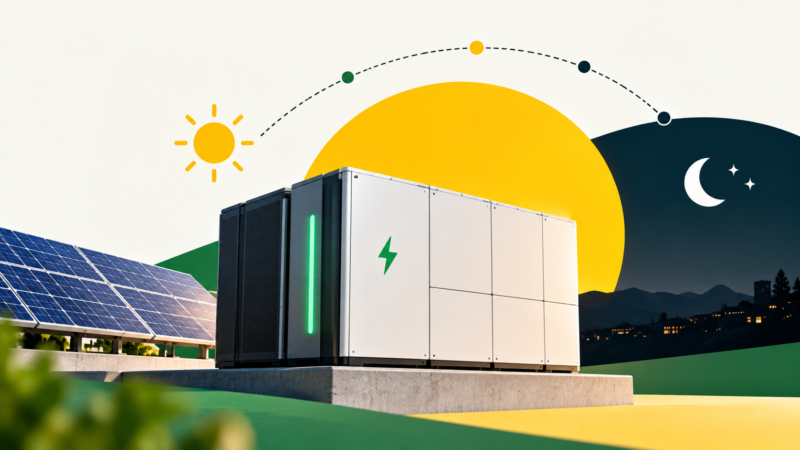
As solar and wind capacity scales up globally, a quieter but equally critical challenge has moved to the center of the clean energy conversation: long duration energy storage. Lithium-ion batteries have solved short-duration intermittency — smoothing out a few hours of cloud cover or evening demand peaks — but they were never designed to store power for days at a time. That gap is exactly what long duration energy storage is built to close, and in 2026, it’s becoming one of the most closely watched segments of the entire energy transition.
This blog breaks down what long duration energy storage actually means, the leading long duration energy storage technologies competing for dominance, how the battery storage vs long duration storage debate is playing out across the industry, the growing role of grid scale energy storage in national energy planning, and why long duration energy storage 2026 has become such a pivotal year for the sector.
What Is Long Duration Energy Storage?
Long duration energy storage, often shortened to LDES within the industry, refers to storage systems capable of discharging electricity for 8 hours or more — often stretching to multiple days — compared to the 2-4 hour discharge window typical of standard lithium-ion battery installations. This distinction matters enormously for grid planning, because renewable generation doesn’t always align neatly with demand: a cloudy, windless week can leave a grid heavily reliant on fossil backup unless long duration energy storage is available to bridge the gap.
Unlike short-duration storage, which is primarily about smoothing daily fluctuations, long duration energy storage is about resilience — ensuring that a grid built predominantly on renewables can survive extended periods of low generation without reverting to coal or gas peaker plants.
Why Long Duration Energy Storage Matters More in 2026
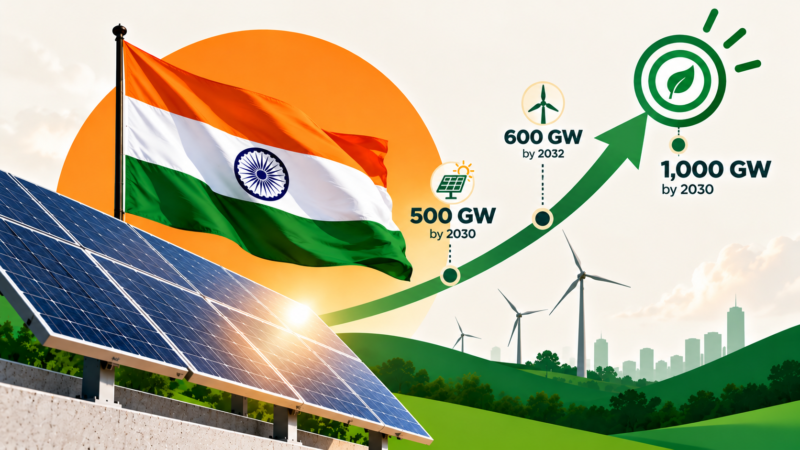
Heading into long duration energy storage 2026, the urgency around this technology has intensified for a simple reason: renewable penetration has crossed a threshold in many grids where intermittency can no longer be patched over with short-duration batteries alone. As solar and wind now represent a growing share of total generation in markets like India, the US, and parts of Europe, the economic and reliability case for long duration energy storage has shifted from “nice to have” to “grid-critical infrastructure.”
Several illustrative estimates (to be verified against current IEA/BloombergNEF LDES Council reporting) suggest global long-duration storage capacity needs to grow many times over current deployment levels by the early 2030s to support stated net-zero targets — a scale-up that makes long duration energy storage 2026 investment decisions especially consequential for the trajectory of the next decade.
Ready to switch to Solar?
solar solutions with Anya Green Energy and discover how you can reduce your electricity bills.
Contact UsLong Duration Energy Storage Technologies: The Leading Contenders
The race to dominate long duration energy storage technologies includes several distinct approaches, each with different cost, scalability, and geographic suitability profiles.
Flow Batteries
Flow batteries store energy in liquid electrolyte tanks rather than solid electrodes, allowing storage duration to be scaled independently of power capacity simply by adding larger tanks. This flexibility makes flow batteries one of the more promising long duration energy storage technologies for applications requiring 8-24+ hours of discharge, though cost-per-kWh at scale remains a work in progress compared to lithium-ion.
Compressed Air and Liquid Air Energy Storage
Compressed air energy storage (CAES) and its newer cousin, liquid air energy storage (LAES), store energy by compressing or liquefying air using excess renewable electricity, then releasing it through a turbine when power is needed. These long duration energy storage technologies benefit from long asset lifespans and the ability to use existing geological formations or underground caverns, making them attractive for specific regional deployments.
Thermal Energy Storage
Thermal storage systems store excess renewable electricity as heat — often in molten salt, ceramic bricks, or similar high-capacity thermal media — and convert it back to electricity or direct heat when needed. This approach has gained traction as one of the more cost-competitive long duration energy storage technologies, particularly for industrial heat applications where direct thermal discharge avoids conversion losses entirely.
Battery Storage vs Long Duration Storage: Understanding the Difference
The battery storage vs long duration storage comparison isn’t really a competition — it’s a question of matching the right tool to the right duration requirement. Standard lithium-ion battery storage remains the most cost-effective solution for daily cycling, typically covering 2-4 hour discharge windows to manage evening demand peaks after solar generation drops off.
Where the battery storage vs long duration storage distinction becomes critical is in multi-day or seasonal gaps — periods of extended cloud cover, low wind, or unusual demand spikes — scenarios where lithium-ion becomes prohibitively expensive to scale, simply because you’d need an enormous number of battery cells sitting mostly idle most of the year. Long duration technologies are generally optimized for lower cost-per-kWh at the expense of higher upfront infrastructure, making the battery storage vs long duration storage choice fundamentally about matching discharge duration to the specific reliability problem being solved.
| Factor | Lithium-Ion Battery Storage | Long Duration Energy Storage |
|---|---|---|
| Typical Discharge Duration | 2–4 hours | 8+ hours to multiple days |
| Cost Structure | Lower upfront, higher per-cycle at scale | Higher upfront, lower cost-per-kWh long-term |
| Best Use Case | Daily peak shaving | Multi-day reliability, seasonal gaps |
| Maturity | Highly mature, widely deployed | Emerging, scaling rapidly |
| Round-Trip Efficiency | 85–95% | Varies widely (40–80% depending on tech) |
Grid Scale Energy Storage: The Infrastructure Behind the Shift
Deploying long duration energy storage at a meaningful scale requires serious investment in grid scale energy storage infrastructure — not just the storage technology itself, but transmission upgrades, interconnection capacity, and regulatory frameworks that properly value long-duration reliability rather than just short-term price arbitrage.
Several countries have begun structuring dedicated grid scale energy storage procurement programs specifically targeting long-duration capacity, recognizing that market mechanisms designed around short-duration batteries don’t naturally incentivize the kind of multi-day storage grids will increasingly need. This policy evolution is one of the most important underlying trends supporting long duration energy storage 2026 momentum, since technology alone doesn’t scale without a market structure that rewards it.
India's Position in the Long Duration Energy Storage Landscape
India’s rapid renewable capacity growth has placed long duration energy storage squarely on the national policy agenda. With ambitious non-fossil capacity targets and a grid that must eventually absorb much higher shares of variable solar and wind generation, grid scale energy storage — including pumped hydro, battery storage, and emerging long-duration technologies — is increasingly viewed as essential rather than optional infrastructure.
Illustrative estimates (requiring verification against current CEA/MNRE data) suggest India’s storage capacity additions will need to scale substantially through the late 2020s to support stated renewable integration targets, positioning long duration energy storage 2026 developments in India as a space worth watching closely for both policy announcements and private investment activity.
Challenges Facing Long Duration Energy Storage Adoption
Despite strong momentum, long duration energy storage faces real adoption hurdles. Capital costs for many long duration energy storage technologies remain higher than conventional lithium-ion on a per-project basis, even if long-term economics favor them. Supply chains for specialized components — from flow battery electrolytes to turbine equipment for compressed air systems — are still maturing and lack the manufacturing scale that has driven down lithium-ion costs so dramatically.
Regulatory and market design also lag behind the technology. Many electricity markets still don’t have clear mechanisms to properly compensate grid scale energy storage assets for the multi-day reliability value they provide, which slows investment even where the technical case is strong. Addressing these structural gaps will likely do as much to determine the pace of long duration energy storage 2026 deployment as any single technological breakthrough.
Expert Perspective
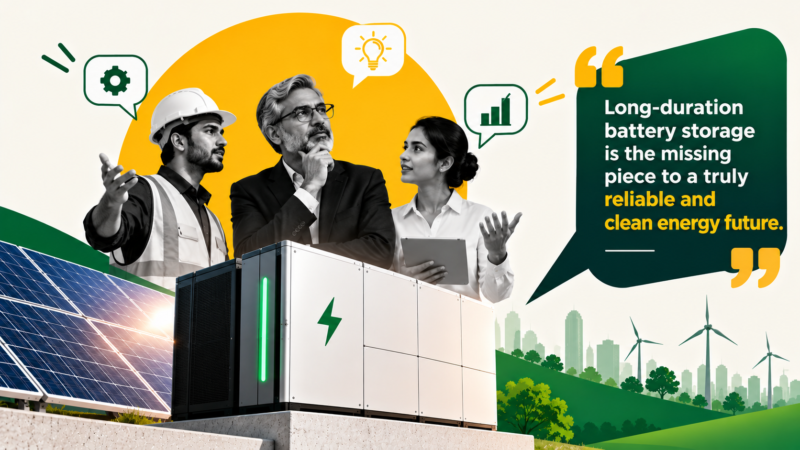
As one grid infrastructure analyst put it in a recent industry discussion, paraphrased here: the next major unlock for renewable energy isn’t more solar panels or wind turbines — it’s solving the multi-day storage problem that short-duration batteries were never built to handle, and whichever long duration energy storage technologies reach cost-competitive scale first will shape how fast grids worldwide can retire fossil backup capacity for good.
What to Watch in Long Duration Energy Storage 2026
Heading further into long duration energy storage 2026, a few developments are worth tracking closely: policy announcements around dedicated long-duration procurement mechanisms, cost trajectory updates from flow battery and thermal storage manufacturers scaling production, and pilot project results from early grid-scale deployments that will inform whether current technologies are ready for wider rollout. These signals will matter far more than headline capacity announcements alone in determining whether long duration energy storage reaches the scale the climate transition actually requires.
Conclusion
Long duration energy storage represents one of the most consequential — and least publicly discussed — pieces of the clean energy transition. While solar panels and wind turbines capture most public attention, the ability to store that power for days, not just hours, is what will ultimately determine whether renewable-dominant grids can be genuinely reliable. As long duration energy storage technologies mature, the battery storage vs long duration storage conversation will increasingly shift from either/or to a layered strategy where each technology handles the duration it’s best suited for. Watching how grid scale energy storage investment and policy evolve through long duration energy storage 2026 and beyond will offer one of the clearest signals of how quickly the broader energy transition is truly progressing.
FAQs
Q1: What counts as long duration energy storage?
A: Generally, systems capable of discharging electricity for 8 hours or more, often extending to multiple days, as opposed to the 2-4 hour window typical of standard lithium-ion batteries.
Q2: Why can’t lithium-ion batteries handle long duration storage needs?
A: Scaling lithium-ion for multi-day storage becomes prohibitively expensive, since it requires enormous battery capacity sitting idle most of the year — long duration technologies are generally designed for lower cost-per-kWh at longer durations instead.
Q3: What are the most promising long duration energy storage technologies right now?
A: Flow batteries, compressed/liquid air storage, thermal storage, and green hydrogen are the leading contenders, each suited to different duration ranges and geographic conditions.
Q4: Is long duration energy storage relevant to India specifically?
A: Yes — as India scales renewable capacity toward its non-fossil targets, grid scale energy storage, including long-duration technologies, is becoming essential to maintaining reliability.
Q5: What’s slowing down long duration energy storage adoption?
A: Higher capital costs, immature supply chains for specialized components, and electricity market structures that don’t yet properly value multi-day reliability are the main barriers.
Trusted by 50000+ Customers
Anya Green Energy is a leading solar company and Solar Energy service provider established in 2013. We are recognized by startup India and customer best choice award 2022.
Our Achievements :
Recognized by Startup India.
Purvanchal’s first solar company to operate exclusively with solar products.
Certified by well-known institutions such as MSME, IndiaMart, and Just Dial and many more.
Winner of the Best Customer Choice Award 2022.
Over 50,000 happy customers across India.