
Tidal and Wave Energy: Harnessing the Ocean's Untapped Power for a Clean Energy Future
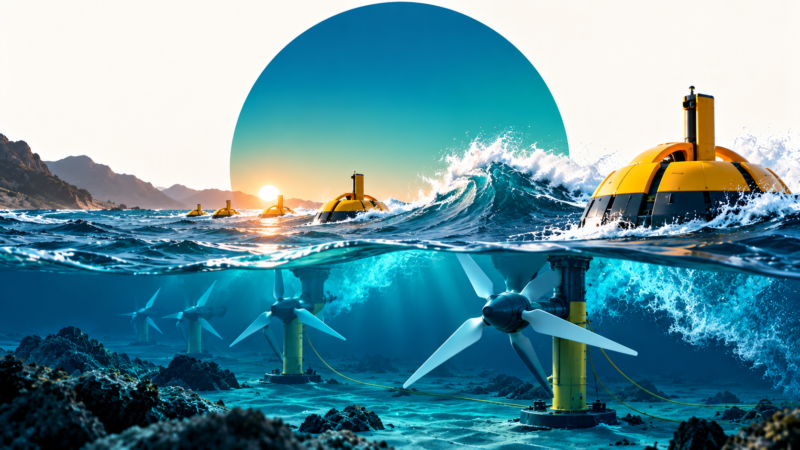
Picture a force that has been rising and falling, pushing and pulling, for billions of years — one humans have only just begun to seriously harness. That force is the ocean, and tidal and wave energy is the name given to the clean power generated from its endless motion. Unlike solar panels that go dark at night or wind turbines that stall on calm days, this category of power draws on something far more dependable: the gravitational rhythm of the tides and the constant churn of waves rolling in from the open sea.
As nations push harder to decarbonize their power grids, interest in marine renewable energy has quietly picked up pace. Pilot projects now dot coastlines from Scotland to South Korea, and even India — with its 7,500-kilometre coastline — has begun studying where this technology might one day fit in. Solar and wind still dominate the clean energy conversation, but tidal and wave energy is increasingly being discussed as the next frontier worth watching.
How Tidal Power Generation Works
Tides rise and fall because of the gravitational pull of the moon and sun, a cycle so precise that scientists can predict it down to the minute, years in advance. This is what makes tidal power generation fundamentally different from almost every other renewable source — there’s no guessing involved, no waiting for the right weather. Engineers simply know when the water will move and how much energy it will carry when it does, and this predictability is one of the defining strengths of tidal and wave energy as a category.
There are three broad approaches to tidal power generation that engineers currently pursue. Tidal barrages use dam-like structures across river estuaries to trap and release water, spinning turbines as it flows. Tidal stream generators look and behave much like underwater wind turbines, capturing the kinetic energy of moving currents. A third, newer concept called dynamic tidal power remains largely experimental. Among these, tidal stream systems are generally considered the most scalable and least disruptive approach to tidal power generation in use today.
As one ocean energy researcher described it in a recent industry briefing, this technology is essentially “wind power turned upside down and submerged.” The physics are similar, but seawater is roughly eight hundred times denser than air — meaning comparatively modest underwater turbines can still generate meaningful, steady output from tidal power generation systems.
Understanding Wave Energy Conversion
Where tides are driven by gravity, waves are driven by wind sweeping across open water, carrying stored energy that can travel thousands of kilometres before finally breaking on shore. Wave energy conversion is the science of capturing that motion — part of the broader tidal and wave energy landscape — and turning it into usable electricity.
Several competing designs are currently being tested around the world. Point absorbers are buoys that bob up and down with passing swells. Oscillating water columns use the rhythmic rise and fall of water inside a chamber to push air through a turbine. Attenuators are long, segmented, snake-like structures that flex as waves travel beneath them. Each approach to wave energy conversion comes with its own trade-offs in cost, durability, and efficiency, and no single design has yet become the industry standard.
The biggest challenge isn’t efficiency — it’s survival. Ocean storms unleash forces far more violent than steady tidal currents, and more than a few early prototypes have been battered or destroyed during open-water trials. Engineers today are far more focused on building wave energy conversion systems tough enough to survive decades at sea than on squeezing out marginal efficiency gains in calm test tanks.
Ready to switch to Solar?
Solar solutions with Anya Green Energy and discover how you can reduce your electricity bills.
Contact UsOcean Energy Technology: Where the World Stands Today
Globally, this entire category of ocean energy technology remains years, if not decades, behind the commercial maturity of solar and wind, even though interest in tidal and wave energy continues to grow steadily. The MeyGen project in Scotland’s Pentland Firth is often cited as the world’s largest operating tidal stream array, while test centres in Orkney and Hawaii continue refining wave-capturing prototypes under real, unforgiving sea conditions — part of the fast-evolving landscape of ocean energy technology worldwide.
South Korea’s Sihwa Lake Tidal Power Station remains one of the largest tidal barrage installations anywhere, proof that large-scale projects are technically achievable wherever geography cooperates.
Data disclosure: Project names, capacities, and timelines referenced above are illustrative, drawn from general industry knowledge rather than live data retrieval in this session. Please verify current figures against IEA, IRENA, or Ocean Energy Europe sources before publishing.
Industry estimates suggest this category of ocean energy technology could expand several-fold over the next decade, provided costs follow a trajectory similar to offshore wind’s own steep decline — an outcome that hinges heavily on sustained government backing and private capital.
Marine Renewable Energy in India: Potential and Roadblocks
India’s long coastline and numerous estuaries give it genuine, if still largely theoretical, potential for marine renewable energy development. The Gulf of Khambhat and Gulf of Kutch in Gujarat, along with the Sundarbans delta in West Bengal, have both been studied for years as candidate sites for tidal power generation, part of the country’s broader, early-stage interest in tidal and wave energy.
Even so, marine renewable energy in India remains firmly at the feasibility-study stage rather than commercial rollout. High upfront capital costs, the environmental sensitivity of estuary ecosystems, and the relative immaturity of wave energy conversion hardware compared to well-established solar manufacturing have all slowed momentum considerably.
That said, as India’s solar and wind capacity additions begin to approach saturation in the most favourable locations, this category of marine renewable energy could eventually earn a place as a complementary power source — particularly valuable because ocean-based generation often follows a different rhythm than solar and wind, offering a useful diversification benefit for grid planners eyeing the long-term potential of tidal and wave energy.
Quick Comparison: Tidal vs Wave Energy
| Factor | Tidal Energy | Wave Energy |
|---|---|---|
| Driving force | Gravitational pull (moon/sun) | Wind-driven surface motion |
| Predictability | Very high, forecastable years ahead | Moderate, weather-dependent |
| Technology maturity | More mature (barrages proven) | Earlier-stage, less standardized |
| Best suited sites | Estuaries, narrow straits | Open coastlines, deep water |
| India potential | Gujarat, West Bengal estuaries | Limited current assessment |
Why Tidal and Wave Energy Deserves Attention
Despite its early stage, there are solid reasons analysts keep a close eye on tidal and wave energy as a long-term bet:
- Exceptional predictability — tidal and wave energy output can be forecast years ahead, something solar and wind simply cannot match.
- High energy density — water’s density means relatively compact installations can still generate significant power.
- Minimal land footprint — most hardware sits offshore or fully submerged, avoiding competition with farmland or housing.
- A different rhythm — generation patterns from the ocean often complement, rather than mirror, solar and wind supply curves.
- Durable, long-life assets — many designs are engineered for multi-decade service, similar to large hydropower infrastructure.
- A maturing innovation pipeline — rising R&D investment in ocean energy technology echoes the early cost curves once seen in solar and offshore wind.
The Challenges Standing in the Way
For all its promise, tidal and wave energy still faces real, unresolved obstacles before it can scale meaningfully. The marine environment is brutal on equipment — saltwater corrosion, biofouling from barnacles and algae, and the sheer force of storms all shorten lifespans and inflate maintenance bills.
Capital costs remain stubbornly high compared to solar and onshore wind, and the levelized cost of electricity from most marine renewable energy projects still sits above grid parity in nearly every market studied so far.
Environmental concerns add another layer of complexity. Tidal barrages, in particular, can disrupt estuary ecosystems, alter sediment flow, and interfere with fish migration. Regulatory frameworks, including India’s, are still catching up to the specific demands this emerging form of ocean energy technology requires.
Looking Ahead
Most analysts agree tidal and wave energy won’t replace solar or wind as the backbone of the energy transition — but it may well carve out a meaningful niche, particularly for island nations, coastal cities, and regions blessed with strong tidal ranges or consistent wave activity.
One renewable energy strategist summed up the sector’s likely trajectory at a recent industry panel this way: it will probably follow the same arc offshore wind did two decades ago — “expensive and experimental at first, until enough pilot projects de-risk the technology for serious capital to follow.”
For India specifically, sustained pilot investment, clearer regulatory pathways, and international technology partnerships will likely decide whether tidal and wave energy moves beyond feasibility studies into real, grid-connected capacity within the next decade.
Where Anya Green Energy Stands on Ocean Power
Right now, Anya Green Energy’s focus remains firmly on solar — rooftop, commercial, and utility-scale installations, where the technology is proven, bankable, and ready for deployment today. This emerging ocean-based category is not currently part of our product portfolio, but we track the space closely as part of our broader, long-term view of India’s clean energy transition.
For anyone curious about where this might fit into the bigger picture, we’d frame it as a complementary, longer-horizon technology — one that could eventually work alongside solar, wind, and battery storage, rather than something replacing rooftop solar anytime soo
Frequently Asked Questions
Q1: What exactly is tidal and wave energy, and how is it different from solar or wind power?
A1: It’s a category of ocean-based renewable power often called tidal and wave energy, drawing on two distinct forces — the gravitational pull that drives tidal cycles, and the kinetic motion of wind-driven waves. Because these forces follow predictable patterns rather than weather, output can be forecast with far greater precision than solar or wind.
Q2: Is this technology currently in use anywhere in India?
A2: Not yet at commercial scale. India has studied promising sites in the Gulf of Khambhat, Gulf of Kutch, and the Sundarbans delta, but current efforts remain at the feasibility and pilot-testing stage.
Q3: How exactly is electricity generated from ocean waves?
A3: Devices like floating buoys, oscillating water columns, and flexible segmented structures perform wave energy conversion by turning wave motion into mechanical energy, which then drives a generator — conceptually similar to how a wind turbine converts moving air into electricity.
Q4: Why hasn’t this sector scaled the way solar has?
A4: The marine environment is far harsher than open-air installations. Saltwater corrosion, biofouling, and storm forces drive up costs and shorten equipment lifespans, while high capital requirements and a less mature supply chain have slowed commercial scaling considerably.
Q5: Will Anya Green Energy offer solutions in this space in the future?
A5: For now, our focus stays on proven, bankable rooftop and commercial solar. We continue to monitor developments in this space and will share updates if and when the technology becomes commercially viable for our customers.
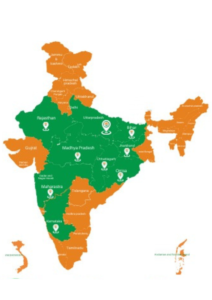
Trusted by 50000+ Customers
Anya Green Energy is a leading solar company and Solar Energy service provider established in 2013. We are recognized by startup India and customer best choice award 2022.
Our Achievements :
Recognized by Startup India.
Purvanchal’s first solar company to operate exclusively with solar products.
Certified by well-known institutions such as MSME, IndiaMart, and Just Dial and many more.
Winner of the Best Customer Choice Award 2022.
Over 50,000 happy customers across India.