Best Solar Panels for Small Roofs: Maximize Output in Limited Space
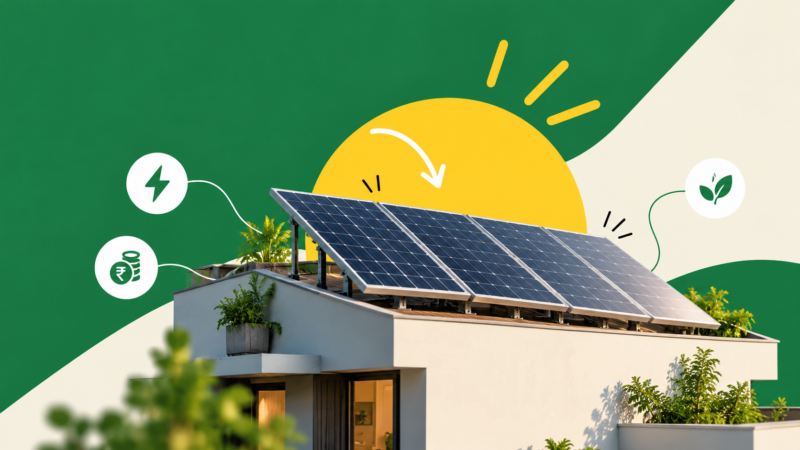
If you’ve been told your roof is “too small” for solar, you’ve probably gotten that advice based on standard, lower-efficiency panels — not on the full range of options actually available. Finding the best solar panels for small roofs isn’t about settling for a smaller system; it’s about choosing the right technology to generate maximum output from the space you actually have.
This guide walks through exactly which panel types qualify as the best solar panels for small roofs, why efficiency matters more than panel count, and how to make the most of limited rooftop space without compromising on long-term savings.
Why Small Roofs Need a Different Approach
Standard solar advice assumes you have generous, unobstructed roof space to work with. But for urban homes, apartments with shared terraces, or properties with significant roof obstructions (water tanks, staircases, chimneys), that assumption doesn’t hold. Finding the best solar panels for small roofs requires prioritizing output-per-square-foot over simply chasing the lowest price-per-watt, since your limiting factor is space, not budget alone.
This distinction matters enormously. A homeowner with abundant roof space can simply add more standard panels to hit their target output. A homeowner with a small roof has a hard ceiling on total panels — meaning each panel needs to work as hard as possible.
Ready to switch to Solar?
solar solutions with Anya Green Energy and discover how you can reduce your electricity bills.
Contact UsThe Key Metric: Efficiency, Not Just Wattage
When searching for the best solar panels for small roofs, the single most important specification to understand is efficiency rating — the percentage of sunlight a panel converts into usable electricity. High efficiency solar panels generate more power per square foot than standard panels, which directly determines how much total system capacity you can fit on a constrained roof.
For context, standard panels typically operate at 15-17% efficiency, while premium options can reach 21-23% or higher. On a small roof, this difference between standard and high efficiency solar panels can mean the gap between a 2kW system and a 3.5kW system occupying the exact same physical space.
Monocrystalline Solar Panels: The Default Choice for Small Roofs
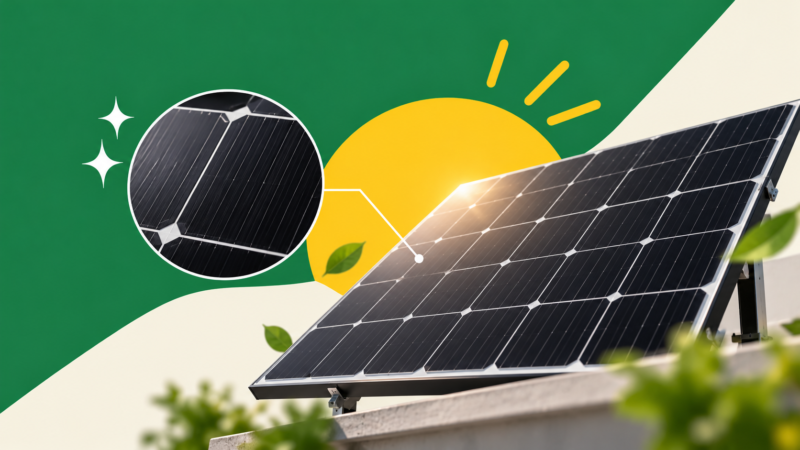
Monocrystalline solar panels are almost always the starting recommendation when space is limited. Made from a single, continuous silicon crystal structure, these panels achieve higher efficiency (typically 19-21%) than polycrystalline alternatives, translating directly into more output per square foot.
Beyond efficiency, monocrystalline solar panels also perform better in partial shading conditions compared to older polycrystalline technology — a meaningful advantage for small urban roofs where neighboring buildings or structures often create some unavoidable shade during parts of the day.
While monocrystalline solar panels carry a higher price per panel than polycrystalline alternatives, the space efficiency gain usually justifies the cost difference specifically for small-roof scenarios, where you simply can’t compensate for lower efficiency by adding more panels
Half-Cut Cell Technology: An Upgrade Worth Considering
Beyond standard monocrystalline options, half-cut cell panels represent a meaningful upgrade for compact solar panel systems. By splitting standard cells in half, this technology reduces internal electrical resistance, improving efficiency by an additional 2-3% while also reducing performance loss from partial shading — a double benefit for small, potentially shade-affected roofs.
Half-cut cell technology has moved from a premium niche option to a near-standard offering across most installers, meaning it’s often available at a smaller price premium than you might expect, making it worth specifically requesting when comparing quotes for best solar panels for small roofs.
Bifacial Panels: An Option for Specific Small-Roof Scenarios
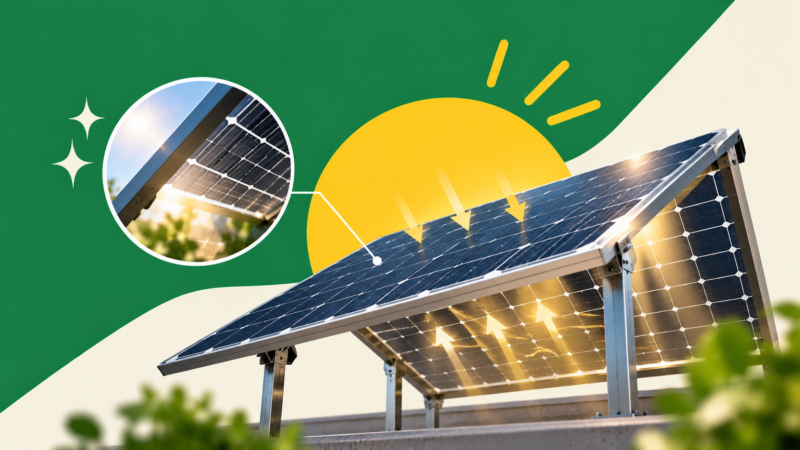
Bifacial panels capture sunlight on both their front and rear surfaces, generating additional output from reflected light — particularly effective on light-colored or reflective roofing surfaces. For small roofs with white or reflective terrace flooring, bifacial technology can meaningfully boost total output, sometimes by 5-10% beyond what the same panel would generate in a standard installation.
However, bifacial panels require specific mounting configurations to expose their rear surface to reflected light, which isn’t always practical on every small roof layout. They’re worth discussing with your installer specifically if your small roof has favorable reflective surface conditions, but shouldn’t be assumed as universally better than high-efficiency monocrystalline or half-cut options for every small-roof scenario.
Comparing Panel Technologies for Small Roofs
| Panel Type | Typical Efficiency | Best For Small Roofs When… |
|---|---|---|
| Standard polycrystalline | 15-17% | Rarely recommended for genuinely constrained space |
| Monocrystalline | 19-21% | Default recommendation for most small-roof situations |
| Half-cut cell monocrystalline | 21-22% | Shading concerns exist alongside space constraints |
| Bifacial | 21-23%+ (with rear gain) | Reflective/light-colored roof surface available |
This comparison makes clear why the best solar panels for small roofs conversation almost always centers on monocrystalline-based technology rather than budget polycrystalline options, despite the higher upfront cost per panel.
Maximum Output Small Roof Solar: Beyond Just Panel Choice
Panel technology alone doesn’t guarantee maximum output small roof solar performance — system design matters just as much.
Optimize Orientation and Tilt
Even on a small roof, ensuring panels face as close to true south as possible (for most Indian locations) and are tilted at an appropriate angle for your latitude significantly affects total output — sometimes more than the panel technology choice itself.
Minimize Shading Losses
On constrained roofs, shading from water tanks, parapet walls, or neighboring structures has an outsized impact since every panel matters more when you have fewer of them. A proper site survey mapping shadows across all seasons is especially critical for maximum output small roof solar installations.
Consider Microinverters or Power Optimizers
Standard string inverters mean if one panel underperforms (due to partial shading or debris), it can drag down the output of the entire panel string. Microinverters or power optimizers allow each panel to operate independently, meaning shading or performance issues on one panel don’t affect the others — a particularly valuable upgrade for small systems where losing even one panel’s worth of output is proportionally more significant.
Precise System Sizing
With limited space, getting your system size calculation exactly right matters more than on a large roof where there’s room for error. Work with your installer to calculate your actual consumption needs precisely, rather than simply maximizing whatever panels fit.
Compact Solar Panel Systems: What to Expect in Terms of Output
For a typical small roof with 150-250 sq. ft. of usable, shadow-free space, compact solar panel systems using high-efficiency monocrystalline or half-cut cell panels can realistically achieve:
- 2-3.5 kW capacity depending on exact space and panel efficiency
- 8-14 units of daily generation under good sunlight conditions
- Meaningful bill reduction (40-70% depending on household consumption) even without a large system
This demonstrates that small roofs aren’t disqualifying — they simply require more deliberate technology choices to achieve worthwhile maximum output small roof solar results.
Common Mistakes When Choosing Panels for Small Roofs
- Defaulting to the cheapest polycrystalline option without calculating the space-efficiency trade-off
- Ignoring shading analysis, which matters disproportionately more on constrained roofs
- Not asking about half-cut cell availability, assuming it’s an unaffordable premium option
- Oversizing panel count estimates without accounting for real obstructions like water tanks or staircases
- Choosing a standard string inverter without considering microinverters when partial shading is unavoidable
As one solar installation engineer noted in a recent product comparison piece: “Small roofs don’t mean small ambitions — they just mean every square foot needs to work harder, which is exactly what higher-efficiency panel technology is built for.”
How to Choose the Right Panels for Your Small Roof
- Get an accurate measurement of your actual usable, shadow-free roof space
- Request efficiency ratings, not just wattage, when comparing installer quotes
- Prioritize monocrystalline or half-cut cell technology over standard polycrystalline options
- Ask specifically about shading mitigation — microinverters or power optimizers if partial shade is unavoidable
- Calculate your real consumption needs to ensure your system size genuinely matches your usage, not just available space
Final Thoughts: Small Roof Doesn't Mean Small Savings
Finding the best solar panels for small roofs comes down to prioritizing efficiency over price-per-panel, since space — not budget — is your real constraint. High efficiency solar panels, particularly monocrystalline solar panels and half-cut cell variants, consistently deliver the strongest output-per-square-foot for constrained roofs, while thoughtful system design around orientation, shading, and inverter choice rounds out a genuinely effective compact solar panel systems setup.
With the right technology choices, even a modest roof can deliver maximum output small roof solar performance that meaningfully reduces your electricity bills — proving that limited space is a design challenge, not a dealbreaker.
Anya Green Energy offers free site assessments specifically tailored to small and constrained roofs, helping you identify the exact panel technology and system design that maximizes output for your specific space.
FAQ Section
Q1: What are the best solar panels for small roofs?
The best solar panels for small roofs are typically monocrystalline or half-cut cell panels, since their higher efficiency (19-22%) generates more power per square foot compared to standard polycrystalline options.
Q2: Are high efficiency solar panels worth the extra cost on a small roof?
Yes — on a small roof, high efficiency solar panels are usually worth the premium since they let you fit more total capacity into limited space, which standard panels simply can’t match regardless of price.
Q3: Why are monocrystalline solar panels recommended over polycrystalline for small spaces?
Monocrystalline solar panels offer higher efficiency and better partial-shade performance than polycrystalline panels, making them the better choice when you can’t compensate for lower efficiency by adding more panels.
Q4: What size system can I realistically get with compact solar panel systems?
Compact solar panel systems on a typical small roof (150-250 sq. ft.) can usually achieve 2-3.5 kW capacity using high-efficiency panels, enough for meaningful bill reduction for most households.
Q5: How can I get maximum output small roof solar performance?
To achieve maximum output small roof solar results, prioritize high-efficiency panels, optimize orientation and tilt, minimize shading through careful site survey, and consider microinverters if partial shade is unavoidable.
Trusted by 50000+ Customers
Anya Green Energy is a leading solar company and Solar Energy service provider established in 2013. We are recognized by startup India and customer best choice award 2022.
Our Achievements :
Recognized by Startup India.
Purvanchal’s first solar company to operate exclusively with solar products.
Certified by well-known institutions such as MSME, IndiaMart, and Just Dial and many more.
Winner of the Best Customer Choice Award 2022.
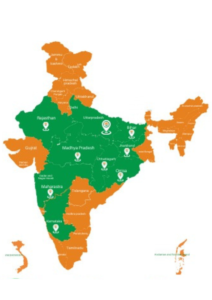
Over 50,000 happy customers across India.