The Optical Advantage: How Solar Concentration Films Are Maximizing Photovoltaic Output

What if the fastest way to boost solar panel energy generation isn’t building bigger silicon wafers, but redirecting the light that hits them? Modern photovoltaic panels reflect or lose a noticeable fraction of incoming sunlight due to steep surface angles, structural shadows, and surface reflection.
To solve this, optical engineers are deploying solar concentration films—thin, highly engineered polymeric sheets that trap, bend, and concentrate sunlight directly onto active semiconductor zones.
By integrating flexible micro-optics onto standard modules, solar concentration films offer a cost-effective, passive upgrade that maximizes panel yield without requiring heavy mechanical solar trackers or complex cooling systems.
What Are Solar Concentration Films?
At their core, solar concentration films are specialized optical layers embedded with micro-structured lenses, prisms, or Fresnel textures. Unlike traditional glass lenses used in massive concentrated photovoltaics (CPV) setups, these flexible film membranes are ultra-thin and lightweight.
When applied over standard silicon or thin-film modules, solar concentration films act as passive light managers. They capture wide-angle ambient light, reduce front-surface reflection, and funnel photons straight into light-absorbing semiconductor regions.
The Optical Blueprint: Micro-Optic Film Technologies
The functional power of solar concentration films stems from advanced micro-optic film technologies. Instead of relying on bulk refractive elements, these films utilize sub-millimeter optical patterns engineered to manipulate light paths at the surface level.
Micro-Fresnel Lens Arrays: Miniature concentric grooves focus incoming direct rays onto localized high-efficiency solar cells.
Prismatic Anti-Reflective Layers: Triangular micro-structures redirect reflected rays back down onto the panel surface, increasing net light absorption.
Diffractive Light Guide Films: Micro-structured patterns capture diffuse sunlight during cloudy conditions and bend it toward active p-n junctions.
Planar Concentrators: Flat optical waveguides that channel light laterally across the module surface to minimize cell area requirements.
By combining these specialized structures, solar concentration films transform ordinary glass surfaces into high-efficiency optical collectors.
How Optical Light Management Enhances Solar Output
The key to achieving meaningful solar power enhancement lies in precision optical light management. When sunlight strikes an unprotected solar glass surface, a significant portion reflects away at sharp angles—especially during early morning and late afternoon hours.
When equipped with optical concentration layers, the panel manages incoming rays through a multi-stage optical path:
Wide-Angle Light Capture: Micro-prisms capture low-angle rays during off-peak sun hours and bend them toward normal incidence.
Internal Total Reflection (TIR): Light that reflects off the back contact gets trapped inside the film layer, bouncing repeatedly until absorbed.
Shadow Mitigation: Micro-optics divert incoming light around surface busbars and metallic grid lines, directing rays exclusively onto active silicon.
Thermal Distribution: Diffuse optical concentration prevents localized hot spots, protecting cell longevity while maintaining steady output.
This comprehensive approach to optical light management ensures panels generate high energy yields even under low-light or angled conditions.
Overcoming Thermal Barriers: Maximizing Real-World Efficiency gains
Historically, high-ratio concentrated photovoltaics suffered from intense heat buildup, which reduces semiconductor performance and degrades cell material over time. High operating temperatures lower open-circuit voltage, offsetting efficiency gains.
However, modern solar concentration films overcome heat issues by applying low-concentration ratios (typically $1.5\times$ to $5\times$). This mild optical gain provides substantial output improvements without generating damaging thermal spikes.
By combining low optical concentration with infrared-reflective film coatings, advanced solar concentration films deliver significant solar power enhancement while keeping operating temperatures within safe bounds for standard mounting systems.
Durability and Weathering Resistance in Rugged Environments
Solar components must withstand decades of harsh outdoor exposure, including ultraviolet radiation, hail, temperature swings, and sand abrasion.
Modern solar concentration films use fluoropolymer materials such as ETFE (ethylene tetrafluoroethylene) and UV-stabilized acrylics. These advanced polymers resist yellowing, cracking, and dust accumulation over prolonged deployment.
Hydrophobic surface coatings allow these films to clear dirt and dust naturally during rainstorms, preserving optical clarity and ensuring reliable performance in harsh outdoor environments.
Real-World Applications: Where Concentration Films Excel
The lightweight, flexible nature of solar concentration films enables applications across diverse solar sectors:
Commercial Rooftop Arrays: Retrofitting commercial rooftops with film overlays boosts output without adding structural weight.
Building-Integrated Photovoltaics (BIPV): Integrating micro-optic films into window glass and architectural facades captures ambient city light effectively.
Agrivoltaics: Patterned concentration films direct necessary light wavelengths to crops below while harvesting remaining spectrum for energy generation.
This broad versatility establishes micro-optic films as a key driver of modern solar power enhancement.
Sustainable Manufacturing and Lower Levelized Cost of Energy (LCOE)
Evaluating renewable energy solutions requires analyzing their total manufacturing cost and environmental footprint. Traditional optical collectors rely on heavy glass lenses and motorized metal tracking mounts, increasing upfront capital costs.
In contrast, solar concentration films are manufactured using high-speed roll-to-roll nanoimprint lithography. This scalable chemical printing process lowers production costs, reduces material use, and minimizes embodied carbon footprints.
By combining low manufacturing costs with enhanced power output, solar concentration films lower the Levelized Cost of Energy (LCOE) for residential, commercial, and utility-scale solar projects.
Trusted by 50000+ Customers
Anya Green Energy is a leading solar company and Solar Energy service provider established in 2013. We are recognized by startup India and customer best choice award 2022.
Our Achievements :
Recognized by Startup India.
Purvanchal’s first solar company to operate exclusively with solar products.
Certified by well-known institutions such as MSME, IndiaMart, and Just Dial and many more.
Winner of the Best Customer Choice Award 2022.
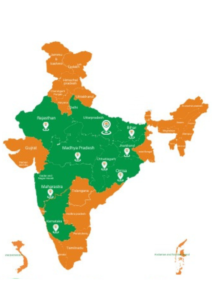
Over 50,000 happy customers across India.

Trusted by 50000+ Customers
Anya Green Energy is a leading solar company and Solar Energy service provider established in 2013. We are recognized by startup India and customer best choice award 2022.
Our Achievements :
Recognized by Startup India.
Purvanchal’s first solar company to operate exclusively with solar products.
Certified by well-known institutions such as MSME, IndiaMart, and Just Dial and many more.
Winner of the Best Customer Choice Award 2022.
Over 50,000 happy customers across India.