Non-DCR solar Panels in Commercial Solar: What the 31 December 2026 Deadline Means for Your Business

Commercial and industrial building owners across India are facing a major regulatory shift that could significantly alter the financial calculations for rooftop and ground-mounted solar projects. Under evolving guidelines from the Ministry of New and Renewable Energy, the window for using non DCR solar panels on commercial sites is rapidly closing, with a firm cutoff set for 31 December 2026.
This impending commercial solar panel deadline 2026 means that businesses planning solar installations over the next two years must make strategic choices about module procurement, capital expenditure, and installation timelines today.
Understanding how these regulatory shifts impact procurement strategies will help business leaders avoid unexpected cost increases, project delays, or compliance complications as the 31 December 2026 date approaches.
Understanding DCR and Domestic Content Requirements
To understand why this deadline matters, business owners first need to understand domestic content requirement solar rules and how they differentiate module types in the Indian market. Domestic Content Requirement regulations were introduced to encourage local manufacturing by mandating that both the solar cells and the assembled modules be produced within India.
Historically, DCR mandates applied primarily to government-subsidized programs and residential schemes, while commercial and industrial buyers enjoyed flexibility to procure non DCR solar panels. These non-DCR options frequently offered lower upfront capital costs because manufacturers could source solar cells from global supply chains.
The distinction between DCR vs non DCR solar panels has therefore been one of procurement flexibility versus local sourcing compliance, with C&I buyers leaning heavily toward non-DCR options to maximize return on investment.
As one commercial solar procurement strategist noted in a recent industry panel, “the commercial market built its financial models on global cell pricing for years, but domestic content requirement solar mandates are reshaping that playbook entirely.”
What Changes After 31 December 2026?
After the 31 December 2026 cutoff date, the regulatory exemption that allowed commercial installations to use imported modules or cells will effectively end. Projects commissioned after this commercial solar panel deadline 2026 will be required to strictly use DCR-compliant modules, fundamentally altering supply options for business buyers.
This transition means that non DCR solar panels will no longer be eligible for grid connection or net metering approvals in commercial site categories covered by the updated guidelines.
Furthermore, this commercial solar panel deadline 2026 will compress module demand toward domestic manufacturers, making early procurement planning essential for businesses wanting to secure favorable pricing before market demand shifts completely.
Ready to switch to Solar?
Solar solutions with Anya Green Energy and discover how you can reduce your electricity bills.
Contact UsDCR vs Non-DCR Solar Panels: Cost, Availability, and Efficiency
When evaluating DCR vs non DCR solar panels, commercial site owners must weigh capital expenditure against long-term operational performance. Non DCR solar panels have historically maintained a slight cost advantage because global cell manufacturers operate at massive economies of scale, driving down per-watt prices.
However, domestic cell and module manufacturing in India has advanced rapidly in both efficiency and capacity. The gap between DCR vs non DCR solar panels in terms of wattage output and technology options, such as TOPCon and Mono PERC, has narrowed significantly over recent years.
As domestic content requirement solar mandates expand across commercial sectors, Indian manufacturers are scaling up domestic cell lines to ensure that high-efficiency modules remain readily available for business buyers well before the deadline.
Quick Comparison: DCR vs Non-DCR Solar Modules for Commercial Sites
| Feature | DCR Compliant Modules | Non-DCR Modules |
|---|---|---|
| Solar Cell Origin | Manufactured in India | Imported (Global supply chain) |
| Module Assembly Origin | Assembled in India | Assembled in India or imported |
| Post-Dec 2026 Eligibility | Fully compliant for all C&I sites | Restricted or non-compliant |
| Current Upfront CAPEX | Slightly higher | Lower |
| Net Metering Approval Risk | Zero regulatory risk | High risk after 31 December 2026 |
How the ALMM Regulations Tie Into the 2026 Mandate
The Approved List of Models and Manufacturers plays a central role in enforcing these domestic sourcing rules. The ALMM list solar panels framework was established to ensure that only verified, high-quality modules from approved manufacturers can be used in grid-connected projects across India.
Under updated regulatory directions, ALMM list solar panels mandates are being progressively tightened to align with domestic content requirement solar goals.
This means that modules appearing on the ALMM list solar panels framework will increasingly require verified domestic cell sourcing, ensuring that non DCR solar panels are phased out in a structured, verifiable manner across all commercial sectors.
Why Commercial Project Timelines Need Adjustment Today
Developing a commercial solar project in India is rarely a overnight process. From initial feasibility studies and engineering design to vendor selection, net metering approvals, and final grid synchronization, a commercial project typically takes anywhere from four to nine months.
Because of this timeline, waiting until late 2026 to plan an installation around the commercial solar panel deadline 2026 carries severe operational risks. A project delayed by supply chain bottlenecks or administrative approvals could miss the 31 December 2026 commissioning cutoff.
If a commercial site project experiences delays and gets commissioned after the commercial solar panel deadline 2026, non DCR solar panels purchased for that site may be rejected during final inspection, forcing costly module replacements and project re-engineering.
Businesses should also factor in that ALMM list solar panels demand will spike as thousands of commercial site owners attempt to complete installations simultaneously during late 2026, potentially creating localized equipment shortages and installation delays.
Business Impact and ROI Considerations for C&I Solar
For business leaders, the decision between procuring non DCR solar panels today versus transitioning immediately to DCR modules comes down to financial modeling. Deploying non DCR solar panels before the 31 December 2026 cutoff allows commercial entities to lock in lower upfront hardware costs, resulting in a slightly faster payback period.
However, this financial advantage must be weighed against execution risk. Commercial site owners evaluating DCR vs non DCR solar panels must ensure that their EPC contractor guarantees project commissioning comfortably ahead of the regulatory cutoff.
Businesses that plan their installations early in 2025 or early 2026 can capture the CAPEX benefits of non DCR solar panels while maintaining a safe operational buffer against unexpected commissioning delays.
Additionally, as domestic content requirement solar rules take full effect, domestic module manufacturers are expanding capacity, which will help stabilize DCR module pricing over the long term, protecting commercial solar ROI even after the deadline passes.
Step-by-Step Action Plan for Commercial Site Owners
To navigate this regulatory transition smoothly, commercial building owners and industrial asset managers should follow a structured evaluation roadmap:
- Audit current power consumption — determine the exact plant capacity needed for your commercial facility.
- Evaluate installation timelines — establish whether your project can be fully commissioned at least three months before the commercial solar panel deadline 2026.
- Compare module options — run financial models evaluating DCR vs non DCR solar panels based on current market availability and pricing.
- Verify vendor compliance — ensure your EPC partner works exclusively with approved suppliers offering ALMM list solar panels.
- Lock in grid approval pathways — initiate net metering and local discom clearance paperwork as early as possible to prevent administrative delays.
- Include contractual safeguards — ensure supply contracts mandate module replacement at vendor cost if commissioning slips past the 31 December 2026 cutoff due to supplier delays.
Where Anya Green Energy Stands
At Anya Green Energy, we specialize in delivering high-performance rooftop and ground-mounted solar solutions tailored for commercial and industrial clients. We assist business owners in navigating evolving regulatory frameworks, ensuring that every project remains fully compliant while maximizing long-term financial returns.
Whether your organization aims to capitalize on non DCR solar panels before the 31 December 2026 cutoff or prefers to transition directly to DCR modules featuring ALMM list solar panels, our engineering team provides end-to-end support.
We monitor regulatory updates, including domestic content requirement solar changes and the approaching commercial solar panel deadline 2026, so our commercial partners can make confident, risk-free investments in clean energy.
Frequently Asked Questions
Q1: What is the main difference when comparing DCR vs non DCR solar panels for commercial sites?
A1: DCR solar panels use solar cells and modules manufactured entirely within India, making them compliant for all government and mandated sectors. Non DCR solar panels use imported cells or modules, offering lower upfront costs but facing regulatory cutoffs for commercial sites after 31 December 2026.
Q2: Why is 31 December 2026 an important date for commercial solar projects?
A2: This date marks the approaching commercial solar panel deadline 2026, after which non DCR solar panels will no longer be permitted for installation or grid connection on commercial and industrial sites under updated MNRE guidelines.
Q3: How does the ALMM list impact module selection for my business?
A3: The ALMM list solar panels directory specifies which manufacturers and module models are approved for grid-connected installations in India. Choosing modules from approved manufacturers is mandatory for securing net metering and discom approvals.
Q4: Can my business still install non DCR solar panels if we start the project in 2026?
A4: Yes, provided the project is fully installed, inspected, and commissioned before the commercial solar panel deadline 2026. Because commercial installations take several months to complete, projects should be initiated well in advance to avoid missing the cutoff.
Q5: What happens if our commercial installation gets delayed past 31 December 2026?
A5: If a commercial project using non-DCR modules fails to achieve commissioning before the deadline, it risks rejection during discom inspection, which may prevent net metering approval until non-compliant modules are replaced with DCR-compliant options meeting domestic content requirement solar rules.
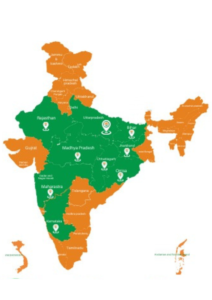
Trusted by 50000+ Customers
Anya Green Energy is a leading solar company and Solar Energy service provider established in 2013. We are recognized by startup India and customer best choice award 2022.
Our Achievements :
Recognized by Startup India.
Purvanchal’s first solar company to operate exclusively with solar products.
Certified by well-known institutions such as MSME, IndiaMart, and Just Dial and many more.
Winner of the Best Customer Choice Award 2022.
Over 50,000 happy customers across India.