
Pink Hydrogen Explained: How Nuclear Power Is Entering the Clean Hydrogen Race
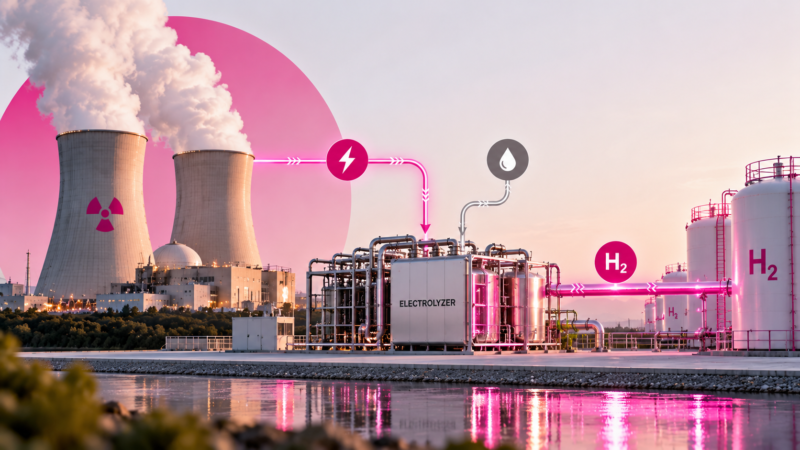
When most people think about clean hydrogen, solar and wind-powered electrolysis — known as green hydrogen — usually come to mind first. But there’s another low-carbon hydrogen category quietly gaining attention: pink hydrogen. Produced using nuclear power instead of renewables, pink hydrogen offers a different path to the same destination — clean, low-emission hydrogen fuel — and it’s becoming an increasingly important part of the global clean hydrogen conversation.
This blog breaks down what pink hydrogen actually is, how nuclear powered hydrogen production works, how the pink hydrogen vs green hydrogen comparison plays out in practice, where pink fits among the broader hydrogen colors explained framework, and the mechanics behind nuclear hydrogen electrolysis that make this approach technically distinct.
What Is Pink Hydrogen?
Pink hydrogen refers to hydrogen produced through electrolysis — splitting water into hydrogen and oxygen — using electricity generated by nuclear power plants rather than fossil fuels or renewable sources. Because nuclear power generates electricity with essentially zero direct carbon emissions, pink hydrogen qualifies as a low-carbon hydrogen category, similar in emissions profile to green hydrogen, despite using a completely different electricity source.
The term “pink” fits into a broader color-coding system the hydrogen industry uses to distinguish production methods. Understanding this system matters because not all hydrogen is created equal in terms of emissions, even though the finished product — hydrogen gas — is chemically identical regardless of how it was made.
Hydrogen Colors Explained: Where Pink Fits In
To understand pink hydrogen, it helps to see the full picture of hydrogen colors explained across the industry. Grey hydrogen, the most common form produced today, comes from natural gas through steam methane reforming, releasing significant carbon emissions in the process. Blue hydrogen uses the same natural gas process but captures and stores the resulting carbon emissions, reducing but not eliminating its carbon footprint. Green hydrogen is produced via electrolysis powered by renewable electricity — solar, wind, or hydro — making it the most widely discussed zero-emission option.
Pink hydrogen occupies its own distinct category within this hydrogen colors explained system: electrolysis powered specifically by nuclear electricity. Some industry definitions also use “purple” or “red” hydrogen interchangeably for nuclear-powered production, though pink hydrogen has become the more commonly adopted term in recent industry and policy discussions.
Nuclear Powered Hydrogen Production: How It Actually Works
Nuclear powered hydrogen production uses the same fundamental electrolysis process as green hydrogen — electricity splits water molecules into hydrogen and oxygen — but draws that electricity from a nuclear power plant instead of solar panels or wind turbines. This distinction matters less for the chemistry and more for the economics and reliability of the process.
Nuclear power plants generate electricity continuously, day and night, regardless of weather conditions — a stark contrast to the intermittent nature of solar and wind generation. This means nuclear powered hydrogen production can run electrolyzers at consistently high utilization rates around the clock, rather than only during sunny or windy periods, which has meaningful implications for the overall cost-efficiency of the hydrogen produced.
Ready to switch to Solar?
Solar solutions with Anya Green Energy and discover how you can reduce your electricity bills.
Contact UsNuclear Hydrogen Electrolysis: The Technical Advantage
Nuclear hydrogen electrolysis benefits from a specific technical advantage worth understanding: high-temperature electrolysis. Because nuclear plants also generate substantial waste heat as a byproduct of power generation, some nuclear hydrogen electrolysis approaches use this heat alongside electricity to improve the efficiency of splitting water molecules, a process known as high-temperature steam electrolysis.
This combined heat-and-power approach can make nuclear hydrogen electrolysis more energy-efficient than standard electrolysis methods that rely purely on electrical input, since part of the energy needed to split water is supplied directly as heat rather than being converted from electricity first — a conversion step that always loses some efficiency along the way.
Pink Hydrogen vs Green Hydrogen: The Real Comparison
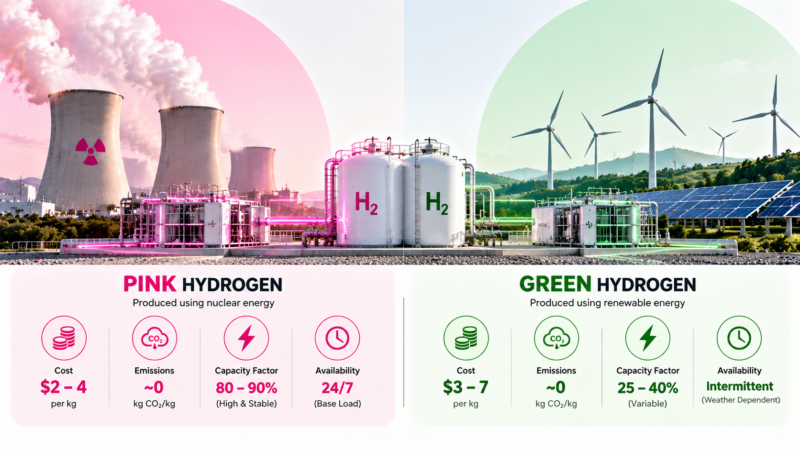
The pink hydrogen vs green hydrogen comparison often gets framed as a competition, but the more accurate framing is complementary pathways to the same low-carbon outcome. Both produce hydrogen with minimal direct emissions, and both rely on electrolysis as the core production method — the real differences lie in reliability, land use, and regional applicability.
Pink hydrogen benefits from nuclear power’s consistent, round-the-clock output, allowing electrolyzers to run at near-constant capacity. Green hydrogen, by contrast, depends on variable renewable generation, meaning electrolyzers may run at partial capacity during low-sun or low-wind periods unless paired with battery storage or grid electricity backup — which can complicate the pure “green” emissions claim.
On the other hand, green hydrogen benefits from the rapidly falling cost of solar and wind power, while nuclear power plants require enormous upfront capital investment and lengthy construction timelines, making pink hydrogen vs green hydrogen as much a question of national energy infrastructure and policy priorities as pure technology comparison.
| Factor | Pink Hydrogen | Green Hydrogen |
|---|---|---|
| Electricity Source | Nuclear power | Solar/wind/hydro |
| Output Consistency | Continuous, high utilization | Variable, weather-dependent |
| Emissions Profile | Low-carbon | Zero direct emissions |
| Capital Requirements | Very high (nuclear plant) | High but falling (renewables) |
| Best Suited Regions | Countries with existing nuclear infrastructure | Countries with strong solar/wind resources |
Why Some Countries Are Betting on Pink Hydrogen
Countries with substantial existing nuclear infrastructure — including France, Canada, South Korea, and Japan — have shown particular interest in pink hydrogen as a way to leverage their existing nuclear fleets for clean hydrogen production rather than building entirely new renewable capacity from scratch. For these nations, nuclear powered hydrogen production represents a way to extract additional value from existing nuclear assets while supporting national decarbonization and energy security goals.
This regional pattern is an important nuance in the pink hydrogen vs green hydrogen conversation — the “better” choice genuinely depends on what energy infrastructure a country already has in place, rather than one technology being universally superior to the other.
Challenges Facing Pink Hydrogen Adoption
Despite its advantages, pink hydrogen faces real adoption hurdles. Public perception of nuclear power remains mixed in many countries, and nuclear plant construction carries notoriously long timelines and high capital costs, often stretching a decade or more from approval to operation. This makes scaling nuclear powered hydrogen production a fundamentally slower proposition than adding incremental solar or wind capacity for green hydrogen.
Regulatory classification is another challenge — some policy frameworks and subsidy programs explicitly favor renewable-sourced hydrogen, meaning pink hydrogen may not always qualify for the same incentives or “green” labeling that renewable-based hydrogen receives, even though its emissions profile is comparably low. This classification gap is an active policy debate in several hydrogen-focused markets.
Where Pink Hydrogen Fits in India's Energy Strategy
India’s hydrogen strategy to date has focused predominantly on green hydrogen, leveraging the country’s abundant and increasingly affordable solar resources. Pink hydrogen has received comparatively less attention domestically, given that nuclear power represents a smaller share of India’s overall energy mix compared to countries like France. However, as India’s nuclear capacity expands under long-term energy diversification plans, nuclear powered hydrogen production could eventually become a complementary pathway alongside the country’s primary green hydrogen ambitions, particularly for applications requiring highly consistent, round-the-clock hydrogen supply.
Expert Perspective
As one nuclear energy policy analyst put it in a recent industry discussion, paraphrased here: pink hydrogen isn’t trying to replace green hydrogen — it’s filling a specific gap that intermittent renewables can’t easily cover, namely delivering hydrogen at consistently high production rates from a single, reliable electricity source, which matters enormously for industrial buyers who need predictable, continuous supply rather than variable output.
Conclusion
Pink hydrogen represents a genuinely important, if less publicized, pathway in the broader clean hydrogen landscape. By using nuclear power instead of renewables for electrolysis, nuclear powered hydrogen production offers a low-carbon alternative with the distinct advantage of continuous, weather-independent output. Understanding the pink hydrogen vs green hydrogen comparison — and where each fits within the broader hydrogen colors explained framework — helps clarify that the clean hydrogen transition isn’t a single-technology race, but a portfolio of complementary approaches shaped by each country’s existing energy infrastructure. As nuclear hydrogen electrolysis technology continues to mature, pink hydrogen is likely to play a growing, if regionally concentrated, role in the global shift toward low-carbon fuel production
FAQs
Q1: What exactly is pink hydrogen?
A: Pink hydrogen is hydrogen produced through electrolysis powered by nuclear electricity, resulting in a low-carbon hydrogen output similar in emissions profile to green hydrogen.
Q2: Is pink hydrogen as clean as green hydrogen?
A: Both produce hydrogen with minimal direct emissions, since nuclear and renewable electricity are both low-carbon sources — the main differences lie in reliability and regional applicability, not emissions.
Q3: Why do some countries prefer pink hydrogen over green hydrogen?
A: Countries with substantial existing nuclear infrastructure, like France and South Korea, can leverage that existing capacity for consistent, round-the-clock hydrogen production without building entirely new renewable capacity.
Q4: Does pink hydrogen qualify for the same subsidies as green hydrogen?
A: Not always — some policy frameworks specifically favor renewable-sourced hydrogen, meaning pink hydrogen may face different or more limited incentive eligibility depending on the region.
Q5: Is pink hydrogen relevant to India’s hydrogen strategy?
A: Currently less so, since India’s hydrogen strategy focuses primarily on green hydrogen given its strong solar resources, though nuclear powered hydrogen production could become more relevant as India’s nuclear capacity expands.

Trusted by 50000+ Customers
Anya Green Energy is a leading solar company and Solar Energy service provider established in 2013. We are recognized by startup India and customer best choice award 2022.
Our Achievements :
Recognized by Startup India.
Purvanchal’s first solar company to operate exclusively with solar products.
Certified by well-known institutions such as MSME, IndiaMart, and Just Dial and many more.
Winner of the Best Customer Choice Award 2022.
Over 50,000 happy customers across India.