Solar Energy Explained: How Harnessing the Sun Can Save Our Planet (2026)
Every single hour, the sun sends enough radiation toward the Earth to power the entire planet for a full year. Sit with that for a moment. We are surrounded by an almost limitless source of power, yet most of us still rely on coal, oil, and gas to light our homes and run our cities. This is exactly why solar energy has become one of the most talked-about topics of this decade — not just among scientists and policymakers, but among ordinary families who are tired of rising electricity bills and worried about the future of the planet.
In this guide, we’ll break down what this technology really is, how it works, why it matters for the environment, and how you and your community can start using it today. Whether you’re a homeowner curious about rooftop panels, a student researching sustainable power, or someone who simply wants to understand the sector better, this article is written for you.
What Is Solar Energy?
Solar energy is the radiant light and heat that comes from the sun. Humans have harvested this natural resource for thousands of years, but it’s only in the last few decades that we’ve developed the technology to convert it into usable electricity and heat on a large scale. Today, it is one of the fastest-growing sources of power in the world, and it sits at the heart of the global shift toward cleaner, greener living.
Unlike fossil fuels, which take millions of years to form and release harmful emissions when burned, this resource is abundant and, once the equipment is installed, essentially free to use. That’s why so many households, businesses, and even entire cities are turning to the sun to reduce their dependence on the traditional electricity grid.
Harnessing sunlight generally happens through two main methods:
- Photovoltaic (PV) technology — This is what most people picture when they think of solar panels. PV cells, usually made of silicon, absorb sunlight and convert it directly into electricity.
- Solar thermal technology — This method captures heat from the sun to warm water or air, commonly used for home heating systems and large-scale power plants.
Both approaches fall under the broader umbrella of renewable energy because they don’t burn fuel or release carbon dioxide during operation.
How Does It Actually Work?
To really appreciate how it works, it helps to understand the science behind it — don’t worry, we’ll keep it simple.
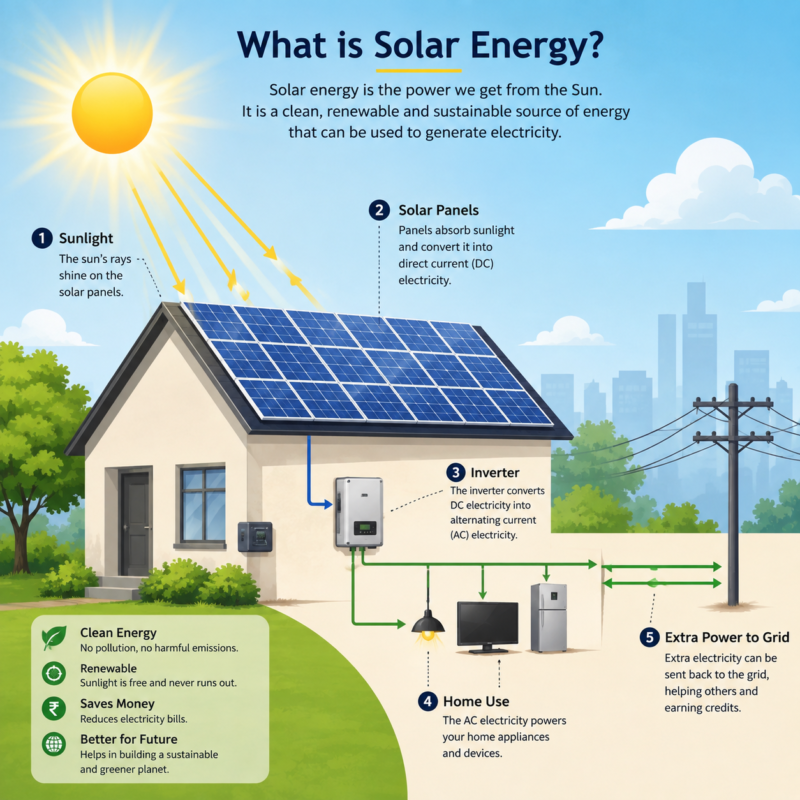
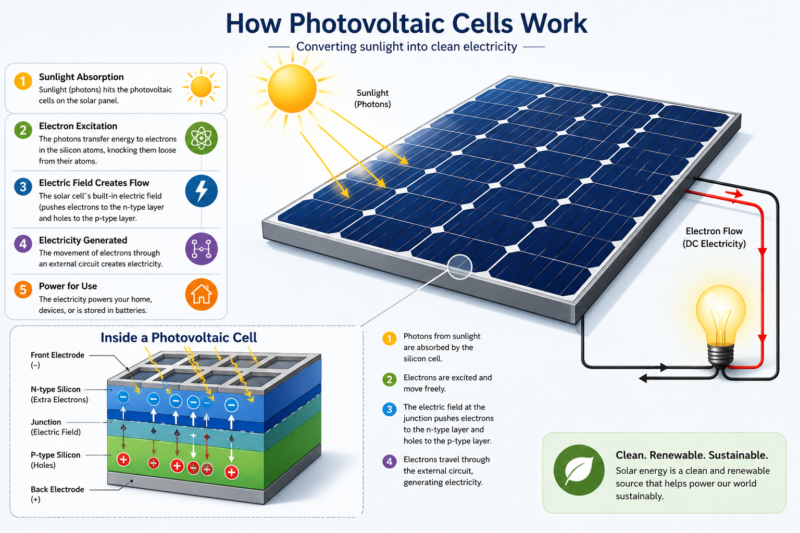
Solar panels are made up of many small units called photovoltaic cells. When sunlight hits these cells, it excites electrons inside the silicon material, creating an electric current — a reaction known as the “photovoltaic effect.” The direct current (DC) produced is then passed through an inverter, which converts it into alternating current (AC), the type of electricity that powers our homes and appliances.
Here’s a simple breakdown of the process:
- Sunlight hits the panels installed on a rooftop or open field.
- The cells convert that sunlight into DC electricity through the photovoltaic effect.
- An inverter changes DC into usable AC electricity so it can run homes and businesses.
- Any surplus is stored in batteries or sent back to the grid, often earning credits through net metering programs.
This entire system, when scaled up, is what makes the sun such a practical replacement for coal and gas-based electricity. And because sunlight itself is free, the only real cost is the upfront installation of panels and related equipment — a cost that continues to fall every year.
The Rise of the Solar Sector: Why 2026 Is a Turning Point
The solar sector has seen explosive growth over the past few years, and 2026 is shaping up to be one of its biggest yet. Industry experts note that global installations are expected to climb significantly this year, as more countries push toward net-zero targets and businesses look for ways to protect themselves from volatile power prices.
A few key developments are driving this momentum:
- Falling costs: Panel prices have dropped dramatically since 2010, making this technology accessible to far more households and small businesses than ever before.
- Bifacial panels: Newer designs can now capture sunlight from both sides, significantly boosting output for the same amount of space.
- AI-powered management: Smart systems now help homes and businesses optimize how they use their generated power, analyzing weather patterns and demand in real time.
- Solar carports and community farms: Businesses and neighborhoods with limited rooftop space are turning parking lots and shared land into small power stations.
- Better battery storage: Advances in storage technology mean power can now be banked and used even after the sun goes down, solving one of the industry’s biggest historical limitations.
This rapid innovation across the sector is exactly why awareness matters right now. The more people understand this technology and how accessible it has become, the faster our communities can move away from fossil fuels.
Why Solar Energy Matters for Our Environment
Climate change is no longer a distant threat — it’s something we see and feel through extreme heatwaves, unpredictable rainfall, and shrinking natural resources. This resource offers one of the most practical, scalable solutions to slow this down.
Here’s why the sun’s power is such a valuable tool for protecting our surroundings:
1. Zero Emissions During Operation
Once installed, rooftop systems produce electricity without releasing carbon dioxide or other harmful pollutants. This is a stark contrast to coal and gas plants, which are major contributors to air pollution and global warming.
2. Reduces Dependence on Fossil Fuels
Every home or business that switches to the sun is one less consumer relying on coal, oil, or natural gas. On a large scale, this shift can dramatically shrink a region’s carbon footprint.
3. Conserves Water Resources
Traditional power plants use enormous amounts of water for cooling. Photovoltaic systems, by comparison, use very little water, making them a far more sustainable choice in regions facing scarcity.
4. Reduces Air and Noise Pollution
Rooftop and ground-mounted arrays operate silently and don’t emit smoke, soot, or toxic gases, improving air quality in the communities where they’re installed.
5. Protects Biodiversity
By reducing our reliance on mining and drilling for fossil fuels, this shift helps protect natural habitats and reduces the long-term damage caused by resource extraction.
When you add all of this up, it becomes clear that widespread adoption of solar power isn’t just a personal financial decision — it’s a collective environmental responsibility.
The Benefits of Going Solar for Homes and Communities
Beyond the environmental impact, there are very real, practical perks that make this worth considering for your own home or neighborhood.
- Lower electricity bills: Once your solar panels are installed, your dependence on the grid — and your monthly bill — drops significantly.
- Energy independence: Generating your own supply gives households and businesses more control over their electricity, reducing vulnerability to blackouts and price hikes.
- Increased property value: Homes equipped with rooftop systems often sell at a premium compared to those without.
- Job creation: The growing sector is creating thousands of new roles in manufacturing, installation, and maintenance.
- Community resilience: Neighborhoods that invest in shared projects or community solar farms build stronger local energy security, especially during natural disasters or grid failures.
This is where community matters most. Going solar isn’t only about individual households — it’s about entire towns and cities working together to shrink their environmental footprint. Community programs, where a shared farm powers multiple homes, are becoming a popular way for renters and apartment dwellers who can’t install panels on their own roof to still benefit from a cleaner power supply.
The Economics: What Does Going Solar Actually Cost?
One of the biggest questions people have before making the switch is simple: what’s this actually going to cost me? The honest answer is that it depends on your location, your household’s energy usage, the size of the system you need, and any local subsidies or rebates available in your area. That said, a few general truths hold across most markets today.
First, the cost of panels and related hardware has fallen dramatically over the past 15 years — by some estimates, prices have dropped by roughly 80% since 2010. This is largely thanks to manufacturing improvements, economies of scale, and fierce competition among global panel producers. Second, most systems pay for themselves over time through reduced electricity bills, typically within five to ten years, depending on local electricity rates and how much sunlight your region gets. After that break-even point, the electricity your system generates is essentially free for the remaining lifespan of the equipment, which is often 25 years or more.
Financing has also become far more flexible. Many installers now offer leasing arrangements, power purchase agreements, and low-interest loans, meaning homeowners don’t always need a large upfront payment to get started. Governments in many countries also offer tax credits, rebates, or accelerated depreciation for businesses, which can shave a significant percentage off the total installation cost. Before signing any contract, it’s worth comparing at least three quotes, checking installer certifications, and reading the fine print on warranties for both the panels and the inverter, since these components often have different coverage periods.
It’s also worth factoring in the “soft costs” — permitting, inspection, and grid connection fees — which can vary widely by city or state. A reputable installer should walk you through all of these details upfront so there are no surprises once installation begins.
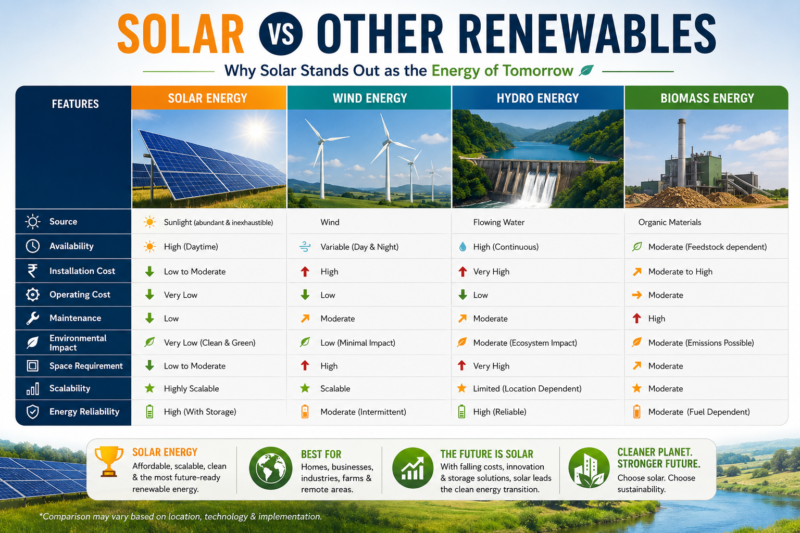
Solar Power vs. Other Renewable Energy Sources
This resource is just one piece of the larger renewable energy puzzle, which also includes wind, hydro, geothermal, and biomass. So how does harnessing sunlight compare?
- Sun vs. Wind: Wind farms require specific geographic conditions, like consistent wind speeds, while sunlight can be harvested almost anywhere, making it more versatile for residential use.
- Sun vs. Hydro: Hydropower requires large infrastructure like dams, which can disrupt ecosystems. Rooftop systems, in contrast, can be installed with minimal environmental disruption.
- Sun vs. Geothermal: Geothermal power is strong but location-dependent, typically limited to areas with volcanic or tectonic activity, while sunlight has no such geographic restriction.
While each renewable energy source has its place in a balanced grid, this one stands out for its accessibility, scalability, and rapidly falling costs — which is exactly why it’s leading the broader clean energy movement worldwide.
Common Myths About Solar Energy (Debunked)
Despite its growing popularity, several myths still hold people back from adopting this technology. Let’s clear a few of them up.
Myth 1: “Panels don’t work on cloudy days.” False. Solar panels still generate electricity in cloudy or overcast conditions — just at a reduced efficiency compared to direct sunlight.
Myth 2: “It’s too expensive.” While there is an upfront cost, prices have fallen dramatically over the past decade, and many governments offer subsidies, tax credits, or financing options that make going solar far more affordable than most people assume.
Myth 3: “Panels require constant maintenance.” In reality, a rooftop system needs very little upkeep — occasional cleaning and an annual inspection are usually enough to keep it running efficiently for 25-plus years.
Myth 4: “It can’t power an entire home.” With the right system size and battery storage, this energy source can absolutely meet most or all of a household’s needs, especially when paired with efficient appliances.
Clearing up these misconceptions is a crucial part of building awareness — because informed communities make faster, better decisions about adopting clean energy.
How You Can Get Started with Solar Power
If you’re inspired to bring this technology into your own life, here are some practical steps to get started:
- Assess your energy needs — Look at your monthly electricity bills to understand how much power you typically use.
- Evaluate your roof or property — Check how much direct sunlight your space receives throughout the day.
- Get quotes from certified installers — Compare pricing, warranties, and panel efficiency ratings.
- Look into local incentives — Many regions offer rebates, tax credits, or net metering programs that make the switch significantly more affordable.
- Consider community options — If installing panels isn’t possible at your home, look for shared programs in your area.
- Start small if needed — Solar-powered chargers, garden lights, or small backup kits are a great way to experience the benefits of this technology before committing to a full installation.
Every step you take toward making this switch, no matter how small, contributes to a larger movement toward a cleaner, more sustainable future.
Building a Community Around Solar Energy Awareness
One of the most powerful things about this movement is that it thrives on community action. Here’s how you can help spread awareness and encourage others to consider a cleaner alternative:
- Talk about it: Share your own experience with rooftop panels or renewable energy with friends, family, and neighbors.
- Support local initiatives: Attend town hall meetings or community events focused on sustainable power adoption.
- Educate the next generation: Encourage schools to include lessons about the sun’s power and environmental responsibility in their curriculum.
- Use social media: Share credible facts and success stories about going solar to help normalize the shift toward clean energy.
- Advocate for policy support: Encourage local leaders to invest in community projects, especially in underserved neighborhoods.
Environmental change happens fastest when it’s a shared effort. The more people understand and talk about this topic, the more normalized and accessible it becomes for everyone — not just those who can afford it individually.
The Future of Solar Energy
Looking ahead, the sector shows no signs of slowing down. Emerging innovations like flexible panels, transparent solar glass for windows, and floating farms on lakes and reservoirs are pushing the boundaries of where and how we can capture the sun’s power. Meanwhile, improvements in battery storage are solving one of the technology’s biggest historical limitations — what happens when the sun isn’t shining.
As more countries commit to net-zero emissions goals, this technology is expected to play a central role in the global clean energy mix. Analysts anticipate continued double-digit growth in installations over the coming years, driven by falling costs, supportive government policies, and rising public awareness.
The bottom line? This isn’t a passing trend — it’s becoming the backbone of how we’ll power our homes, businesses, and cities for decades to come.
Frequently Asked Questions About Solar Energy
Q: Is solar energy really renewable? Yes. It comes from the sun, a resource that will continue to shine for billions of years, making it one of the most reliable forms of renewable energy available.
Q: How long do solar panels last? Most come with a 25-to-30-year warranty and can continue producing electricity, at a slightly reduced efficiency, well beyond that timeframe.
Q: Can solar power fully replace fossil fuels? While it alone may not replace every energy source, it is a critical part of a diversified clean energy mix that, alongside wind, hydro, and battery storage, can significantly reduce our dependence on fossil fuels.
Q: Is this good for the environment? Absolutely. It produces no emissions during operation, conserves water, and reduces air pollution, making it one of the most environmentally friendly power sources available today.
Q: What’s the difference between solar power and solar energy? Solar energy refers to the raw energy from the sun, while solar power typically refers to the electricity generated after that energy is converted using solar panels or other technology.
A Snapshot of Global Progress
Around the world, entire regions are proving just how far this shift has come. Countries with strong sunlight exposure have started generating a significant share of their daytime electricity needs from rooftop and utility-scale installations, sometimes covering demand almost entirely during peak sunlight hours. Island nations that once relied heavily on imported diesel fuel are now pairing rooftop systems with battery storage to cut fuel costs and improve reliability during storms. In agricultural regions, farmers are experimenting with “agrivoltaics” — installing elevated panel arrays above crops, which provide partial shade that can actually improve certain crop yields while generating power on the same land.
Cities are getting creative too. Municipal governments are mandating that new commercial buildings include rooftop generation capacity, transit agencies are electrifying bus fleets and charging them with on-site arrays, and school districts are installing systems on gymnasium roofs to offset energy costs while teaching students about sustainability in real time. None of this happens overnight, and there are still real challenges — permitting delays, grid capacity limits, and the need for skilled installers chief among them. But the trajectory is unmistakable: more panels, more storage, and more communities choosing to generate their own power.
Final Thoughts: Every Panel Powers a Better Future
Solar energy represents more than just a technological upgrade to how we generate electricity — it represents a shift in how we think about our relationship with the planet. Every rooftop system installed, every household that switches to the sun, and every community that embraces clean energy is a small but meaningful step toward a healthier environment for future generations.
The sector is growing faster than ever, prices are falling, technology is improving, and awareness is spreading. Now is the time to learn, talk, and act. Whether you install panels on your own roof, support a community project, or simply share what you’ve learned with someone else, you’re contributing to a movement that matters.
The sun isn’t going anywhere. It’s time we made better use of it.
Found this guide helpful? Share it with someone who cares about the environment, and let’s build a community that champions solar energy, one rooftop at a time.
Connect us on



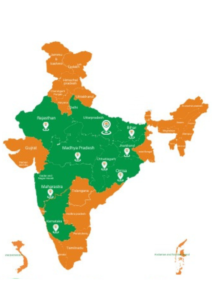
Trusted by 50000+ Customers
Anya Green Energy is a leading solar company and Solar Energy service provider established in 2013. We are recognized by startup India and customer best choice award 2022.
Our Achievements :
Recognized by Startup India.
Purvanchal’s first solar company to operate exclusively with solar products.
Certified by well-known institutions such as MSME, IndiaMart, and Just Dial and many more.
Winner of the Best Customer Choice Award 2022.
Over 50,000 happy customers across India.