Solar Financing Options in 2026: Loans, EMIs, and Subsidy Explained
Upfront cost has always been the biggest barrier to going solar — but in 2026, that barrier has largely dissolved thanks to a wide range of solar financing options in 2026 now available to Indian homeowners and businesses. The real challenge today isn’t affordability, it’s understanding which financing structure actually fits your situation.
This guide breaks down every major category of solar financing options in 2026, including loan interest rates, EMI plans, zero down payment schemes, and how these combine with subsidy programs — using current 2026 figures, not outdated data from previous years.
Why Solar Financing Looks Different in 2026
The financing landscape for solar has evolved significantly heading into 2026. Where homeowners previously had to choose between paying entirely upfront or taking a generic personal loan, solar financing options in 2026 now include dedicated solar loan products, manufacturer-backed EMI plans, and bank partnerships specifically structured around rooftop solar installations.
This shift matters because dedicated solar financing options in 2026 typically come with better terms than generic consumer loans — lower interest rates, longer repayment tenures, and in some cases, interest subsidies tied to government clean energy priorities. Understanding these options properly can mean the difference between a financing structure that strains your monthly budget and one that pays for itself seamlessly through bill savings.
Ready to switch to Solar?
solar solutions with Anya Green Energy and discover how you can reduce your electricity bills.
Contact UsOverview: The Main Categories of Solar Financing in 2026
Before diving into specifics, here’s a snapshot of the major solar financing options in 2026 available to most households and businesses:
- Solar-specific bank loans with dedicated interest rates
- Manufacturer/installer EMI plans bundled directly into the purchase
- Zero down payment solar schemes requiring no upfront cost
- Government subsidy combined with partial financing
- Commercial financing structures for businesses (leasing, PPA models)
Each of these solar financing options in 2026 serves a different financial profile, and understanding the trade-offs between them is essential before signing any agreement.
Solar Loan Interest Rates in 2026: What to Expect
Solar loan interest rates in 2026 have continued trending favorably compared to previous years, as banks increasingly treat rooftop solar as a priority lending category under green financing initiatives. Dedicated solar loans in 2026 generally carry lower solar loan interest rates than standard personal loans, since lenders view solar installations as asset-backed investments with predictable, income-generating value (through bill savings) rather than pure consumption lending.
When comparing solar loan interest rates across lenders in 2026, pay attention to:
- Processing fees — some lenders waive these for solar-specific products
- Tenure flexibility — longer tenures reduce monthly EMI burden but increase total interest paid
- Prepayment penalties — important if you plan to pay off the loan early using bill savings
- Subsidy-adjusted loan amounts — confirm whether the loan covers pre- or post-subsidy system cost
Shopping around for competitive solar loan interest rates in 2026 is worth the effort, since even a 1-2% difference in rate can meaningfully affect total repayment cost over a 5-7 year loan tenure.
Solar EMI Plans: Spreading Cost Without a Traditional Loan
Many installers and manufacturers now offer solar EMI plans directly, bundled into the purchase process without requiring a separate bank loan application. These solar EMI plans are often structured in partnership with NBFCs (Non-Banking Financial Companies) and can be approved faster than traditional bank loans, making them attractive for homeowners wanting to move quickly.
The appeal of solar EMI plans in 2026 lies in convenience — a single application process covering both the system purchase and financing, often with minimal documentation compared to traditional loans. However, it’s important to compare the effective interest rate embedded in solar EMI plans against standalone solar loan interest rates, since bundled financing isn’t always the cheapest option even when it’s the most convenient.
Zero Down Payment Solar: Is It Really Possible?
Among the most searched solar financing options in 2026 is zero down payment solar — and yes, it’s a genuinely available option for qualifying homeowners in 2026, though it comes with important caveats.
Zero down payment solar schemes typically work by financing 100% of the post-subsidy system cost through a loan or EMI structure, meaning you pay nothing upfront but begin EMI payments immediately. The appeal is obvious: no large upfront cash outlay required. However, zero down payment solar plans generally come with slightly higher solar loan interest rates to offset the lender’s increased risk, and total interest paid over the loan tenure is higher than financing structures involving a partial down payment.
For homeowners with limited upfront savings but stable monthly income, zero down payment solar can still make strong financial sense in 2026, since monthly EMI payments are often comparable to or lower than the electricity bill savings the system generates — effectively making the system self-funding from day one.
Solar Subsidy and Financing: How They Work Together
Perhaps the most important concept in solar financing options in 2026 is understanding how subsidy and financing interact. Solar subsidy and financing aren’t separate, competing paths — they’re designed to work together.
Here’s how it typically works in 2026: you apply for the central and state solar subsidy and financing combination through your installer, who structures the loan or EMI amount around the post-subsidy cost rather than the full system price. This means your financed amount — and therefore your EMI — is calculated on a meaningfully lower base once subsidy is factored in.
Critically, solar subsidy and financing timelines need to be coordinated carefully. Subsidy disbursement can take weeks to months depending on your state’s processing speed, and some financing structures require bridge financing to cover the gap between installation and subsidy disbursement. Always confirm with your installer exactly how solar subsidy and financing are sequenced in your specific agreement.
Comparing Solar Financing Options in 2026
| Financing Option | Upfront Cost | Relative Interest Rate | Best For |
|---|---|---|---|
| Solar-specific bank loan | Low (partial down payment) | Lowest | Buyers who can manage some upfront cost |
| Manufacturer/installer EMI | Low to none | Moderate | Buyers wanting fast, bundled approval |
| Zero down payment solar | None | Highest | Buyers with limited savings, stable income |
| Subsidy + partial financing | Lowest effective cost | Varies | Most residential buyers (default recommended path) |
| Commercial leasing/PPA | None (business only) | N/A (fixed payment structure) | Businesses preferring operating expense model |
Commercial Solar Financing in 2026
For businesses, solar financing options in 2026 extend beyond loans and EMIs into leasing and Power Purchase Agreement (PPA) models, where a third party owns and maintains the system while the business simply pays for the electricity generated at a pre-agreed rate — often lower than grid tariffs. This structure requires no capital investment at all and keeps solar off the business’s balance sheet, making it an increasingly popular financing route in 2026 for businesses prioritizing cash flow over asset ownership.
Combined with accelerated depreciation benefits still available for businesses that do choose to own their systems, commercial solar financing options in 2026 offer meaningfully more flexibility than residential financing structures.
How to Choose the Right Financing Option in 2026
Here’s a practical framework for navigating solar financing options in 2026:
- Calculate your available upfront savings — this immediately narrows your realistic options
- Compare solar loan interest rates across at least 2-3 lenders, not just your installer’s recommended partner
- Confirm whether subsidy is applied before or after loan calculation — this significantly affects your real EMI
- Evaluate zero down payment solar only if your monthly EMI is comfortably covered by projected bill savings
- For businesses, compare ownership (loan/EMI with depreciation benefits) against leasing/PPA models based on balance sheet preferences
As one green finance analyst noted in a 2026 industry briefing: “The biggest mistake buyers make isn’t choosing the wrong financing option — it’s not comparing options at all, and simply accepting whatever the installer bundles by default.” That single habit shift — comparing rather than accepting — is often what separates a good financing decision from an expensive one.
Common Mistakes When Financing Solar in 2026
- Not comparing solar loan interest rates across multiple lenders before signing
- Ignoring processing fees and prepayment penalties buried in loan terms
- Confusing pre-subsidy and post-subsidy loan amounts, leading to miscalculated EMI expectations
- Choosing zero down payment solar without confirming EMI affordability against actual bill savings
- Overlooking commercial leasing/PPA options when evaluating business installations
Avoiding these mistakes ensures your chosen solar financing options in 2026 actually deliver the value they promise, rather than creating unexpected financial strain.
Final Thoughts: Making Solar Financing Work for You in 2026
The range of solar financing options in 2026 has made solar more accessible than ever — but accessibility only translates into genuine value when you understand how solar loan interest rates, solar EMI plans, zero down payment solar, and solar subsidy and financing actually interact with each other.
Rather than defaulting to whatever your installer offers first, take the time to compare structures based on your specific cash flow, savings, and long-term goals. The right solar financing options in 2026 should make your solar system effectively pay for itself through bill savings — not create new financial pressure.
Anya Green Energy offers free consultations in 2026 that walk through every available financing path — comparing loan rates, EMI structures, and subsidy coordination — so you can choose with complete clarity rather than guesswork.
FAQ Section
Q1: What are the main solar financing options in 2026?
The main solar financing options in 2026 include solar-specific bank loans, manufacturer/installer EMI plans, zero down payment schemes, subsidy-combined financing, and commercial leasing/PPA models for businesses.
Q2: What are typical solar loan interest rates in 2026?
Solar loan interest rates in 2026 are generally lower than standard personal loans, as banks treat solar as a priority green financing category — always compare rates across at least 2-3 lenders before committing.
Q3: Is zero down payment solar a good idea in 2026?
Zero down payment solar can be a strong option in 2026 if your monthly EMI is comfortably covered by projected electricity bill savings, though it typically carries a higher interest rate than financing with a partial down payment.
Q4: How do solar subsidy and financing work together in 2026?
Solar subsidy and financing are designed to work together — your loan or EMI amount is typically calculated on the post-subsidy system cost, reducing your effective financed amount and monthly payment.
Q5: Are solar EMI plans better than taking a separate bank loan?
Solar EMI plans offer convenience through bundled approval, but it’s important to compare their effective interest rate against standalone solar loan interest rates, since bundled financing isn’t always the cheapest option.
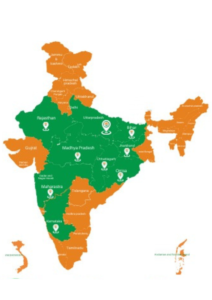
Trusted by 50000+ Customers
Anya Green Energy is a leading solar company and Solar Energy service provider established in 2013. We are recognized by startup India and customer best choice award 2022.
Our Achievements :
Recognized by Startup India.
Purvanchal’s first solar company to operate exclusively with solar products.
Certified by well-known institutions such as MSME, IndiaMart, and Just Dial and many more.
Winner of the Best Customer Choice Award 2022.
Over 50,000 happy customers across India.