Solid State Batteries — Hype vs Reality
Few technologies in the energy and automotive world have generated as much excitement — and as much confusion — as solid state batteries. Headlines regularly promise “revolutionary” EVs with 1,000-kilometer range, 10-minute charging, and zero fire risk, while skeptics counter that the technology is perpetually “five years away” and may never reach mass-market scale.
The truth, as usual, sits somewhere in between. This blog cuts through the noise around solid state batteries by examining what solid state battery technology actually delivers in practice, how solid state batteries vs lithium ion really compare on the metrics that matter, where solid state battery commercialization genuinely stands today, and what the most significant solid state battery challenges still are — giving you a clear-eyed picture of where the hype ends and the reality begins.
What Are Solid State Batteries, Exactly?
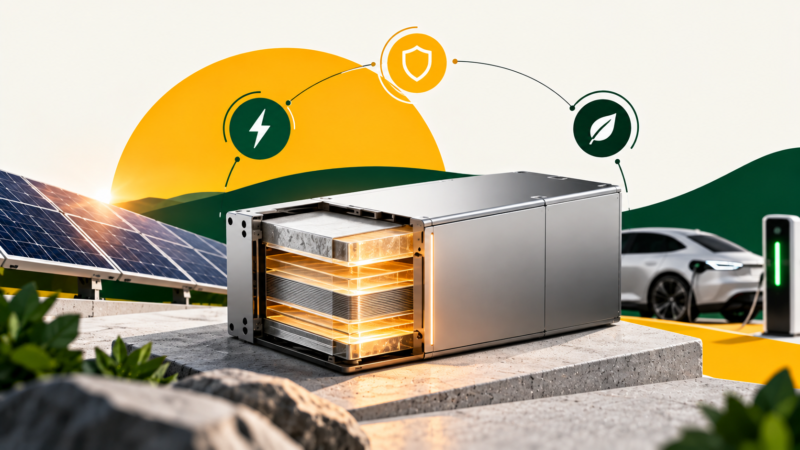
Before evaluating the hype, it’s worth understanding what solid state batteries actually are. Traditional lithium-ion batteries use a liquid electrolyte to move ions between the anode and cathode. Solid state battery technology replaces that liquid electrolyte with a solid material — typically a ceramic, glass, or polymer compound — which fundamentally changes how the battery operates.
This single design shift is what drives most of the claimed advantages: higher energy density (more power in the same volume), improved safety (no flammable liquid electrolyte), and potentially faster charging. These aren’t marketing fantasies — they’re real physics advantages that solid state battery technology genuinely offers over conventional lithium-ion designs.
The Hype: What Solid State Batteries Promise
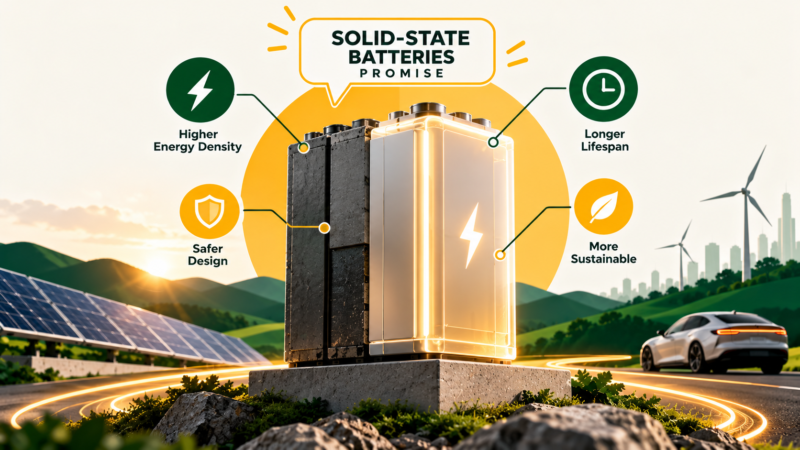
The excitement around solid state batteries isn’t baseless. The technology promises several genuine breakthroughs that would meaningfully reshape electric vehicles, consumer electronics, and grid storage:
Dramatically higher energy density — potentially 2-3x more energy stored in the same volume compared to current lithium-ion cells, which translates directly into longer EV range without heavier battery packs.
Near-elimination of fire risk — since there’s no flammable liquid electrolyte, thermal runaway events (the cause of most EV battery fires) become far less likely, a safety advantage that’s difficult to overstate.
Faster charging times — solid electrolytes can theoretically handle higher charge rates without the degradation issues that limit current lithium-ion charging speeds.
Longer lifespan — early lab results suggest solid state battery technology can endure more charge-discharge cycles before meaningful capacity loss, potentially extending battery life well beyond current 8-10 year expectations.
These promises are why solid state batteries regularly dominate headlines and why major automakers have invested billions in development partnerships. The potential is real.
Ready to switch to Solar?
solar solutions with Anya Green Energy and discover how you can reduce your electricity bills.
Contact UsThe Reality: Where Solid State Batteries Actually Stand
Here’s where the conversation needs grounding. As of 2026, solid state batteries remain largely in the pilot production and early commercialization phase — not mass-market deployment. A handful of manufacturers have announced limited production runs or niche applications (premium EVs, specialized electronics), but widespread availability at scale is still years away for most consumers.
The gap between lab performance and factory-floor reality is where solid state battery challenges become most apparent. Manufacturing solid state battery technology at scale requires solving problems that don’t exist in conventional lithium-ion production: maintaining uniform solid electrolyte layers, preventing microscopic cracks during cycling, and achieving consistent quality across millions of cells — all at a cost that can compete with the highly optimized, decades-mature lithium-ion supply chain.
Solid State Batteries vs Lithium Ion: The Honest Comparison
When comparing solid state batteries vs lithium ion, it’s important to distinguish between theoretical advantages and currently available performance. On paper, solid state batteries vs lithium ion looks like a clear win for solid state across nearly every metric — energy density, safety, charging speed, lifespan.
In practice, though, the comparison is more nuanced. Current lithium-ion technology has benefited from thirty years of manufacturing optimization, cost reduction, and supply chain scaling. Solid state battery technology, by contrast, is still working through early production challenges that keep costs high and yields lower than established lithium-ion lines.
| Factor | Lithium-Ion (Current) | Solid State (2026 Status) |
|---|---|---|
| Energy Density | High (mature) | Higher potential (early stage) |
| Safety | Good (with management systems) | Theoretically much better |
| Manufacturing Maturity | Highly optimized | Early pilot/limited production |
| Cost per kWh | Low and falling | Significantly higher |
| Availability | Mass market | Limited/niche applications |
| Charging Speed | Good (improving) | Theoretically faster |
Solid State Battery Commercialization: Where Things Actually Are
Solid state battery commercialization has progressed further than many skeptics predicted five years ago, but it hasn’t reached the “any month now” readiness that some headlines suggest. Several major players — including Toyota, Samsung SDI, QuantumScape, and Solid Power — have moved from pure R&D into pilot production phases, with some announcing target dates for initial commercial deployment in the late 2020s.
However, solid state battery commercialization at meaningful scale requires more than just working prototypes. It requires manufacturing lines capable of producing millions of cells consistently, supply chains for specialized solid electrolyte materials, and cost structures that can compete with lithium-ion’s established economics. These are engineering and industrial challenges, not scientific ones — which means they’re solvable, but they take time and capital to resolve.
Illustrative industry estimates (to be verified against current company announcements) suggest initial commercial solid state battery technology deployments will likely appear first in premium EV segments or specialized applications where cost sensitivity is lower, before gradually trickling down to mass-market vehicles and consumer electronics through the 2030s.
Solid State Battery Challenges: What's Still in the Way
To give an honest picture, solid state battery challenges remain substantial enough that anyone promising imminent mass-market availability should be viewed skeptically. The most significant hurdles include:
Manufacturing complexity — Producing uniform, defect-free solid electrolyte layers at scale is fundamentally harder than filling cells with liquid electrolyte. Even microscopic imperfections can cause performance issues or failure over time.
Material costs — Many promising solid state battery technology approaches rely on specialized ceramics or other materials that are currently more expensive than the commodity chemicals used in lithium-ion production.
Interface stability — The boundary between the solid electrolyte and the electrodes can degrade during cycling, creating resistance that reduces performance — a problem that doesn’t exist in the same way with liquid electrolytes that naturally conform to electrode surfaces.
Scaling from lab to factory — Many solid state battery challenges are essentially manufacturing challenges: taking a process that works beautifully in a controlled lab environment and making it work reliably across millions of cells produced per day at competitive cost.
These aren’t showstoppers — they’re engineering problems being actively worked on by well-funded teams worldwide. But they do explain why solid state battery commercialization is measured in years, not months.
Who Should Pay Attention to Solid State Batteries Right Now?
For most consumers today, solid state batteries aren’t yet a purchase-decision factor — current lithium-ion EVs and electronics are mature, available, and continuously improving. However, certain audiences should be tracking solid state battery commercialization closely: premium EV buyers planning purchases in the 2028-2030 timeframe, fleet operators evaluating long-term vehicle replacement cycles, and investors or industry professionals watching the energy storage sector.
For everyone else, the practical advice is straightforward: don’t delay buying a current-generation EV or battery-powered device waiting for solid state to arrive — the timeline is too uncertain, and current technology continues improving meaningfully year over year.
Expert Perspective
As one battery industry researcher put it in a recent technical panel, paraphrased here: solid state batteries aren’t science fiction — the physics works, the lab results are real, and major manufacturers are investing seriously. But the gap between a working prototype and a cost-competitive, mass-produced product is where most of the actual engineering work happens, and that’s a gap measured in years of manufacturing development, not months of headlines.
Conclusion: Hype, Reality, and What Comes Next
Solid state batteries represent a genuine technological advancement with real advantages over current lithium-ion technology — higher energy density, improved safety, and faster charging potential aren’t marketing fantasies, they’re real physics. But the reality of solid state battery commercialization is that meaningful scale is still years away, held back by solid state battery challenges that are solvable but not yet solved.
The honest take on solid state batteries vs lithium ion in 2026 is that lithium-ion remains the proven, available, cost-effective choice for today’s needs, while solid state is the promising successor working its way through the difficult transition from lab to factory to mass market. For most buyers and users, the smart move is to engage with current technology today while keeping an eye on solid state battery technology developments for the next decade — because when this technology does reach scale, it will meaningfully reshape what batteries can do.
FAQs
Q1: When will solid state batteries be widely available?
A: Based on current solid state battery commercialization timelines, limited premium applications may appear in the late 2020s, but mass-market availability is more likely in the 2030s as manufacturing scales and costs decrease.
Q2: Are solid state batteries really safer than lithium-ion?
A: Theoretically yes — without flammable liquid electrolyte, the risk of thermal runaway and fire is significantly reduced. However, real-world safety depends on full system design, not just cell chemistry.
Q3: Will solid state batteries make current lithium-ion batteries obsolete?
A: Eventually, likely yes — but the transition will take years. Lithium-ion manufacturing is highly optimized and cost-effective, so solid state battery technology will need to prove it can compete on cost before fully displacing current technology.
Q4: Why can’t solid state batteries be manufactured at scale yet?
A: The main solid state battery challenges are manufacturing-related: producing uniform solid electrolyte layers, maintaining quality at scale, and reducing material costs to compete with established lithium-ion supply chains.
Q5: Should I wait to buy an EV until solid state batteries are available?
A: Probably not — current lithium-ion EVs are mature, continuously improving, and available now. The timeline for solid state battery commercialization at mass-market scale is uncertain enough that waiting could mean years of delay with no guarantee of significantly better value when it arrives.

Trusted by 50000+ Customers
Anya Green Energy is a leading solar company and Solar Energy service provider established in 2013. We are recognized by startup India and customer best choice award 2022.
Our Achievements :
Recognized by Startup India.
Purvanchal’s first solar company to operate exclusively with solar products.
Certified by well-known institutions such as MSME, IndiaMart, and Just Dial and many more.
Winner of the Best Customer Choice Award 2022.
Over 50,000 happy customers across India.