Lithium Batteries for Solar: Why They're the Backbone of Modern Solar Energy Systems (2026)
Introduction
Solar panels get all the attention, but the real magic behind a dependable, round-the-clock power supply happens after the sun goes down — and that’s where lithium batteries come in. If you’ve researched solar battery storage even briefly, you already know that lithium batteries have become the default recommendation for homeowners, installers, and energy consultants alike.
But why exactly have they taken over the storage market? And with several battery chemistries, brands, and price points competing for attention, how do you know which option is right for your home? Whether you’re a first-time solar shopper trying to make sense of the jargon, or you already have panels on your roof and are wondering what to add next, this guide breaks it all down in plain language. We’ll cover how lithium batteries work, their role in a solar energy system, how they compare to older technologies, and how they stack up for battery backup during outages — so you can walk away knowing exactly what to look for.
What Are Lithium Batteries?
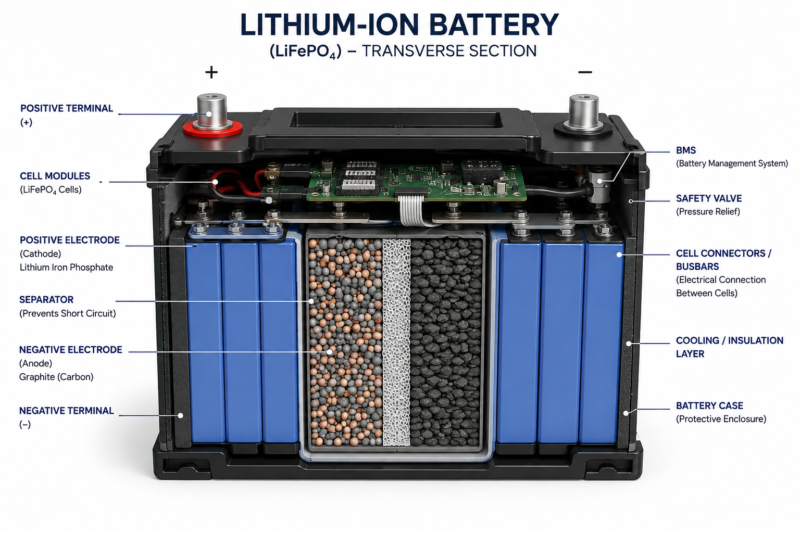
Lithium batteries are rechargeable energy storage devices that use lithium ions moving between electrodes to store and release electrical energy. In the solar world, the most common type used is the lithium-ion battery, and more specifically, a sub-chemistry called lithium iron phosphate (LiFePO4), prized for its safety and long lifespan.
Unlike older lead-acid units, these cells pack more energy into a smaller, lighter package. This efficiency is a major reason lithium batteries have become the standard for solar battery storage — homeowners get more usable capacity without dedicating an entire garage wall to a bulky battery bank.
Why Lithium Batteries Matter for Solar Setups
A solar panel only generates electricity while the sun is shining. Without storage, any unused energy either gets exported to the grid (if net metering is available) or is simply wasted. This is where a modern lithium-ion battery steps in as the critical link between generation and actual usable power.
Here’s why this technology matters so much:
- Energy independence: Lithium batteries let you store solar power during the day and use it at night, reducing your reliance on grid.
- Reliable battery backup: During outages, a solar setup paired with the right storage can keep essential appliances running.
- Better return on investment: Because lithium batteries last longer and perform more efficiently than older chemistries, they improve the long-term economics of any solar energy system.
- Grid resilience: As more homes adopt battery storage, the broader grid becomes more stable and less dependent on peaker plants during high-demand periods.
Simply put, a solar energy system without proper storage is only doing half the job. Lithium batteries complete the picture.
How Lithium Batteries Work in a Solar Setup
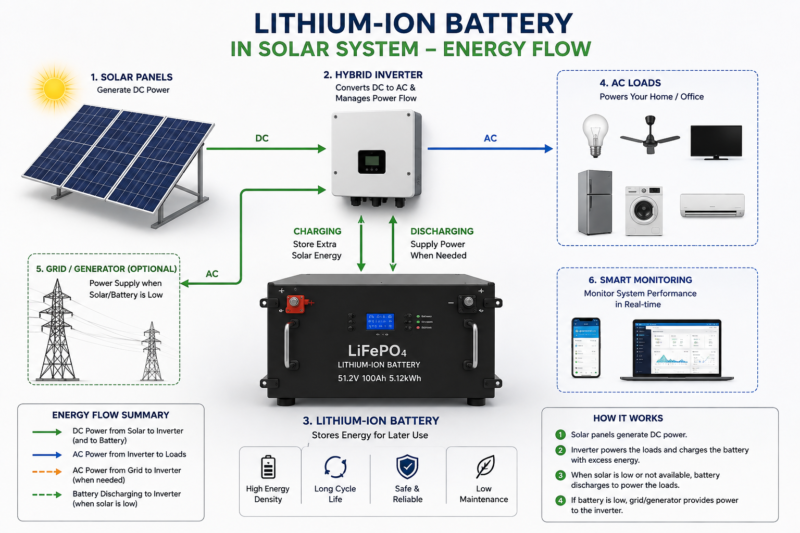
Understanding the flow of energy helps explain why this storage solution is so effective:
- Solar panels generate DC electricity during daylight hours.
- A charge controller or inverter manages the flow, directing excess energy toward the battery bank instead of letting it go to waste.
- The cells store the surplus energy chemically, ready for use whenever it’s needed.
- At night or during cloudy periods, stored energy is drawn from the batteries to power the home.
- During grid outages, systems with battery backup automatically switch to stored power, often within milliseconds.
This cycle repeats daily, and a well-built lithium-ion battery can handle thousands of these charge-discharge cycles before its capacity noticeably declines.
Lithium vs. Other Battery Types
Not all batteries used in a solar setup are created equal. Here’s how they compare to the alternatives:
| Feature | Lithium Cells | Lead-Acid Batteries | Saltwater Batteries |
|---|---|---|---|
| Lifespan | 10–15+ years | 3–5 years | 5–8 years |
| Depth of discharge | 80–100% | 50% | 100% |
| Weight/size | Compact, lightweight | Bulky, heavy | Moderate |
| Maintenance | Minimal | Regular maintenance needed | Minimal |
| Efficiency | 95%+ | 80–85% | 85–90% |
| Cost | Higher upfront | Lower upfront | Mid-range |
While lead-acid batteries are cheaper initially, their shorter lifespan and lower depth of discharge mean they often cost more over time. This is a major reason these units dominate today’s storage market despite the higher sticker price.
Key Dimensions to Consider in the Solar Sector
When evaluating a battery for your solar system, it helps to look at the decision from several angles.
1. Capacity and Household Needs
How much stored energy do you actually need? A small household might need 5–10 kWh of solar battery storage, while larger homes or those wanting full battery backup during extended outages may need 20 kWh or more.
2. Chemistry Type
Most residential storage units use LiFePO4 chemistry for its thermal stability and safety, while some commercial systems use NMC (Nickel Manganese Cobalt) for higher energy density.
3. Climate and Installation Environment
These units generally perform well across a wide temperature range, but extreme heat or cold can still affect efficiency and lifespan. Indoor or climate-controlled installation is often recommended.
4. Integration with Existing Solar Panels
Not every lithium-ion battery is compatible with every inverter or solar setup. Confirm compatibility with your installer before purchasing.
5. Warranty and Cycle Life
Most reputable LiFePO4 batteries come with warranties covering 10 years or 6,000–10,000 cycles — a strong indicator of expected real-world durability.
6. Cost vs. Long-Term Value
While the upfront cost is higher than lead-acid options, the extended lifespan, lower maintenance, and higher usable capacity of this battery type typically make them more cost-effective over a 10–15 year period.
What Should People Choose?
Choosing the right setup depends on your goals. Here’s a simple breakdown:
- If you want basic solar battery storage on a budget: A smaller battery bank (5–10 kWh) covers evening usage without a huge upfront investment.
- If you want full backup power during outages: Look for a larger bank (10–20+ kWh) paired with an automatic transfer switch.
- If you live in an area with unreliable grid power: Prioritize lithium storage with a high depth of discharge and strong cycle life ratings.
- If budget is the main constraint: Compare financing or leasing options, since the long-term savings of these batteries often outweigh the higher initial cost.
- If you’re building a new solar installation from scratch: Choose a battery and inverter combination from the same manufacturer when possible, since this typically ensures smoother integration and better warranty support.
For most homeowners, a mid-sized setup offering 80–100% depth of discharge, a 10-year warranty, and LiFePO4 chemistry represents the best balance of safety, performance, and value.
Common Mistakes to Avoid
Even a great product can underperform if it’s chosen or installed the wrong way. Here are the mistakes that trip up most first-time buyers:
- Undersizing the battery bank: This leads to running out of stored power before solar production resumes the next day.
- Ignoring inverter compatibility: Mismatched components can reduce efficiency or void warranties.
- Choosing based on price alone: The cheapest options may cut corners on safety certifications or cycle life.
- Skipping professional installation: Backup power systems involve real electrical risk and should always be installed by a licensed professional.
The Future of Lithium Storage in the Solar Sector
As solar adoption grows, this technology is expected to keep improving in energy density, cost efficiency, and lifespan. Emerging developments like solid-state cells and improved recycling processes are likely to make battery storage even more accessible and sustainable in the coming years. For now, these units remain the most trusted and widely recommended choice for anyone serious about maximizing their PV system.
Frequently Asked Questions
Q: How long do these storage units last in a solar system? A: Most LiFePO4 batteries last 10–15 years or more, depending on usage patterns, climate, and chemistry type.
Q: Can a solar battery fully replace grid power? A: With a properly sized setup, this battery type combined with solar panels can significantly reduce or even eliminate grid dependence, though most homes keep a grid connection as backup.
Q: Is lithium storage safe for home use? A: Yes. Modern cells, especially those using LiFePO4 chemistry, are designed with strong safety features and are widely used in residential solar setups.
Q: Is backup capability worth the extra cost? A: For homeowners in areas prone to outages, this protection offers peace of mind and safeguards essential appliances, often making the investment worthwhile.
Final Thoughts
Lithium batteries have fundamentally changed what’s possible with residential solar power. By pairing high-efficiency solar panels with a reliable storage unit, homeowners gain energy independence, dependable emergency power, and a smarter, more resilient solar setup overall. As you compare solar storage options, focus on capacity, chemistry, warranty, and installer compatibility — the right choice can make your solar investment work harder for you, day and night.
Ready to explore your options? Consult a licensed solar installer to find the right battery setup for your home’s specific energy needs.