Virtual Power Plants: How Thousands of Homes Are Becoming One Giant Power Station
Imagine a power plant with no smokestack, no turbine hall, and no single physical location — instead, it’s made up of thousands of rooftop solar systems, home batteries, and smart appliances spread across an entire city, all coordinated in real time. That’s exactly what virtual power plants are, and they represent one of the most practical, already-happening innovations in how modern electricity grids actually function.
This blog explains what virtual power plants are, how virtual power plant technology ties individual homes into a coordinated network, the mechanics of how virtual power plants work in practice, why distributed energy resources are the essential building blocks behind the concept, and the real virtual power plant benefits for homeowners, utilities, and the broader grid.
What Are Virtual Power Plants?
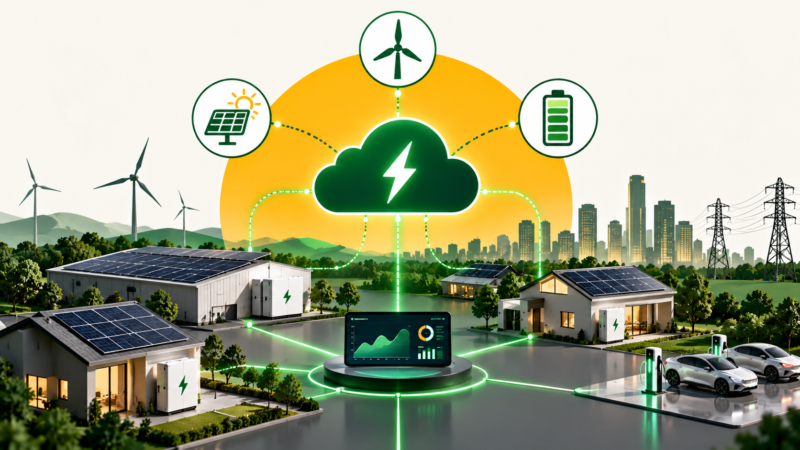
Virtual power plants are networks of decentralized energy resources — rooftop solar systems, home batteries, electric vehicle chargers, and smart thermostats — that are digitally coordinated to act collectively like a single power plant. Rather than building one large centralized facility, a virtual power plant aggregates the small-scale generation and storage capacity already sitting in homes and businesses, then uses software to dispatch that combined capacity when the grid needs it most.
This concept flips the traditional power generation model on its head. Instead of electricity flowing one-way from a handful of large plants to millions of consumers, virtual power plants turn consumers into active participants, feeding stored or generated power back into the grid during periods of high demand or supply shortfall.
How Virtual Power Plants Work: The Mechanics Behind the Concept
Understanding how virtual power plants work starts with the three core components involved: distributed generation and storage assets (rooftop solar, home batteries), a communication network connecting these assets to a central control system, and software that aggregates and dispatches this combined capacity based on real-time grid needs.
When a utility or grid operator signals a need for additional power — say, during a hot summer evening peak — the virtual power plant operator can draw stored energy from thousands of connected home batteries simultaneously, or adjust smart thermostats slightly to reduce demand, all without any individual homeowner noticing a disruption. This is the essence of how virtual power plants work: coordinating many small, flexible resources to behave like one large, responsive asset.
Virtual Power Plant Technology: What Makes It Possible
The technology enabling modern virtual power plant technology has matured significantly in recent years. Smart inverters now allow individual solar and battery systems to communicate bidirectionally with grid operators, rather than operating as isolated, one-way generation devices. Cloud-based aggregation platforms use algorithms to predict demand patterns, optimize dispatch timing, and ensure fair compensation is calculated for each participating household.
Advances in virtual power plant technology have also improved response speed dramatically — modern systems can coordinate thousands of distributed assets within seconds of a grid signal, a level of responsiveness that was simply not achievable with the communication infrastructure available even a decade ago.
Ready to switch to Solar?
solar solutions with Anya Green Energy and discover how you can reduce your electricity bills.
Distributed Energy Resources: The Building Blocks of VPPs
Distributed energy resources, or DERs, are the individual components that make virtual power plants possible in the first place. These include rooftop solar panels, home battery storage systems, electric vehicles with bidirectional charging capability, smart water heaters, and programmable thermostats — essentially any device capable of generating, storing, or flexibly adjusting electricity consumption.
The growing adoption of distributed energy resources at the household level is precisely what has made virtual power plants commercially viable over the past several years. A decade ago, there simply weren’t enough home batteries or smart devices in any given area to aggregate into a meaningful resource. Today, with rooftop solar and home storage becoming increasingly common, distributed energy resources have reached the critical mass needed for VPP programs to deliver real grid value.
Virtual Power Plant Benefits: Why This Model Matters
The virtual power plant benefits extend across three distinct groups — homeowners, utilities, and the broader grid — making this one of the rare clean energy innovations with genuinely aligned incentives for everyone involved.
For homeowners: Participants typically receive compensation or bill credits for allowing their solar, battery, or smart devices to be used during grid events, turning otherwise idle capacity into an income stream. This is one of the most tangible virtual power plant benefits for individual households already invested in solar and storage.
For utilities: Virtual power plants provide a flexible, fast-responding capacity resource without the enormous capital cost and multi-year construction timeline of a traditional power plant. This flexibility is especially valuable for managing short, sharp demand peaks that would otherwise require expensive and polluting peaker plants.
For the grid overall: Aggregating distributed energy resources through virtual power plants improves overall grid resilience, reduces strain during extreme weather events, and accelerates the integration of renewable energy by providing the flexibility needed to manage intermittency at scale.
| Stakeholder | Key Virtual Power Plant Benefit |
|---|---|
| Homeowners | Compensation/bill credits for participation |
| Utilities | Lower-cost, fast-responding capacity |
| Grid Operators | Improved resilience and renewable integration |
| Environment | Reduced reliance on fossil peaker plants |
Virtual Power Plants vs Traditional Power Plants
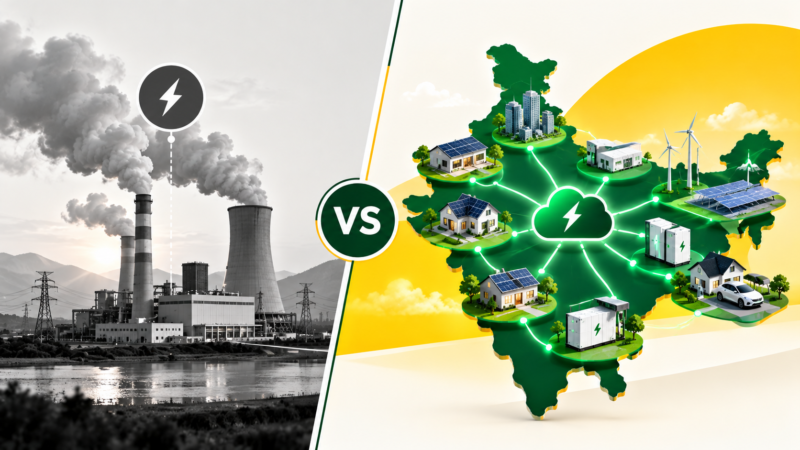
The contrast between virtual power plants and traditional centralized generation is stark. A traditional power plant requires years of construction, massive capital investment, and a fixed physical location — while a virtual power plant scales organically as more households adopt distributed energy resources, with no single point of construction or failure.
This decentralized structure also makes virtual power plants inherently more resilient. A traditional plant going offline creates a significant supply gap, while a VPP’s distributed nature means the loss of any single participating household has a negligible impact on overall capacity — a structural advantage that’s increasingly relevant as grids face more frequent extreme weather events
Real-World Applications of Virtual Power Plants
Virtual power plants have moved well beyond pilot projects in several markets globally, with utilities in the US, Australia, and parts of Europe running active VPP programs that aggregate tens of thousands of home batteries and solar systems. India’s own rapid growth in rooftop solar and household battery adoption positions the country well to develop similar virtual power plant technology programs as the regulatory and market infrastructure matures.
These real-world deployments demonstrate that how virtual power plants work in theory translates effectively into practice — aggregated household resources have successfully provided meaningful grid support during genuine demand stress events, validating the model beyond its conceptual appeal.
Challenges Facing Virtual Power Plant Adoption
Despite strong momentum, virtual power plants face genuine adoption barriers. Regulatory frameworks in many regions haven’t fully caught up to enable seamless aggregation and compensation of distributed energy resources across different utility territories. Cybersecurity is another real concern, since coordinating thousands of connected devices creates a broader attack surface that must be carefully secured.
Consumer awareness also remains limited — many homeowners with solar and battery systems simply don’t know virtual power plant participation programs exist in their area, or are unsure whether the virtual power plant benefits are worth the setup effort. Addressing these awareness and regulatory gaps will likely determine how quickly VPP adoption scales from promising pilots to mainstream grid infrastructure.
Expert Perspective
As one grid modernization specialist put it in a recent industry discussion, paraphrased here: virtual power plants represent one of the few genuinely underhyped technologies in the energy transition — while everyone talks about new generation and storage hardware, the real breakthrough is software-driven coordination of resources that already exist, turning millions of individually small assets into grid infrastructure that rivals traditional power plants in flexibility and speed.
Ready to switch to Solar?
Solar solutions with Anya Green Energy and discover how you can reduce your electricity bills.
Contact UsConclusion
Virtual power plants represent a fundamental shift in how electricity grids can be managed — not by building more centralized infrastructure, but by intelligently coordinating the distributed energy resources already present in homes and businesses. As virtual power plant technology continues to mature and more households adopt solar and battery storage, understanding how virtual power plants work and the genuine virtual power plant benefits available will become increasingly relevant for anyone invested in rooftop solar. What once required massive, centralized infrastructure can now be achieved through thousands of coordinated homes — a quietly powerful shift in how the world keeps the lights on
FAQs
Q1: Do I need a battery to participate in a virtual power plant?
A: While battery storage makes participation more valuable, some virtual power plant programs also include solar-only systems or smart devices like thermostats, depending on the specific program structure.
Q2: How do virtual power plants make money for homeowners?
A: Participants are typically compensated through bill credits or direct payments for allowing their solar, battery, or smart devices to be used during grid events — one of the core virtual power plant benefits.
Q3: Are virtual power plants available in India yet?
A: Adoption is still emerging, though India’s rapid growth in rooftop solar and household battery storage is creating the distributed energy resources base needed for future VPP programs.
Q4: Is my personal power supply affected if I join a virtual power plant?
A: No — virtual power plant technology is designed to draw on excess or stored capacity without disrupting a household’s own power supply or comfort.
Q5: How is a virtual power plant different from a microgrid?
A: A microgrid typically operates as a localized, often islandable system serving a specific area, while a virtual power plant aggregates distributed resources across a wider area to provide flexible capacity to the broader grid.
Ready to switch to Solar?
Solar solutions with Anya Green Energy and discover how you can reduce your electricity bills.
Contact Us
Trusted by 50000+ Customers
Anya Green Energy is a leading solar company and Solar Energy service provider established in 2013. We are recognized by startup India and customer best choice award 2022.
Our Achievements :
Recognized by Startup India.
Purvanchal’s first solar company to operate exclusively with solar products.
Certified by well-known institutions such as MSME, IndiaMart, and Just Dial and many more.
Winner of the Best Customer Choice Award 2022.
Over 50,000 happy customers across India.