
Solar Module Waste: Is India Sitting on a Ticking Bomb?
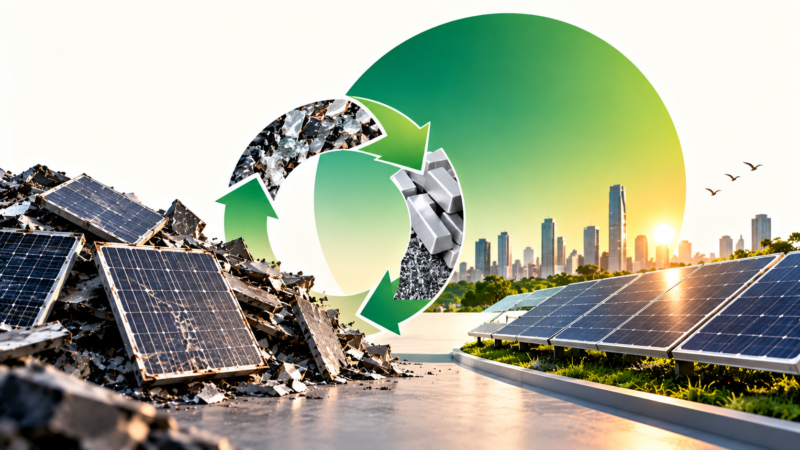
Every solar panel installed today carries an invisible expiration date, and across India, the question of solar module waste in India is quietly shifting from a distant theoretical concern to an approaching reality. For more than a decade, India’s solar story has been one of celebration — falling costs, record capacity additions, ambitious government targets. But almost nobody asks what happens when the millions of panels installed during that boom eventually reach the end of their working lives.
Most solar panels are designed to operate for twenty-five to thirty years, which means the earliest utility-scale and rooftop installations from India’s first major solar push are now approaching middle age. The volume of solar module waste in India is projected to grow dramatically over the next decade, and the infrastructure needed to responsibly manage that volume simply does not yet exist at the scale required.
Understanding the Scale of Solar Module Waste in India
To understand why this matters, it helps to look at the sheer scale of deployment. India has added gigawatts of solar capacity year after year since the early 2010s, and every one of those panels will eventually need to be decommissioned, recycled, or discarded. Industry estimates suggest the country’s cumulative solar module waste in India could reach hundreds of thousands of tonnes within the next ten to fifteen years, with the volume accelerating sharply as panels installed during the 2015–2020 boom years begin reaching end-of-life.
Data disclosure: Specific tonnage projections, timelines, and growth rates cited in this section are illustrative estimates based on general industry knowledge, not live data retrieval in this session. These figures should be verified against current MNRE, CPCB, or IRENA reports before publishing, given the numbers-sensitive nature of this topic.
Unlike a slow, predictable trickle, this waste stream is expected to arrive in waves tied to historical installation booms, meaning the country could face sudden spikes in retired panels needing disposal within a relatively compressed timeframe — a pattern that has earned this issue its “ticking bomb” framing among some industry observers, even if the comparison is more rhetorical than literal.
Why Solar Panel Decommissioning Is Becoming Urgent

Solar panel decommissioning refers to the formal process of safely removing, assessing, and routing retired panels toward reuse, recycling, or disposal. Right now, structured solar panel decommissioning processes remain the exception rather than the norm across most of India’s solar installations, particularly in the rooftop and small commercial segments where panels are often removed informally with little record-keeping or safety oversight.
The urgency around proper solar panel decommissioning stems from more than just volume — it’s also about what’s inside each panel. Modern solar modules contain small amounts of materials that require careful handling, alongside valuable recoverable components like silver, copper, aluminum, and high-purity silicon. Without organized solar panel decommissioning infrastructure, these materials are frequently lost to landfills or informal scrap markets rather than being responsibly recovered and reused.
As one circular economy researcher observed in a recent clean energy sustainability panel, “we spent a decade perfecting how to install solar panels and almost no time planning what happens when they come down — that gap is exactly where today’s risk is concentrated.” That observation captures precisely why this issue deserves far more attention than it currently receives.
Ready to switch to Solar?
Solar solutions with Anya Green Energy and discover how you can reduce your electricity bills.
Contact UsWhat's Actually Inside a Retiring Solar Panel
A typical crystalline silicon solar panel is made up of roughly 75–80% glass, 10% polymer materials, 8% aluminum framing, and small but valuable quantities of silicon, copper, and silver. This composition is central to the case for a circular economy for solar panels, since most of these materials are technically recoverable with the right processing technology.
Building a genuine circular economy for solar panels would mean recovering glass for reuse in new manufacturing, reclaiming aluminum frames for the metals market, and extracting silicon and precious metals for reintroduction into new panel production — dramatically reducing the need for virgin raw material extraction. The technology to support a circular economy for solar panels already exists in parts of Europe and East Asia, but it remains largely absent from India’s current solar supply chain.
Recoverable Materials in a Typical Solar Panel
| Material | Approximate Share | Recovery Potential |
|---|---|---|
| Glass | 75–80% | High — reusable in new glass/panel manufacturing |
| Aluminum frame | 8–10% | High — standard scrap metal recovery |
| Silicon (cells) | 5% | Medium-High — requires specialized processing |
| Copper (wiring) | 1% | High — standard scrap metal recovery |
| Silver (contacts) | <0.1% | High value despite small quantity |
| Polymer/encapsulant | 10% | Low — difficult to recycle, often landfilled |
The Current State of Solar E-Waste Management in India
Solar e-waste management in India sits at an early and somewhat fragmented stage of development. In 2022, India’s E-Waste Management Rules were amended to formally include solar photovoltaic modules and cells under extended producer responsibility obligations — a meaningful regulatory step, but one that still faces significant implementation gaps on the ground.
Effective solar e-waste management in India requires more than regulation alone; it needs dedicated collection networks, certified recycling facilities, and trained workers capable of safely dismantling panels. Today, much of the country’s informal e-waste sector handles solar components using methods designed for conventional electronics, which are poorly suited to the specific materials and safety considerations solar panels present.
Several private companies and research institutions have begun piloting dedicated solar e-waste management in India facilities, but capacity remains far below what will eventually be needed once decommissioning volumes rise sharply later this decade.
The Broader Photovoltaic Waste Crisis in Global Context
India is far from alone in facing this challenge — the global photovoltaic waste crisis has been flagged by international energy bodies for several years now, with early solar-adopting regions like parts of Europe, China, and the United States further along in developing regulatory and recycling responses. Studying how these markets have approached the photovoltaic waste crisis offers India a chance to leapfrog some of the early mistakes other regions made.
The European Union, for instance, established producer responsibility requirements for solar panels earlier than most regions, offering a useful regulatory template. However, every market’s version of the photovoltaic waste crisis has its own complications tied to local installation volumes, climate conditions, and existing recycling infrastructure — meaning India’s solution will need to reflect its own specific circumstances rather than simply importing a foreign framework wholesale.
Challenges Standing in the Way
Several structural barriers continue to slow progress on this issue. Economic viability remains a central challenge — recycling solar panels currently costs more in many cases than simply landfilling them, removing the financial incentive needed to drive private investment without stronger policy support.
Collection logistics present another major hurdle, particularly for the millions of small rooftop installations scattered across homes and small businesses nationwide, where there is no centralized system for tracking panels or ensuring they reach proper decommissioning facilities once removed. The informal recycling sector, while resourceful, often lacks the specialized equipment needed to safely recover materials without environmental or worker-safety risks.
Finally, limited public awareness means most consumers and even many installers remain unaware that solar panels require specialized end-of-life handling at all, often assuming “clean energy” equipment is inherently free of any waste management concerns.
Why This Also Represents a Genuine Opportunity
- Material security — recovering silicon, silver, and copper domestically reduces dependence on imported raw materials for future panel manufacturing.
- Job creation — building a formal recycling sector could generate meaningful employment in collection, processing, and materials recovery.
- Manufacturing cost reduction — recovered materials can lower input costs for India’s growing domestic solar manufacturing base.
- Environmental protection — proper handling prevents hazardous materials from entering soil and water systems.
- Policy leadership opportunity — India could position itself as a regional model for responsible end-of-life solar management.
- Alignment with broader sustainability goals — strengthens the overall credibility and lifecycle story of India’s renewable energy transition.
Looking Ahead: Turning the Ticking Clock Into a Head Start
The window to build proper infrastructure before the heaviest wave of retirements arrives is narrowing but not yet closed. Strengthening extended producer responsibility enforcement, incentivizing private recycling investment, and raising public awareness could collectively shift this story from crisis to opportunity over the next five to ten years.
Industry observers increasingly argue that the real risk isn’t the waste itself, but the delay in building the systems needed to handle it — a gap that, if closed now, could prevent today’s manageable challenge from genuinely becoming the “ticking bomb” the framing suggests.
Where Anya Green Energy Stands
At Anya Green Energy, our installations are built for long-term, reliable performance, and we recognize that responsible lifecycle management is part of being a genuinely sustainable energy provider — not just a clean electricity generator. While dedicated panel recycling is not yet part of our direct service offering, we actively track developments in certified recycling partnerships and plan to incorporate clearer end-of-life guidance for our customers as formal infrastructure matures across India.
We believe addressing this issue honestly, rather than ignoring it, is essential to maintaining the credibility of the solar industry as a whole.
Frequently Asked Questions
Q1: How big of a problem is solar panel waste actually expected to be in India?
A1: Industry estimates suggest the volume could reach hundreds of thousands of tonnes within the next decade or so as panels from India’s early solar boom reach end-of-life, though exact figures vary by source and should be verified against current government and industry reports.
Q2: What happens to a solar panel after it’s removed?
A2: Ideally, retired panels go through a structured decommissioning process where recoverable materials like glass, aluminum, silicon, and silver are separated and reused. In practice, much of this currently happens informally, with limited material recovery.
Q3: Does India have regulations covering this issue?
A3: Yes, India’s E-Waste Management Rules were amended in 2022 to include solar photovoltaic modules under extended producer responsibility requirements, though implementation infrastructure is still developing.
Q4: Can solar panels actually be recycled, or do they just end up in landfills?
A4: They can be recycled — most of a panel’s materials, especially glass and aluminum, are technically recoverable. The barrier isn’t technical feasibility but economic viability and the current lack of widespread certified recycling infrastructure in India.
Q5: Is this really as urgent as the “ticking bomb” framing suggests?
A5: The framing is somewhat rhetorical, but the underlying concern is genuine — a large volume of panels will reach end-of-life within a relatively compressed timeframe, and the infrastructure to handle that volume responsibly needs to be built well before that wave arrives, not after.
Trusted by 50000+ Customers
Anya Green Energy is a leading solar company and Solar Energy service provider established in 2013. We are recognized by startup India and customer best choice award 2022.
Our Achievements :
Recognized by Startup India.
Purvanchal’s first solar company to operate exclusively with solar products.
Certified by well-known institutions such as MSME, IndiaMart, and Just Dial and many more.
Winner of the Best Customer Choice Award 2022.
Over 50,000 happy customers across India.