DCR vs Non-DCR Solar Panels: 2027 Rules Explained

India’s solar energy sector is going through an important policy transition. With the growing focus on domestic solar manufacturing, the government is strengthening regulations related to solar PV modules and solar cells.
One important date for the industry is 1 January 2027. From this date, certain commercial solar projects will no longer be covered by the limited exemption from ALMM List-II for solar PV cells.
This development has created questions among solar buyers, business owners, EPC companies and solar installers. Will Non-DCR solar panels be discontinued? Will DCR panels become mandatory? Will solar panel prices increase?
To understand these developments, it is important to know the difference between DCR and Non-DCR panels and how the latest Solar panel rules in India affect different project categories.
In this article, we will explain DCR vs Non-DCR solar panels, the role of ALMM List-I and List-II, the possible impact on solar panel prices and what buyers should check before purchasing a solar system.
What Are DCR Solar Panels?
DCR stands for Domestic Content Requirement.
DCR solar panels are panels that meet the applicable domestic manufacturing requirements. Under the relevant government schemes, solar modules must use domestically manufactured solar cells and meet the specified manufacturing conditions.
The objective is to promote Indian solar manufacturing, strengthen the domestic supply chain and reduce dependence on imported solar components.
Key features of DCR solar panels:
Solar cells must meet the applicable domestic manufacturing requirements.
The solar modules must fulfil the relevant DCR conditions.
Their compliance may need to be verified through the prescribed documentation and certification process.
They are required in specified government-supported solar schemes and programmes.
DCR compliance is particularly important when purchasing solar equipment under schemes where domestic content is mandatory.
Understanding DCR vs Non-DCR solar panels is important because the two categories have different domestic content requirements. However, DCR is only one part of the broader Solar panel rules in India.
What Are Non-DCR Solar Panels?
Non-DCR solar panels are panels that do not fulfil the specified DCR requirements.
They may use imported solar cells or cells that do not meet the applicable domestic content conditions. However, this does not automatically mean that such panels are poor-quality or unsuitable for every solar installation.
Their eligibility depends on the type of project and the regulations applicable to it.
Important points about Non-DCR panels:
They do not meet the specified DCR requirements.
They may be used in projects where DCR is not mandatory, subject to other applicable regulations.
Their price may differ from DCR panels depending on the manufacturer, technology and supply chain.
They may still need to comply with applicable ALMM requirements.
The distinction between DCR and Non-DCR is important, but buyers should not confuse DCR compliance with ALMM compliance.
This is one of the most important points to understand when studying DCR vs Non-DCR solar panels and the changing Solar panel rules in India.
Ready to switch to Solar?
Solar solutions with Anya Green Energy and discover how you can reduce your electricity bills.
Contact UsDCR vs Non-DCR Solar Panels: Key Differences
Let’s compare both panel categories.
| Parameter | DCR Solar Panels | Non-DCR Solar Panels |
|---|---|---|
| Full form | Domestic Content Requirement compliant | Does not meet specified DCR requirements |
| Cell sourcing | Meets applicable domestic manufacturing conditions | May use cells that do not meet DCR conditions |
| Manufacturing | Fulfils specified domestic content conditions | Does not fulfil specified DCR conditions |
| Government schemes | Required where DCR is mandatory | Not eligible where DCR is mandatory |
| Other commercial projects | Subject to applicable project rules | May be used where permitted |
| ALMM compliance | Must meet applicable ALMM requirements separately | Must meet applicable ALMM requirements separately |
| Pricing | Depends on manufacturing and market conditions | Depends on manufacturing and market conditions |
The main difference in DCR vs Non-DCR solar panels is the domestic content requirement, not simply the country where the final panel is assembled.
A panel assembled in India is not automatically DCR-compliant. The solar cells and manufacturing processes must meet the applicable DCR conditions.
Similarly, the Solar panel rules in India do not make every commercial solar project subject to DCR.
What Is ALMM and Why Is It Important?
ALMM stands for Approved List of Models and Manufacturers.
It is a framework introduced by the Ministry of New and Renewable Energy (MNRE) to identify approved solar PV module and cell models and manufacturers for projects covered by the relevant requirements.
ALMM has two important lists:
ALMM List-I: Solar PV Modules
ALMM List-I contains approved solar PV module models and manufacturers.
Projects covered by the ALMM Order must use applicable listed modules, subject to the relevant exemptions and provisions.
ALMM List-II: Solar PV Cells
ALMM List-II contains approved solar PV cell models and manufacturers.
The requirement to use cells from ALMM List-II applies to the project categories covered by the relevant MNRE provisions.
This is where the 2027 transition becomes important.
The Solar panel rules in India include separate requirements for modules and cells. Therefore, buyers must check both lists rather than assuming that DCR and ALMM mean the same thing.
Understanding ALMM is essential to understanding DCR vs Non-DCR solar panels because a panel’s DCR status alone does not establish whether it meets the ALMM requirements for a particular project.
What Will Change from 1 January 2027?
The important regulatory development concerns the limited exemption from ALMM List-II for certain net-metering and open-access renewable energy projects.
MNRE provided an exemption window allowing eligible projects to be commissioned without complying with ALMM List-II for solar PV cells until 31 December 2026.
From 1 January 2027, projects commissioned after this deadline will need to follow the applicable ALMM List-II requirements.
This means that affected projects will need to consider:
Whether the solar project falls under the applicable ALMM provisions.
Whether the selected solar modules comply with ALMM List-I.
Whether the solar cells used in the modules are covered by ALMM List-II.
Whether any specific exemption applies to the project.
The change is not a universal DCR mandate.
The Solar panel rules in India distinguish between domestic content requirements and approved manufacturer requirements. Therefore, the 2027 transition should be understood as an ALMM List-II compliance change, not a blanket conversion of all Non-DCR panels into DCR panels.
For buyers comparing DCR vs Non-DCR solar panels, this distinction is particularly important before making a purchase.
Which Solar Projects Will Be Affected After 31 December 2026?
The impact depends on the project’s structure and commissioning date.
A. Net-Metering Solar Projects
Net metering allows eligible solar consumers to export surplus electricity to the grid and receive credits or adjustments according to the applicable regulations.
For eligible net-metering projects commissioned by 31 December 2026, the limited ALMM List-II exemption applies.
Projects commissioned after this date will need to comply with the applicable ALMM List-II requirements.
The relevant Solar panel rules in India therefore make the commissioning date important for these projects.
B. Open-Access Solar Projects
Open-access projects allow eligible consumers to procure electricity from renewable energy generators through the electricity network, subject to applicable regulations.
The same limited exemption window applies to eligible open-access projects.
Projects commissioned after 31 December 2026 will need to follow the applicable ALMM List-II provisions.
This may influence the selection and procurement of solar modules and cells.
C. Private Behind-the-Meter Captive Solar Projects
A private behind-the-meter solar plant used solely for captive consumption has a different regulatory treatment.
According to MNRE’s clarification, ALMM List-I and List-II do not apply to qualifying behind-the-meter plants used for captive consumption by consumers other than government entities and public sector enterprises.
This means that qualifying private businesses using solar power for their own consumption may not face the same ALMM requirements.
However, project structure and actual consumption arrangements must be checked before relying on this exemption.
D. Government and Public Sector Enterprise Projects
Government entities and public sector enterprises are treated differently under the relevant provisions.
For qualifying behind-the-meter captive projects belonging to these entities, ALMM-listed modules are required, and the exemption from ALMM List-II is limited to projects commissioned by 31 December 2026.
Projects commissioned after this date must follow the applicable module and cell requirements.
These project-specific differences are essential to understanding the Solar panel rules in India and the impact of DCR vs Non-DCR solar panels.
Will Non-DCR Solar Panels Be Banned from 2027?
No. There is no blanket ban on all Non-DCR solar panels in India from 1 January 2027.
The change relates to ALMM List-II requirements for specific project categories. It does not mean that every solar installation must use DCR panels.
The following distinctions should be remembered:
DCR requirements apply wherever specified under the relevant government scheme or programme.
ALMM List-I requirements apply to projects covered by the relevant module-list provisions.
ALMM List-II requirements apply to projects covered by the relevant solar-cell-list provisions.
Qualifying private behind-the-meter captive projects may be exempt from both ALMM lists.
Other project-specific exemptions and tender conditions may also apply.
Therefore, the future of DCR vs Non-DCR solar panels will depend on the project category and applicable regulations.
Buyers should avoid assuming that all Non-DCR panels will disappear from the market. The Solar panel rules in India are project-specific, and the applicable compliance requirements must be verified before procurement.
Will DCR Solar Panels Become More Expensive?
DCR panels may have a higher price than comparable Non-DCR panels in some market situations. However, the actual difference depends on the manufacturer, technology, production capacity, availability and procurement conditions.
The 2027 ALMM List-II transition may also influence the cost of certain commercial solar projects.
Possible reasons for cost changes include:
Domestic cell sourcing: Affected projects will need to procure cells from eligible ALMM List-II manufacturers.
Supply and demand: Demand for compliant solar cells may influence market prices.
Manufacturing capacity: Domestic production capacity and availability can affect procurement costs.
Technology and efficiency: Different panel technologies and specifications have different price points.
Project requirements: System capacity, installation design and compliance requirements influence total project investment.
It is important to understand that ALMM List-II compliance is not identical to DCR compliance.
The Solar panel rules in India may require ALMM-listed cells for an affected project without automatically making DCR mandatory under a separate scheme.
Therefore, the price impact of DCR vs Non-DCR solar panels should be evaluated according to the actual project requirements rather than assuming a fixed price increase for every installation.
What Should Buyers Check Before Purchasing Solar Panels?
Before purchasing a solar system, buyers should understand which regulations apply to their installation.
Use this checklist:
Project category: Is it net metering, open access or private captive consumption?
Commissioning date: Will the project be commissioned before or after 31 December 2026?
DCR requirement: Does the relevant scheme or programme require DCR panels?
ALMM List-I: Is the selected solar module included in the applicable list?
ALMM List-II: Does the project require solar cells from listed manufacturers?
Documentation: Can the supplier provide the required certificates, invoices and traceability information?
Warranty: What product and performance warranties are provided?
Price comparison: Are you comparing panels with similar capacity, efficiency and technical specifications?
These checks can help buyers make informed decisions under the changing Solar panel rules in India.
They are also essential when comparing DCR vs Non-DCR solar panels for a commercial or industrial installation.
Final Verdict: DCR vs Non-DCR Solar Panels in 2027
The Indian solar market is moving towards stronger domestic manufacturing and greater compliance with approved solar cell and module requirements.
From 1 January 2027, eligible net-metering and open-access projects commissioned after 31 December 2026 will need to comply with applicable ALMM List-II requirements.
However, this does not mean that every Non-DCR panel will be banned or that DCR panels will become compulsory for every commercial solar installation.
DCR and ALMM are separate regulatory requirements. Their applicability depends on the scheme, project category and relevant MNRE provisions.
For solar buyers, the most important step is to identify the correct project category before selecting panels.
The key takeaway: Do not choose solar panels only by comparing DCR and Non-DCR prices. First understand the applicable Solar panel rules in India, verify the required compliance and then compare the technical specifications, warranty and total project cost.
Frequently Asked Questions (FAQs)
1. What is the main difference between DCR and Non-DCR solar panels?
DCR panels meet the applicable domestic content requirements, while Non-DCR panels do not. Their eligibility depends on the regulations applicable to the project.
2. Will Non-DCR solar panels be banned from 1 January 2027?
No. There is no universal ban. The change concerns applicable ALMM List-II requirements for specific project categories.
3. Are DCR solar panels mandatory for all commercial projects?
No. DCR is mandatory only where specified under the relevant government schemes or programmes. Other commercial projects must follow the regulations applicable to their project category.
4. What is ALMM List-II?
ALMM List-II is the approved list of solar PV cell models and manufacturers maintained under the MNRE framework.
5. What happens to net-metering projects after 31 December 2026?
Eligible net-metering projects commissioned after 31 December 2026 will need to comply with the applicable ALMM List-II requirements.
6. Are private captive solar projects exempt from ALMM?
Qualifying private behind-the-meter plants used solely for captive consumption by consumers other than government entities and public sector enterprises are exempt from ALMM List-I and List-II under the relevant MNRE clarification.
7. Will DCR solar panels cost more than Non-DCR panels?
They may cost more in some market conditions, but the price difference depends on the manufacturer, technology, specifications, supply and demand.
Choose the Right Solar Solution with Anya Green Energy
Planning to install a solar system for your business? Understanding panel specifications and government regulations is essential before making an investment.
Anya Green Energy helps businesses explore solar solutions based on their power requirements, system capacity and project needs.
Anya Green Energy – Since 2013
Make an informed solar investment. Choose the right system for your business.
Trusted by 50000+ Customers
Anya Green Energy is a leading solar company and Solar Energy service provider established in 2013. We are recognized by startup India and customer best choice award 2022.
Our Achievements :
Recognized by Startup India.
Purvanchal’s first solar company to operate exclusively with solar products.
Certified by well-known institutions such as MSME, IndiaMart, and Just Dial and many more.
Winner of the Best Customer Choice Award 2022.
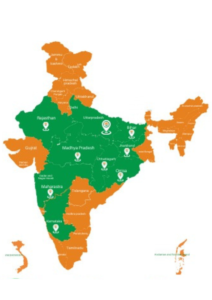
Over 50,000 happy customers across India.