Solar Panels: The Ultimate Guide to Technology, Efficiency, Procurement, and Performance
Photovoltaic solar panels have transformed from high-cost aerospace technology into the primary engine driving India’s clean energy transition.
Installed on residential rooftops, commercial facility roofs, and vast utility-scale solar farms, solar panel capture free sunlight and convert it directly into clean, lower-cost electricity.
For property owners, industrial manufacturing units, and commercial enterprises across India, investing in high-efficiency solar panel provides a hedge against rising grid electricity tariffs while significantly reducing corporate carbon emissions.
Driven by rapid advancements in silicon wafer manufacturing, cell passivating technologies, and automated module assembly, modern solar panels deliver higher wattage output, lower degradation rates, and longer operational lifespans than ever before.
Understanding how solar panels work, evaluating different cell technologies, and selecting certified modules is crucial for ensuring that your solar installation produces maximum clean energy over its twenty-five-year lifespan.
How Solar Panels Generate Clean Electricity
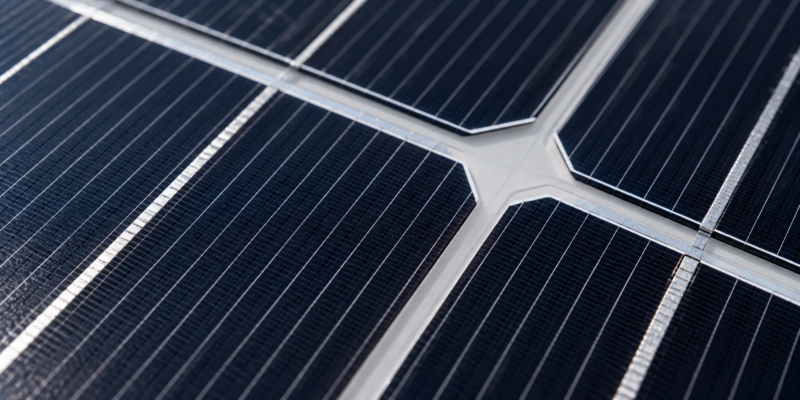
At the core of every solar panel is an array of interconnected photovoltaic solar cells manufactured from ultra-pure silicon semiconductors.
When light strikes the surface of these solar panels, photons transfer energy to electrons within the silicon crystal structure, releasing free charge carriers that flow through metallic busbars to generate a direct current.
To withstand harsh outdoor weather conditions for decades, individual solar cells are encapsulated within a multi-layer protective module architecture:
- Tempered protective glass — anti-reflective, high-transmittance front glass that maximizes light absorption while shielding solar cells from hail, wind loads, and mechanical impact.
- Encapsulant layers — durable EVA or POE polymer sheets that seal solar cells against moisture ingress, dust, and thermal degradation.
- Rear backsheet or glass layer — a protective weather-resistant polymer backsheet, or a second layer of tempered glass in bifacial solar panels, providing electrical insulation and mechanical strength.
- Anodized aluminum frame — a corrosion-resistant metal frame that provides structural rigidity for mounting racking and protects module edges during handling and installation.
- Junction box and bypass diodes — IP68-rated weather-proof electrical enclosure containing bypass diodes that prevent power losses and hot-spot damage during partial shading.
As one module manufacturing scientist noted during a clean energy tech conference, “the modern solar panel is a masterclass in materials engineering — designed to absorb extreme solar radiation while surviving thirty years of rain, wind, and thermal cycling.”
Understanding the Primary Types of Solar Panels
Evaluating different cell technologies is an essential step when procuring solar panel for home, business, or agricultural applications.
Different manufacturing methods deliver distinct trade-offs in terms of module efficiency, wattage density, temperature performance, and upfront cost:
Monocrystalline Solar Panels
Monocrystalline solar panel represent the gold standard for residential rooftops and commercial facilities where space is limited and maximum efficiency is required.
Manufactured from single-crystal silicon ingots, these solar panels feature a dark, uniform appearance and achieve cell conversion efficiencies ranging between 20 and 23 percent.
Monocrystalline solar panels deliver higher wattage output per square meter than older module designs, generating maximum clean power from compact roof spaces.
Polycrystalline Solar Panels
Polycrystalline solar panels are produced by melting multiple silicon crystals together, resulting in a distinctive blue speckled appearance.
While polycrystalline solar panel carry lower upfront manufacturing costs, their conversion efficiency is lower, typically ranging between 16 and 18 percent.
As monocrystalline module prices have fallen, polycrystalline solar panels have largely been phased out in favor of higher-efficiency monocrystalline and TOPCon alternatives across Indian commercial and residential markets.
Thin-Film Solar Panels
Thin-layer solar panel are manufactured by depositing photovoltaic materials — such as Cadmium Telluride or CIGS — onto flexible glass or metal substrates.
While thin-film solar panels offer lightweight flexibility and excellent performance in high-temperature environments, their overall conversion efficiency remains lower (14 to 16 percent), requiring significantly larger surface areas to generate equivalent power output.
Quick Comparison: Monocrystalline vs Polycrystalline vs Thin-Film Modules
| Module Feature | Monocrystalline Solar Panels | Polycrystalline Solar Panels | Thin-Film Solar Panels |
|---|---|---|---|
| Cell Silicon Type | Single-Crystal Silicon | Multi-Crystal Silicon | Non-Silicon / Thin Deposit |
| Average Module Efficiency | 20% – 23%+ | 16% – 18% | 14% – 16% |
| Temperature Coefficient | Low (-0.35% / °C) | Moderate (-0.40% / °C) | Very Low (-0.20% / °C) |
| Best Suited Application | Compact roofs, homes, C&I sites | Budget ground arrays (legacy) | Flexible / curved surfaces |
| Current Market Relevance | Dominant Industry Standard | Phased Out | Niche Applications |
Ready to switch to Solar?
Solar solutions with Anya Green Energy and discover how you can reduce your electricity bills.
Contact UsNext-Generation Module Innovations: TOPCon, HJT, and Bifacial
Rapid technological innovation continues to push the boundaries of what high-performance solar panels can achieve.
Understanding these next-generation technology terms enables buyers to make informed equipment choices when procuring modules:
Half-Cut Cell and Multi-Busbar Designs
Modern monocrystalline solar panels utilize half-cut cell layouts combined with multi-busbar technology.
By cutting standard solar cells in half using precision lasers, internal electrical resistance inside the module is reduced by 75 percent, lowering operating temperatures and boosting overall wattage output.
Half-cut solar panel also offer superior shade tolerance; if shading covers the lower section of a panel, the upper section continues generating power independently.
TOPCon Solar Panels
Tunnel Oxide Passivated Contact technology represents the newest mainstream evolution in high-efficiency silicon solar panels.
TOPCon solar panel add ultra-thin silicon oxide passivating layers that reduce electron recombination losses, achieving impressive module efficiencies exceeding 22 to 24 percent.
TOPCon solar panels also feature superior temperature coefficients, meaning they lose less power output during hot summer months in high-temperature regions like Rajasthan and Gujarat.
Heterojunction (HJT) Technology
Heterojunction solar panels combine crystalline silicon cell technology with thin-film amorphous silicon layers.
HJT modules achieve exceptional conversion efficiencies while offering very low degradation rates and outstanding performance in ambient high-heat conditions.
Bifacial Solar Panels
Bifacial solar panels feature transparent rear glass backsheets that allow photovoltaic cells to absorb sunlight from both the front and rear surfaces.
When installed over reflective ground surfaces — such as light-colored roofs, concrete, or white gravel — bifacial solar panels capture reflected ground light (albedo), increasing total clean energy generation by an additional 10 to 25 percent compared to traditional monofacial panels.
Key Efficiency Metrics and Datasheet Parameters
When comparing different models of solar panels, buyers should know how to read manufacturer technical datasheets to evaluate real-world performance:
- Nameplate Wattage Rating (STC) — the peak power output measured under Standard Test Conditions (1,000 W/m² irradiance, 25°C cell temperature). Modern residential solar panels typically range from 400W to 550W+, while utility-scale modules reach 600W to 700W+.
- Module Conversion Efficiency (%) — the percentage of incident sunlight converted into usable electrical energy. Higher efficiency means more power generated per square meter of roof space.
- Temperature Coefficient of Pmax (%/°C) — measures how much power output drops for every degree Celsius rise in cell temperature above 25°C. A lower negative number indicates superior performance in hot climates.
- First-Year and Annual Degradation Rates — quality solar panels experience light-induced degradation of 1.0 to 2.0 percent during their first year, followed by an annual degradation rate of less than 0.4 to 0.5 percent for the remaining 25 years.
- Power Tolerance Rating — reputable manufacturers provide a positive power tolerance (e.g., 0 to +5W), ensuring that solar panels deliver at or slightly above their rated nameplate capacity upon delivery.
Financial ROI and Economic Benefits of Procuring Quality Modules
Investing in premium, high-efficiency solar panels delivers financial returns that significantly surpass traditional fixed-income corporate investments or real estate yields.
Selecting certified, tier-1 solar panels yields measurable financial advantages across the entire system lifecycle:
Rapid Capital Payback Period
Commercial and industrial enterprises installing high-efficiency solar panels achieve full capital payback within 3 to 5 years through direct electricity bill savings.
Residential solar installations backed by PM-Surya Ghar subsidies achieve capital payback within 4 to 6 years, delivering free electricity for the remaining two decades of operation.
Accelerated Depreciation Tax Incentives
Commercial entities in India procuring solar panels can claim accelerated depreciation tax benefits under income tax regulations.
This policy allows businesses to write off a significant portion of the solar equipment value in the first year of operation, substantially reducing taxable corporate income.
Twenty-Five-Year Operational Lifespan
Tier-1 solar panels come backed by two distinct manufacturer warranties:
- Product Workmanship Warranty — guarantees physical materials and manufacturing against defects for 12 to 15 years.
- Linear Performance Warranty — guarantees that solar panels will retain at least 80 to 85 percent of their original nameplate power output after 25 years of continuous operation.
Government Policies, ALMM Regulations, and Procurement Mandates
The Indian government, through the Ministry of New and Renewable Energy, has established regulatory frameworks to ensure module quality and support domestic manufacturing:
Approved List of Models and Manufacturers (ALMM)
The ALMM regulatory framework mandates that only solar panels from verified manufacturers listed on the official ALMM directory can be used in government-funded projects, subsidized residential schemes, and grid-connected commercial installations across India.
ALMM regulations protect buyers by ensuring that installed solar panels meet strict performance standards and safety certifications.
Domestic Content Requirement (DCR) Mandates
Under specific government schemes, such as residential rooftop subsidy programs, regulations require the use of DCR-compliant solar panels, where both the photovoltaic cells and the final modules must be manufactured within India.
Commercial buyers should stay informed regarding evolving DCR timelines to ensure full compliance for net metering and discom approvals.
Environmental Impact: Reducing Carbon Footprint and Saving Water
Installing high-efficiency solar panels is one of the most effective ways for corporate entities and homeowners to reduce their environmental impact and advance climate stewardship goals.
India’s traditional power grid relies heavily on coal-fired thermal power generation, which releases substantial quantities of carbon dioxide, greenhouse gases, and toxic air pollutants.
Over its 25-year operational lifespan, a single 530W monocrystalline solar panel offsets approximately 15 to 18 tonnes of carbon dioxide emissions that would otherwise be produced by coal thermal power plants.
A 100 kW commercial array utilizing high-efficiency solar panels eliminates over 3,000 tonnes of carbon emissions over its operational life, equivalent to planting over 120,000 mature trees.
Furthermore, as demonstrated in environmental resource assessments, generating electricity with solar panels requires zero water during operation, saving millions of liters of freshwater that would otherwise be consumed in coal thermal cooling towers, supporting water conservation in drought-prone regions.
Site Evaluation Checklist: Selecting the Optimal Installation Site
To ensure that installed solar panels operate at maximum efficiency, property owners and engineering teams should conduct a rigorous site assessment before mounting equipment:
- Structural load capacity — verify that the roof structure can safely support the dead weight of solar panels, aluminum racking, and wind-ballast systems for over 25 years.
- Unobstructed solar exposure — ensure that solar panel receive shadow-free sunlight between 9:00 AM and 4:00 PM, eliminating shade from trees, water tanks, parapets, and surrounding buildings.
- Optimal orientation and tilt — in India, solar panels generate maximum clean power when oriented facing true south at a tilt angle matching the local latitude (typically 12° to 28°).
- Adequate ventilation gap — maintain a 10 to 15 cm air gap between the roof deck and the back of solar panels to facilitate airflow, preventing excess heat buildup that reduces conversion efficiency.
- Robust grounding and surge protection — ensure that solar panel frames and racking are securely bonded to dedicated earthing pits and protected by Class-II surge protection devices against lightning strikes.
- ALMM-compliant hardware selection — procure certified solar panel from ALMM-approved manufacturers that maintain active local warranty support in India.
Step-by-Step Guide to System Installation and Net Metering
Implementing a successful solar project requires careful coordination between engineering, procurement, and regulatory compliance teams:
- Energy consumption audit — analyze 12 months of electricity bills to calculate daily kilowatt-hour demand and establish required solar panel plant capacity.
- Detailed 3D engineering design — generate precise CAD layouts and shadow simulation models to optimize panel placement and wiring layouts on your roof deck.
- Discom net metering approval — submit technical feasibility applications to local electricity distribution companies to secure grid connectivity and net meter allotment.
- Structure mounting and racking installation — anchor hot-dip galvanized or anodized aluminum racking securely to structural roof members using weather-sealed fasteners.
- Module mounting and string wiring — secure solar panels to racking using module clamps, wiring strings in series using UV-resistant DC cabling and IP68 MC4 connectors.
- Inverter wiring and electrical grounding — connect DC array cables to the solar inverter, connect AC output to the building distribution board, and install dedicated earthing pits.
- Commissioning and net meter synchronization — conduct insulation resistance tests, perform discom site inspection, install the bi-directional meter, and energize the system.
- Digital monitoring setup — configure Wi-Fi monitoring modules to track real-time power generation, daily yield metrics, and string health through mobile software apps.
Maintenance and Care for Maximum 25-Year Performance
While modern solar panels have no moving parts and require minimal maintenance, establishing a consistent care routine ensures peak power production throughout their operational life:
- Periodic module cleaning — wash solar panels every two to three weeks using clean water and soft micro-fiber mops to remove dust, agricultural soil, bird droppings, and industrial soot.
- Deploy robotic cleaning in dry regions — for utility-scale or commercial installations in dusty environments, deploy automated robotic dry-cleaning systems that clean panels nightly without using water.
- Annual electrical inspections — hire certified technicians to conduct annual maintenance checks, verifying cable insulation, terminal screw tightness, and DC isolator switch operation.
- Thermal imaging inspections — perform thermal imaging scans using infrared cameras during routine maintenance to detect cell micro-cracks or hot spots before they degrade panel output.
- Trim surrounding vegetation — trim nearby tree branches regularly to prevent new shading from covering solar panels as foliage grows over time.
Where Anya Green Energy Stands
At Anya Green Energy, we specialize in delivering tier-1, high-performance solar panel solutions engineered specifically for Indian climate conditions and commercial energy demands.
From initial 3D shadow analysis and structural feasibility studies to discom net metering approvals, ALMM-compliant procurement, and long-term operations management, our expert engineering team delivers seamless turnkey execution.
We partner exclusively with leading module manufacturers to supply high-efficiency TOPCon, monocrystalline half-cut, and bifacial solar panels backed by guaranteed performance warranties.
Whether you want to eliminate electricity bills for your home, lower operating overheads for your factory, or fulfill corporate net-zero commitments, Anya Green Energy provides the engineering excellence and local service support required to maximize your clean energy investment.
Frequently Asked Questions
Q1: How do I choose the best solar panels for my property?
A1: Choose high-efficiency monocrystalline or TOPCon solar panels from ALMM-approved manufacturers. Look for modules with high wattage ratings (500W+), low negative temperature coefficients, and positive power tolerances backed by 25-year performance warranties.
Q2: What is the average cost savings achieved by installing solar panels?
A2: Installing quality solar panels typically reduces monthly electricity bills by 70 to 90 percent. Most commercial facilities recover their full capital investment within 3 to 5 years, enjoying free clean electricity for the remaining 20+ years of module lifespan.
Q3: How long do modern solar panels last?
A3: Modern solar panels are built to last 25 to 30+ years. Tier-1 manufacturers guarantee that modules will operate at no less than 80 to 85 percent of their original nameplate power output after 25 years of continuous service.
Q4: Do solar panels generate electricity on cloudy or rainy days?
A4: Yes, solar panels continue generating power on overcast and rainy days by absorbing diffused sunlight. While generation drops to 10 to 30 percent of peak capacity during heavy cloud cover, on-grid systems draw backup electricity seamlessly from the grid.
Q5: What is the difference between monofacial and bifacial solar panels?
A5: Monofacial solar panels capture sunlight from the front glass surface only. Bifacial solar panels feature transparent rear glass that captures reflective sunlight from the ground or roof deck below, generating 10 to 25 percent more energy.
Trusted by 50000+ Customers
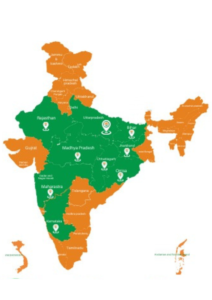
Anya Green Energy is a leading solar company and Solar Energy service provider established in 2013. We are recognized by startup India and customer best choice award 2022.
Our Achievements :
Recognized by Startup India.
Purvanchal’s first solar company to operate exclusively with solar products.
Certified by well-known institutions such as MSME, IndiaMart, and Just Dial and many more.
Winner of the Best Customer Choice Award 2022.
Over 50,000 happy customers across India.