How Long Do Solar Panels Last? The Complete Solar Panel Life Span Guide
Transitioning to clean energy is one of the most powerful financial and environmental decisions a property owner can make. However, committing to a clean power installation requires clear insight into long-term equipment performance. The foundational question every homeowner asks before signing a contract is straightforward: What is the real solar panel life span, and how does power generation hold up over decades of continuous weather exposure?
Many consumers fear that expensive roof installations will fail after a single decade, turning a green investment into a financial headache. The reality, backed by extensive laboratory testing and decades of real-world data, is far more reassuring. Understanding the parameters that dictate long-term equipment performance allows property owners to plan accurately, protect their equipment, and maximize their financial returns.
1. Defining the Standard Solar Panel Life Span
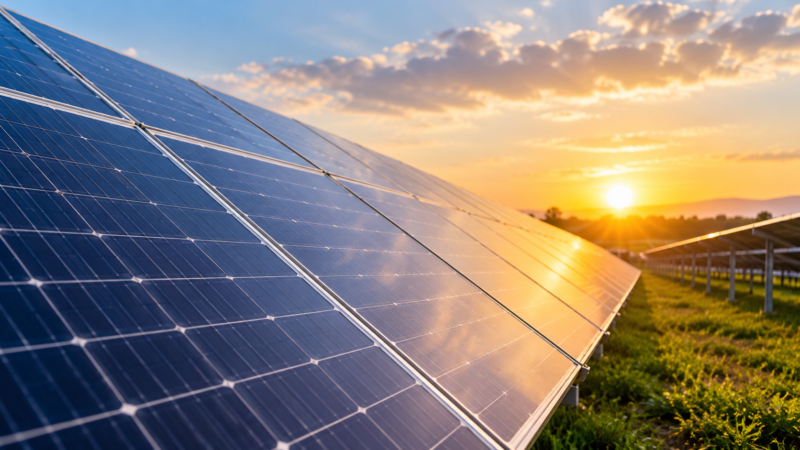
When engineers and manufacturers evaluate equipment durability, they refer to an industry-standard benchmark. Under typical operational conditions, the average solar panel life span ranges between 25 and 30 years.
================================================================================
                       SOLAR PANEL LIFE SPAN SPECTRUM
================================================================================

[ Year 0 - 25 ]  ===> Guaranteed Useful Life (Warranty Covered: 80% to 92% Output)
[ Year 25 - 30 ] ===> Extended Operational Era (Slightly Reduced Power Output)
[ Year 30 - 40+ ]===> Bonus Operational Era (Free Electricity at ~70-80% Capacity)
================================================================================
It is crucial to clarify a common misconception: reaching the end of a 25-year warranty period does not mean a solar array suddenly stops generating power or shuts down overnight. Photovoltaic modules do not have internal moving parts that shatter or seize up like mechanical engines. Instead, they undergo a slow, predictable process known as performance attenuation.
Modern solar technology experiences “graceful degradation”. Over time, the materials inside each panel gradually lose a tiny fraction of their ability to convert sunlight into usable electricity. A module that reaches the 30-year threshold continues to produce reliable electricity; it simply generates a smaller wattage than it did on day one. The industry defines the end of a module’s “useful life” as the specific point where power output drops below 70% to 80% of its original factory rating.
“A solar panel’s lifespan isn’t measured by when it stops producing electricity entirely. Instead, we use its ‘useful life’ to determine its lifespan—the point at which output falls below guaranteed efficiency thresholds.”
When calculating the total financial return of clean energy, a longer solar panel life span directly boosts your overall solar energy ROI. Knowing that your roof will produce low-cost power past Year 25 changes how you calculate total savings.
2. Understanding Solar Panel Degradation Rates
To understand how power output changes over several decades, you must analyze the underlying solar panel degradation rate. Every photovoltaic cell slowly degrades over time due to continuous exposure to sunlight, UV radiation, rain, and extreme temperature changes.
+------------------------------------------------------------------------------+
|                   ANNUAL POWER DEGRADATION COMPARISON                        |
+------------------------------+--------------------+--------------------------+
| Module Technology Class      | Year 1 Drop (LID)  | Annual Degradation Rate  |
+------------------------------+--------------------+--------------------------+
| Premium N-Type TOPCon / HJT  | < 1.0%             | 0.25% - 0.40% / year     |
| Standard Monocrystalline PERC| 1.5% - 2.0%        | 0.50% - 0.70% / year     |
| Legacy Polycrystalline       | 2.0% - 3.0%        | 0.80% - 1.00% / year     |
+------------------------------+--------------------+--------------------------+
Extensive research conducted by the National Renewable Energy Laboratory (NREL) reveals that the median solar panel degradation rate across all modern installations sits at approximately 0.5% per year.
0.5% Annual Degradation: A solar module retains 97.5% capacity at Year 5, 90% capacity at Year 20, and 87.5% capacity at Year 25.
0.8% Annual Degradation: A lower-grade solar module retains 96.0% capacity at Year 5, 84% capacity at Year 20, and 80.0% capacity at Year 25.
Controlling and minimizing your annual solar panel degradation rate is the single most important factor in maximizing long-term photovoltaic system longevity. Choosing high-efficiency modules with strong build quality prevents early power loss, keeping your system productive well into its second and third decades
3. The Science Behind Panel Aging: Why Do Modules Degrade?
Solar modules are exposed to tough weather conditions every single day. Understanding the chemical and physical causes of aging helps explain why different panel designs age at different rates.
                          ENVIRONMENTAL STRESSORS
                                     │
         ┌───────────────────────────┼───────────────────────────┐
         ▼                           ▼                           ▼
  Thermal Cycling            UV & Solar Radiation        Mechanical Loading
(Expansion & Contraction)    (Encapsulant Yellowing)    (Wind, Snow & Vibrations)
         │                           │                           │
         ▼                           ▼                           ▼
Micro-Cracks in Wafers       Light Transmission Loss     Frame & Seal Breakdown
Light-Induced Degradation (LID)
Light-Induced Degradation happens during the first few hours a new panel is exposed to sunlight. In traditional P-type silicon wafers, oxygen impurities interact with boron additives. This reaction causes a minor, one-time power drop of 1% to 3% right after installation. Modern N-type silicon modules use phosphorus instead of boron, making them virtually immune to LID losses.
Thermal Cycling and Micro-Cracking
Rooftops experience extreme temperature changes. Panels expand under afternoon heat and contract during cold nights. Over thousands of these temperature cycles, subtle movement creates microscopic cracks in the thin silicon wafers. While hidden to the naked eye, micro-cracks disrupt electricity flow, increasing internal resistance and slowly reducing total output.
Encapsulant Browning and Yellowing
Silicon cells are sealed between a protective glass top and an EVA (ethylene-vinyl acetate) plastic backing layer. Decades of intense solar ultraviolet (UV) radiation slowly discolor this clear plastic layer, turning it slightly yellow or brown. This discoloration blocks a small fraction of incoming sunlight from reaching the silicon layer, slightly reducing conversion efficiency over time.
Potential-Induced Degradation (PID)
Potential-Induced Degradation occurs when voltage differences between the internal solar cells and the grounded aluminum frame cause stray electric currents. Left unmanaged, these stray currents drain power from the cell circuits. Fortunately, high-quality modern modules use anti-PID glass coatings and improved cell insulation to prevent this issue entirely
4. Primary Factors Influencing Photovoltaic System Longevity
Not all installations age at the exact same rate. A system installed in a mild climate will age differently than one operating under extreme environmental conditions. Key variables directly affect your total solar panel life span.
+------------------------------------------------------------------------------+
|                     ENVIRONMENTAL IMPACT ON LIFESPAN                         |
+--------------------+------------------------+--------------------------------+
| Climate Zone       | Primary Stress Factor  | Impact on Operational Life     |
+--------------------+------------------------+--------------------------------+
| Moderate / Cool    | Low Thermal Stress     | Highest Longevity (35+ Years)  |
| Desert / Extreme   | High Heat & UV Exposure| Higher Degradation (0.8%/Year) |
| Coastal / Marine   | Salt Mist & Humidity   | Risk of Hardware Corrosion     |
| Alpine / Heavy Snow| High Static Load       | Glass & Frame Flex Stress      |
+--------------------+------------------------+--------------------------------+
Thermal Environment and Temperature Coefficients
While solar modules rely on light, excessive heat reduces their operational efficiency. Panels installed in hot desert regions run at high temperatures for months at a time, accelerating chemical wear on internal sealants. Modern modules are rated with a “temperature coefficient” that shows how well they handle extreme heat. Premium panels with low temperature coefficients suffer less efficiency loss in high temperatures.
Quality of Materials and Manufacturing Precision
The quality gap between budget and tier-1 modules directly impacts performance over time. Premium manufacturers use thicker tempered glass, reinforced aluminum frames, and pure silicon wafers. Budget modules with thin backsheets or low-grade sealants are far more vulnerable to moisture, which corrodes internal copper wiring.
Installation Angles and Structural Support
Proper structural installation plays a major role in photovoltaic system longevity. Panels installed at an appropriate tilt angle naturally flush away leaves, dirt, and dust when it rains. Flat-mounted panels often pool water along their bottom edges, collecting dirt that creates shaded spots and dangerous internal hot spots over time.
5. Practical Solar Panel Maintenance Tips
While solar arrays require no daily operating work, setting up a simple upkeep routine is the best way to extend your solar panel life span.
+------------------------------------------------------------------------------+
|                       ROUTINE MAINTENANCE TIMELINE                           |
+----------------------+-------------------------------------------------------+
| Frequency            | Action Items                                          |
+----------------------+-------------------------------------------------------+
| Monthly              | Review app monitoring data for sudden output drops    |
| Bi-Annually          | Visual inspection from ground level for dirt/shade    |
| Annually             | Gentle surface rinse (if dry weather causes dust)     |
| Every 3 to 5 Years   | Professional electrician inspection of roof mounts    |
+----------------------+-------------------------------------------------------+
Surface Cleaning Best Practices
Dust, pollen, bird droppings, and soot block sunlight from reaching the silicon cells beneath the glass. In areas with regular rain, nature handles most of this cleaning for you. However, in dry or dusty regions, rinsing your panels once or twice a year restores lost performance.
Pro Tip: Never wash hot solar glass with cold water on a blazing summer afternoon. The sudden temperature drop can crack the tempered glass. Wash your panels early in the morning when the glass is cool.
Shading Management and Tree Trimming
Surrounding trees grow over time, slowly casting new shadows across your roof. Shading reduces power output and forces bypass diodes inside the modules to work continuously, generating localized heat. Keeping nearby branches trimmed prevents drop-offs in output and extends panel hardware life.
Monitoring System Performance via Software
Modern solar installations include digital performance monitoring that tracks energy output down to the individual module level. Checking your system app once a month allows you to catch output issues early. A sudden drop in power on a single roof section usually points to a blown fuse, loose wire, or heavy dirt buildup rather than equipment failure.
Following simple solar panel maintenance tips preserves your system’s output and keeps warranty protections intact should you ever need to file a claim.
6. Financial Analysis: Maximizing Your Solar Energy ROI
Understanding equipment durability helps you evaluate the financial return of clean energy. Achieving a strong solar energy ROI depends on keeping output steady long after your initial equipment payback period ends.
+------------------------------------------------------------------------------+
|                  CUMULATIVE NET SAVINGS OVER A 30-YEAR PERIOD                |
|                                                                              |
| Years 01-07: [=============> System Payback Phase (Costs Recovered)         |
| Years 08-20: [=================================> Pure Financial Savings      |
| Years 21-30+: [============================================> Extended Yield  |
+------------------------------------------------------------------------------+
The System Payback Timeline
Most residential rooftop installations pay for themselves through utility bill savings within 6 to 9 years. Once your total electricity savings cover the original purchase and installation costs, every kilowatt-hour generated after that point is clear profit.
+------------------------------------------------------------------------------+
|                FINANCIAL MODEL: 8kW SYSTEM OVER 30 YEARS                     |
+-----------------------------------------+------------------------------------+
| Initial System Cost (After Tax Credits) | $18,000                            |
| Average Payback Period                  | 7 Years                            |
| Years 8–25 Electricity Savings          | $38,000                            |
| Years 26–30 Extended Savings            | $12,000 (Bonus Savings Period)     |
| Lifetime Inverter Maintenance Reserve   | -$2,500                            |
| Estimated Net Lifetime Savings          | $47,500                            |
+-----------------------------------------+------------------------------------+
Because panels continue generating power at 80% to 85% capacity in Years 25 through 30, the financial returns grow significantly over time. Buying high-quality equipment with a low solar panel degradation rate ensures you collect these high-margin savings in the later years of operation.
7. Understanding Solar Warranties: Product vs. Performance Coverage
Solar warranties can sound confusing, but understanding the fine print reveals exactly how long manufacturers expect their equipment to operate.
Product Warranty (Workmanship)
The product warranty protects against physical defect failures. If a junction box falls off, a frame welds breaks, or glass cracks on its own, the manufacturer repairs or replaces the panel free of charge. Premium brands offer product warranties spanning 25 years, while standard modules offer 12 to 15 years.
Performance Warranty (Power Output)
The performance warranty outlines an explicit guarantee for power generation over time. It promises that panel degradation will not exceed a specific yearly rate. For instance, a standard performance warranty guarantees that output will not drop below 98% in Year 1, and will stay above 85% at Year 25. Premium N-type panels now come with 30-year performance guarantees that promise 87.4% or higher capacity at Year 30.
8. Components That Need Replacement Before Your Panels
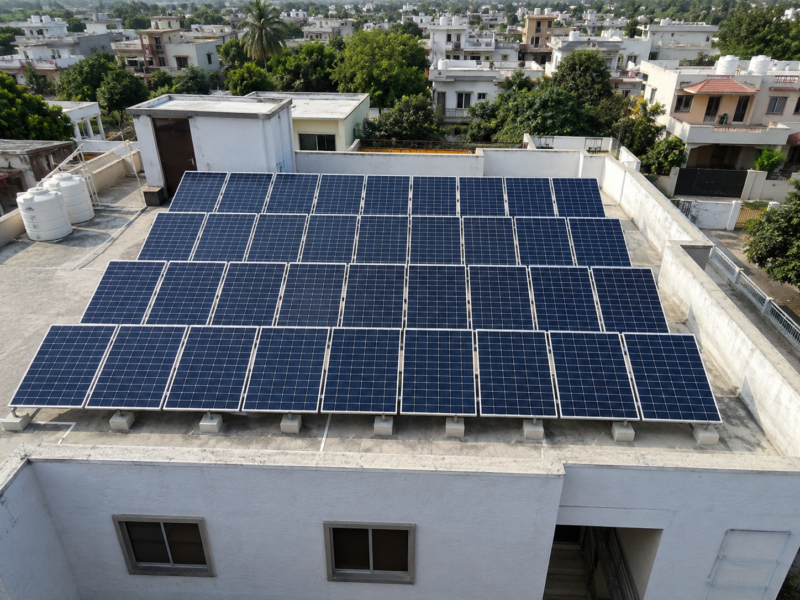
While photovoltaic panels can last 30 to 40 years, other key electrical parts in your system have shorter operational lifespans. Planning for component updates protects overall photovoltaic system longevity and prevents unexpected downtime.
Inverter Replacements: String vs. Microinverters
Inverters process high-voltage direct current (DC) electricity into household alternating current (AC) power. Because inverters handle high voltages and experience internal heat cycling, their electrical parts wear out faster than solar glass.
-
String Inverters: Central wall-mounted units last 10 to 15 years. Expect to replace a central inverter once during your system’s operational lifetime.
-
Microinverters: Small units mounted underneath each roof panel last 20 to 25 years. Their operational life closely matches the solar panel life span, reducing mid-life repair needs.
Home Battery Storage Systems
Solar batteries use chemical reactions that age faster than solid-state silicon cells. Lithium Iron Phosphate (LFP) home batteries typically offer 10 to 15 years of reliable performance before holding significantly less charge.
9. Next-Gen Tech: How Innovation Is Extending Lifespans
Technological advancements are driving down degradation rates while pushing manufacturing durability higher than ever before.
+------------------------------------------------------------------------------+
|                     NEXT-GENERATION SOLAR INNOVATIONS                        |
+----------------------+-------------------------------------------------------+
| Technology           | Design Improvement & Lifespan Benefit                 |
+----------------------+-------------------------------------------------------+
| Dual-Glass Modules   | Replaces plastic backsheets with tempered glass      |
| TOPCon / N-Type      | Eliminates Light-Induced Degradation (LID)           |
| Multi-Busbar (MBB)   | Creates redundant wiring pathways around cell cracks  |
| Advanced Polymer     | Prevents moisture penetration inside the module    |
+----------------------+-------------------------------------------------------+
Dual-Glass (Glass-Glass) Module Designs
Traditional solar modules use a tempered glass top sheet and a plastic polymer back sheet. Next-generation designs swap out the plastic back sheet for a second layer of ultra-thin tempered glass. Dual-glass designs seal internal silicon cells inside an airtight frame, stopping moisture penetration, salt spray corrosion, and chemical breakdown entirely.
N-Type TOPCon and Heterojunction (HJT) Silicon
Advanced silicon manufacturing has made N-type cell architectures the new market standard. By removing boron from cell designs, TOPCon and HJT technologies cut annual degradation rates down to 0.25% to 0.30% per year. These panels are built to deliver over 87% of their original rated power after 30 years of continuous operation.
10. What Options Exist When Panels Reach Year 25?
Keep System Running for Free Electricity: If your older array still covers your household power needs, continuing to use paid-off panels is the most profitable choice. Your installation produces free, clean energy with zero remaining equipment debt.
Repower the Array: If your energy needs have grown, replacing older 250-watt panels with modern 450-watt modules allows you to double your roof’s power output using the same racking infrastructure.
Recycle End-of-Life Panels: Modern recycling programs recover over 90% of a solar panel’s raw materials by weight, including glass, aluminum, copper, and purified silicon. Recovered materials are reused to manufacture new clean energy equipment.
11. Property Owner Action Checklist
To protect your installation, maximize your photovoltaic system longevity, and guarantee a strong solar energy ROI, follow these steps:
[ ] Choose Tier-1 Equipment: Select manufacturers offering dual-glass N-type panels with published annual degradation rates below 0.4%.
[ ] Verify Warranty Terms: Ensure your installation includes a 25-year product warranty alongside a 25-to-30-year performance guarantee.
[ ] Work with Certified Installers: Choose qualified contractors to ensure proper roof sealing and ventilation, preventing heat buildup.
[ ] Follow Basic Maintenance Guidelines: Keep your panels free of shade, rinse away heavy dust buildup, and trim overhanging branches.
[ ] Monitor Monthly Output: Use app monitoring to catch output drops early and keep your system running smoothly.
By choosing high-quality equipment and completing simple routine upkeep, you can easily protect your solar panel life span—enjoying clean, reliable electricity for 30 years and beyond.
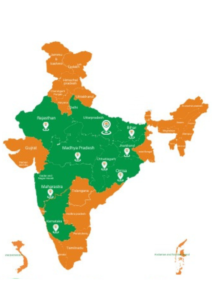
Trusted by 50000+ Customers
Anya Green Energy is a leading solar company and Solar Energy service provider established in 2013. We are recognized by startup India and customer best choice award 2022.
Our Achievements :
Recognized byStartup India.
Purvanchal’s first solar company to operate exclusively with solar products.
Certified by well-known institutions such as MSME, IndiaMart, and Just Dial and many more.
Winner of the Best Customer Choice Award 2022.
Over 50,000 happy customers across India.