Solar Training for Beginners: The Ultimate Guide to Launching Your Clean Energy Career

The world is undergoing a dramatic energy transformation as nations transition away from fossil fuels toward clean, renewable power generation. India sits at the forefront of this global shift, expanding its solar generation capacity at an unprecedented rate across residential rooftops, commercial complexes, and massive utility-scale solar parks.
As government policies, international climate commitments, and falling technology costs accelerate clean energy adoption, the demand for skilled workforce talent has reached historic levels. Enrolling in a comprehensive solar energy course provides the foundational knowledge required to enter this fast-growing sector with confidence.
However, many newcomers struggle to navigate the technical jargon, software tools, and regulatory frameworks required in the industry. Investing in structured solar training for beginners provides the ideal entry point for anyone wanting to build a sustainable, future-proof career in clean tech.
Why Solar Training Matters in Today's Job Market
The rapid expansion of the renewable sector has created a significant skill gap across the country. While thousands of engineering and diploma graduates enter the job market each year, many lack the practical, industry-aligned technical skills that solar companies require.
Structured solar training for beginners bridges this exact gap by converting theoretical engineering concepts into real-world project execution capability. Candidates learn how photovoltaic systems actually function, how equipment is selected, and how installation projects are managed from concept to grid connection.
Furthermore, acquiring formal training empowers individuals to learn solar panel installation techniques, design software tools, and discom compliance workflows. This practical expertise makes certified candidates significantly more attractive to hiring managers across solar engineering, procurement, and construction companies.
What Does Solar Training Cover?
A well-designed introductory program demystifies the technical principles behind photovoltaic energy generation. It breaks down complex physical and electrical concepts into clear, actionable learning modules that anyone with basic technical curiosity can master.
Enrolling in solar training for beginners allows students to understand the foundational principles of electricity, direct current versus alternating current, and how solar cells convert sunlight into electrical power. Students also learn to differentiate between on-grid, off-grid, and hybrid system architectures.
Additionally, technical programs introduce candidates to specialized software applications used across the industry. Gaining hands-on exposure through solar PV design training teaches students how to model 3D rooftop layouts, simulate shading patterns, and estimate annual energy yields accurately.
Ready to switch to Solar?
Solar solutions with Anya Green Energy and discover how you can reduce your electricity bills.
Contact UsWho Should Pursue Solar Training?
One of the greatest advantages of the solar sector is its multidisciplinary nature. People from diverse academic and professional backgrounds can successfully build careers once they acquire structured foundational knowledge.
Taking solar training for beginners is particularly beneficial for several key groups:
1. Fresh Graduates and Job Seekers
Recent engineering, diploma, science, and business graduates seeking high-growth entry-level jobs benefit immensely from practical domain training. Completing a recognized course transforms a standard academic resume into a specialized, job-ready profile.
2. Working Professionals and Career Switchers
Engineers, project managers, and technicians currently working in traditional industries — such as automotive, fossil-fuel utilities, or electrical maintenance — can switch smoothly into clean energy by mastering photovoltaic fundamentals.
3. Teachers, Professors, and Academic Educators
Educators wanting to update their academic curriculum or guide their students toward clean tech careers can enroll in flexible online solar training programs. Understanding modern industry standards helps teachers deliver practical, real-world knowledge in their classrooms.
4. Entrepreneurs and Small Business Owners
Electrical contractors, building supervisors, and aspiring entrepreneurs wanting to launch their own solar installation or consulting business need a firm grasp of design, equipment selection, and grid approval processes.
Key Modules in an Industry-Aligned Beginners' Program
To ensure that students gain complete operational understanding, a high-quality introductory curriculum covers five essential learning pillars:
Module 1: Solar Photovoltaic System Fundamentals
Students explore the physics of photovoltaic cells, comparing monocrystalline, TOPCon, and bifacial solar panel technologies. This module also covers inverter operating principles, string configurations, and balance-of-system hardware.
Module 2: Site Assessment and Shading Analysis
Learners discover how to evaluate rooftop structural integrity, analyze solar tilt angles, and identify shading obstructions. Mastering site surveys ensures that installed systems generate maximum power output throughout their operational lifespan.
Module 3: System Design and Software Simulation
Through dedicated solar PV design training, students learn to use industry-standard tools like PVSyst, Helioscope, and AutoCAD. Learners prepare single-line electrical diagrams, calculate string sizing, and generate professional techno-commercial proposals.
Module 4: Installation, Safety, and Quality Control
Students explore site execution best practices, learning how to learn solar panel installation procedures safely. This module emphasizes Central Electricity Authority safety standards, earthing pit design, surge protection, and structural racking assembly.
Module 5: Regulations, Net Metering, and Project Economics
Learners study discom net metering rules, state regulatory tariffs, and financial return calculations. Understanding payback periods, return on investment, and government subsidy schemes allows students to evaluate project economics effectively.
Comparison: Beginners’ Solar Program vs Advanced Technical Training
| Training Dimension | Beginners’ Solar Program | Advanced Technical Masterclass |
|---|---|---|
| Target Audience | Freshers, Teachers, Career Switchers | Senior Engineers, Utility Project Managers |
| Prerequisite Knowledge | Basic High School Science / Tech Curiosity | Electrical Engineering Degree + Field Exp |
| Primary Focus | Fundamentals, Software Intro, Basic Design | Complex SCADA, Substation, Grid Dynamics |
| software Tools Taught | AutoCAD Basics, Helioscope, Basic PVSyst | Advanced PVSyst, ETAP, MATLAB Simulation |
| Typical Course Duration | 4 to 8 Weeks (Flexible Online) | 3 to 6 Months (Intensive / Field-Based) |
Introducing AGESA: Anya Green Energy Solar Academy
While theoretical courses provide academic knowledge, bridging the gap between learning and actual job placement requires direct industry mentorship. To address this need, Anya Green Energy is proud to launch AGESA (Anya Green Energy Solar Academy) — a specialized training and career development platform.
AGESA delivers industry-aligned solar training for beginners designed specifically to transform motivated learners into qualified clean energy professionals.
1. Flexible Online Coaching Tailored for Busy Schedules
AGESA offers high-quality online solar training modules designed for students, working professionals, and educators. Our flexible digital coaching allows learners to master complex design concepts, simulation software, and discom regulations from the comfort of their homes without interrupting their current jobs or studies.
2. Tailored Programs for Freshers, Teachers, and Job Seekers
Our curriculum is structured to support different learning goals:
- Freshers and Job Seekers: Gain practical design software skills, resume support, and technical interview preparation to land entry-level roles.
- Teachers and Educators: Master practical industry concepts and software tools to update academic coursework and train the next generation of students.
- Contractors and Entrepreneurs: Understand equipment selection, financial modeling, and discom grid approval workflows to launch independent clean tech ventures.
3. Practical Curriculum Taught by Industry Experts
Every AGESA module is created and delivered by senior engineers and project managers actively working at Anya Green Energy. Students work on real-world commercial rooftop designs, discom clearance documentation, and actual project financial models rather than purely academic exercises.
4. Guaranteed Internship Opportunities at Anya Green Energy
A unique highlight of AGESA is our direct pathway to hands-on work experience. Top-performing students enrolled in our programs receive exclusive internship opportunities within Anya Green Energy.
Interns work alongside our engineering teams on live commercial, industrial, and residential projects, applying what they learned in their online classes to real-world engineering challenges.
Furthermore, exceptional interns are fast-tracked for full-time employment roles at Anya Green Energy, while all graduates receive dedicated career support across our national network of clean tech partners.
Career Opportunities After Completing Solar Training
Completing structured solar training for beginners opens diverse career pathways across the expanding clean energy economy:
- Solar System Design Engineer — modeling 3D rooftop layouts, simulating energy yield, and preparing technical drawings using specialized design software.
- Site Execution Engineer — supervising on-site equipment assembly, cable routing, earthing installation, and electrical commissioning.
- Operations and Maintenance Technician — monitoring real-time plant performance, diagnosing electrical faults, and managing preventative maintenance schedules.
- Techno-Commercial Sales Associate — conducting client site surveys, preparing financial return models, and presenting clean energy proposals to commercial buyers.
Starting salaries for trained entry-level professionals typically range between ₹3.0 Lakhs and ₹5.5 Lakhs per annum, with rapid salary growth as individuals gain project execution experience
Step-by-Step Action Plan to Start Your Solar Journey
If you are ready to begin your journey toward a rewarding clean tech career, follow this simple roadmap:
- Assess Your Career Goals: Determine whether your interests lie in system design software, site execution, O&M, or commercial business development.
- Select the Right Learning Platform: Look for industry-backed programs like AGESA that offer flexible online learning combined with practical software exposure.
- Master Key Software Applications: Dedicate time to mastering core tools like PVSyst, Helioscope, and AutoCAD through practical design assignments.
- Build a Practical Project Portfolio: Create 3D solar designs for local buildings, compile your simulation reports, and build a digital portfolio to showcase to employers.
- Apply for Internships and Entry Roles: Leverage certification credentials and your portfolio to apply for structured internships and entry-level positions across the sector.
Where Anya Green Energy Stands
At Anya Green Energy, we believe that investing in human potential is essential for building a sustainable future. As a premier solar engineering, procurement, and construction firm, we deliver high-performance solar solutions across India while actively nurturing the industry’s future workforce.
Through Anya Green Energy’s commercial operations and our AGESA training academy, we provide the practical skills, mentorship, and career opportunities needed to power India’s clean energy transition.
Whether you are a student eager to launch your career, an educator wanting to expand your technical knowledge, or a job seeker pursuing new horizons, enrolling in structured solar training for beginners with AGESA is your first step toward long-term professional success.
Frequently Asked Questions
Q1: Is solar training for beginners suitable for people without an electrical engineering degree?
A1: Yes, solar training for beginners is specifically designed to accommodate candidates from non-electrical backgrounds, including mechanical, civil, science, commerce, and business graduates, by starting with foundational principles before moving to practical system design.
Q2: What key topics are covered in a standard solar energy course?
A2: A comprehensive solar energy course covers photovoltaic cell technology, inverter selection, on-grid and off-grid system design, site shading analysis, AutoCAD and PVSyst software simulation, discom net metering rules, and project financial modeling.
Q3: Can I learn solar panel installation techniques through online programs?
A3: Online programs teach the theoretical principles, structural racking concepts, wiring safety standards, and electrical diagrams required to learn solar panel installation, which are then reinforced through practical field internships and hands-on site work.
Q4: How does AGESA’s online solar training help teachers and academic educators?
A4: AGESA’s online solar training provides teachers with flexible access to modern industry software, real-world case studies, and current discom regulatory updates, enabling them to enhance their academic teaching and guide students toward clean tech careers.
Q5: What are the career advantages of completing specialized solar PV design training?
A5: Completing specialized solar PV design training equips job seekers with practical software skills in PVSyst, Helioscope, and AutoCAD, making them immediately productive for design engineering roles and significantly improving their hiring prospects.
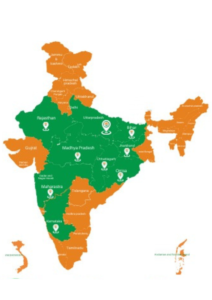
Trusted by 50000+ Customers
Anya Green Energy is a leading solar company and Solar Energy service provider established in 2013. We are recognized by startup India and customer best choice award 2022.
Our Achievements :
Recognized by Startup India.
Purvanchal’s first solar company to operate exclusively with solar products.
Certified by well-known institutions such as MSME, IndiaMart, and Just Dial and many more.
Winner of the Best Customer Choice Award 2022.
Over 50,000 happy customers across India.