Commercial Solar : How Businesses Can Reduce Overhead with Rooftop Power
For factories, offices, warehouses and schools, electricity is not just a utility expense. It is an operating cost that can influence margins, production planning and long-term business competitiveness.
That is why C&I solar is becoming an important consideration for businesses evaluating their energy strategy. By generating electricity at their premises or procuring renewable power through suitable arrangements, organisations can reduce exposure to conventional electricity costs.
However, the business case involves more than installing panels. Decision-makers must assess energy consumption, roof suitability, financing, tax treatment, regulatory requirements and sustainability objectives.
This guide explains how C&I solar can fit into a business’s financial and operational planning, with a focus on Indian commercial and industrial consumers.
What Is Commercial and Industrial Solar?
Commercial and industrial solar refers to solar energy systems designed for businesses and institutions rather than individual households. These installations may serve factories, manufacturing facilities, shopping centres, schools, hospitals, office buildings and logistics warehouses.
A commercial solar installation uses suitable roof space to generate electricity for the facility. Depending on the project’s configuration, a business may consume the electricity directly, export eligible surplus under applicable arrangements or procure renewable electricity from an external project.
The main advantage of C&I solar is that it connects energy generation with business operations. Organisations can evaluate how daytime generation aligns with production schedules, cooling requirements, lighting and other electrical loads.
For example, a manufacturing unit in Uttar Pradesh that operates substantial daytime machinery may have commercial solar a different solar opportunity from a warehouse that uses most of its electricity overnight. Both may benefit from an assessment, but their system designs and financial outcomes can differ.
Why Are Businesses Considering Rooftop Solar?
Electricity expenditure can affect operating margins, especially for energy-intensive facilities. A well-designed commercial solar project can help businesses manage part of this expenditure while supporting longer-term energy planning.
1. Managing electricity costs
One of the main reasons to evaluate C&I solar is the opportunity to generate electricity at the point of consumption. When generation coincides with facility demand, the business may reduce the amount of electricity it needs to purchase from the grid.
The actual savings depend on the tariff structure, commercial solar system cost, generation profile, self-consumption, financing and applicable charges. A credible feasibility study should use the facility’s electricity bills rather than generic savings promises.
2. Using available roof space
Factories and warehouses may have large roof areas that can potentially accommodate photovoltaic modules. A commercial rooftop solar project can turn suitable unused space into an energy-generating asset.
Before installation, businesses must evaluate structural capacity, waterproofing, shading, roof access, maintenance requirements and the remaining life of the roof. Available area alone does not determine the feasible commercial solar system capacity.
3. Improving energy planning
For businesses with predictable daytime loads, solar generation can be incorporated into operating budgets and energy forecasts. This makes commercial solar relevant to financial planning, not simply environmental communication.
However, solar output varies with daylight, weather and system performance. Businesses that operate at night or require uninterrupted electricity may need additional supply arrangements or storage.
How Does a Commercial Solar Project Work?
A business generally begins with an assessment of its energy demand, premises and financial objectives. The project team then evaluates the appropriate system size, connection arrangement and commercial model.
The process typically includes:
Reviewing electricity bills, demand patterns and applicable tariffs.
Inspecting the roof or identifying suitable alternative project locations.
Estimating generation and the proportion likely to be consumed onsite.
Comparing capital purchase, financing and third-party ownership options.
Assessing grid connectivity, approvals and applicable regulations.
Evaluating quotations, warranties, operating costs and expected returns.
A thorough assessment helps determine whether C&I solar is technically and commercially appropriate.
Tax Benefits: Understanding Depreciation
Depreciation allows eligible businesses to account for the reduction in the value of qualifying assets over time for tax purposes. Accelerated depreciation, where applicable, can allow a larger proportion of an asset’s depreciable value to be recognised earlier than under a slower depreciation schedule.
The potential benefit of accelerated depreciation for commercial solar solar depends on the business’s tax position and the rules applicable to its installation.
For instance, a company considering a rooftop installation should ask its tax adviser to model the project’s cash flows both with and without the applicable depreciation treatment. This provides a clearer picture of the investment’s financial impact.
Importantly, a depreciation rate of 40% does not mean that the government pays 40% of the installation cost. The tax effect depends on eligible depreciation, taxable income and other applicable provisions.
Businesses should verify accelerated depreciation for commercial solar before including tax benefits in a board-approved investment case. Eligibility should never be assumed solely because the equipment generates renewable electricity.
Solar Financing: Purchase or Power Purchase Agreement?
Not every business needs to purchase and own a solar installation. Two broad approaches are worth comparing: direct ownership and a third-party power purchase arrangement.
Option 1: Own the solar installation
Under direct ownership, the business funds the installation through available capital or financing. It generally assumes responsibility for the asset, subject to the project contract and applicable arrangements.
This model may suit organisations that want greater control over their equipment and can justify the upfront investment. The financial assessment should include capital expenditure, maintenance, insurance where applicable, financing costs and expected generation.
Option 2: Enter a commercial solar power purchase agreement
A solar power purchase agreement (PPA) is a contract under which a buyer purchases electricity from a solar project at agreed commercial terms. Depending on the arrangement, a third party may finance, own and operate the system.
For a rooftop PPA, the parties must clarify who owns the equipment, who maintains it, how electricity is measured and how payments are calculated.
Before signing a commercial solar power purchase agreement, businesses should examine the contract duration, tariff escalation provisions, minimum purchase obligations, performance commitments, termination terms and treatment of roof access.
The comparison should also include any charges associated with grid use or applicable regulatory arrangements. A PPA may reduce upfront capital requirements, but it does not automatically guarantee lower total electricity costs.
What About Open Access Solar?
A company does not always need to install panels on its own roof to procure renewable electricity. Depending on eligibility and applicable regulations, it may explore power procurement through open access from an offsite renewable energy project.
India’s Green Energy Open Access Rules provide a framework for eligible consumers to procure renewable electricity. The practical requirements, charges and approvals depend on the applicable central and state regulations.
This can be relevant to businesses with limited roof space or several facilities. However, C&I solar procurement through open access requires careful assessment of the consumer’s demand, project arrangement, applicable charges and state-specific rules.
Businesses should compare rooftop generation, captive arrangements and third-party procurement on a like-for-like basis. A proposal should clearly disclose the assumptions used to calculate delivered electricity cost.
Corporate Sustainability and ESG Goals
Environmental, social and governance (ESG) considerations are increasingly relevant to corporate planning, supplier assessments and stakeholder communication.
Solar electricity can support an organisation’s renewable energy objectives by reducing its reliance on conventional grid electricity to the extent that solar generation is consumed or appropriately accounted for.
A structured corporate and commercial solar sustainability programme should start with a documented baseline, an emissions-accounting methodology and a plan for measuring results. Companies should distinguish between installed capacity, electricity generated, electricity consumed and emissions reductions calculated under an appropriate methodology.
For organisations with formal sustainability reporting, corporate solar sustainability should be supported by generation records, energy invoices and transparent calculations rather than broad environmental claims.
Solar adoption can also help businesses engage employees, customers and supply-chain partners in their energy strategy. Nevertheless, installing a solar system alone does not establish that a company is fully sustainable or has achieved a particular ESG target.
How to Evaluate the Business Case
Before committing to a project, business leaders should assess the investment using actual operational data.
| Evaluation area | Key question |
|---|---|
| Electricity demand | How much electricity is consumed during solar generation hours? |
| Roof suitability | Can the roof support the proposed system safely? |
| Financial return | What are the expected costs, savings and payback assumptions? |
| Tax treatment | Which depreciation provisions apply to this business and asset? |
| Commercial model | Is ownership, financing or a PPA more appropriate? |
| Grid arrangements | Which approvals, metering provisions and charges apply? |
| Sustainability | How will renewable electricity and emissions impacts be documented? |
A good feasibility study should include conservative generation assumptions and clearly identify uncertainties. This is particularly important where production schedules, electricity tariffs or operating conditions may change.
Frequently Asked Questions
Is commercial solar suitable for every business?
No. Suitability depends on electricity demand, roof conditions, tariffs, system costs, operating hours and applicable rules. An assessment is necessary before selecting a project.
Can a business claim depreciation on solar equipment?
Eligible businesses may claim depreciation subject to the applicable tax law, asset classification and other conditions. Confirm the treatment with a qualified tax adviser before relying on it in a financial model.
What is a solar PPA?
A solar power purchase agreement is a contract to purchase electricity from a solar project under agreed terms. Ownership, maintenance, pricing and contractual obligations depend on the agreement.
Can companies procure solar electricity without rooftop panels?
Potentially, yes. Eligible businesses may explore open access or other permitted renewable electricity procurement arrangements, subject to the applicable regulations, charges and approvals.
How does solar support ESG reporting?
Solar can contribute to renewable electricity procurement objectives. Companies should maintain appropriate records and use a transparent, recognised methodology when calculating emissions impacts.
Conclusion: Make Solar an Informed Business Decision
For factories, offices, schools and warehouses, C&I solar can be an opportunity to improve energy planning, make productive use of suitable roof space and support sustainability objectives.
The right project is not necessarily the largest installation or the one with the most attractive headline savings. It is the one that fits the business’s electricity demand, capital strategy, roof conditions and long-term operating requirements.
Anya Green Energy encourages businesses to begin with a proper feasibility assessment, a transparent financial model and a clear understanding of the applicable technical and regulatory requirements.
Planning a solar project for your factory, office, warehouse or institution? Contact Anya Green Energy to discuss your energy requirements and explore a suitable commercial solar solution.
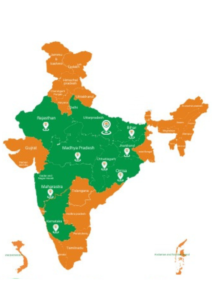
Trusted by 50000+ Customers
Anya Green Energy is a leading solar company and Solar Energy service provider established in 2013. We are recognized by startup India and customer best choice award 2022.
Our Achievements :
Recognized by Startup India.
Purvanchal’s first solar company to operate exclusively with solar products.
Certified by well-known institutions such as MSME, IndiaMart, and Just Dial and many more.
Winner of the Best Customer Choice Award 2022.
Over 50,000 happy customers across India.