Add Your Heading Text Here
For years, green hydrogen has been talked about as the fuel of the future — promising to decarbonise everything from steel plants to cargo ships. In 2026, it’s finally starting to show up in the numbers, not just the pitch decks. Global electrolysis capacity doubled in 2025, and for the first time, low-emissions hydrogen is expected to cross the 1% mark of total global hydrogen production this year.
That might sound small, but the direction matters. If you’ve been hearing about green hydrogen hubs, India’s ₹19,744 crore mission, or companies racing to build electrolysers, this guide breaks down what green hydrogen actually is, where the technology stands right now, and why governments are betting big on it — using the latest 2025–2026 data.
What Is Green Hydrogen?
Green hydrogen is hydrogen gas produced by splitting water into hydrogen and oxygen using electricity generated entirely from renewable energy sources like solar, wind, or hydropower. The process, called electrolysis, uses a machine called an electrolyser to pass an electric current through water, separating it into its two components. Because the electricity comes from clean sources, the process leaves behind almost no carbon emissions — unlike the vast majority of hydrogen produced today.
It’s worth knowing the different “colours” of hydrogen to see where green hydrogen fits:
- Grey hydrogen — produced from natural gas without capturing emissions; this still dominates global hydrogen production.
- Blue hydrogen — produced from fossil fuels, but with carbon capture and storage (CCUS) to reduce emissions.
- Green hydrogen — produced using renewable electricity and water, with virtually no associated emissions.
Green hydrogen matters most for sectors that are hard to electrify directly — steelmaking, chemical production, long-haul shipping, and aviation — where batteries alone can’t do the job.
Green Hydrogen by the Numbers: The Global Picture in 2025–2026
According to the IEA’s Global Hydrogen Review 2026, the technology is scaling faster than ever, even if it’s still a small slice of the overall hydrogen market:
- Global installed electrolysis capacity doubled in 2025, surpassing 4 GW, driven largely by several large-scale projects commissioned in China.
- Low-emissions hydrogen production reached almost 1 million tonnes in 2025 and is expected to cross the 1% threshold of global hydrogen production in 2026.
- China accounted for nearly three-quarters of new electrolyser installations worldwide in 2025.
- Capital spending on low-emissions hydrogen projects reached almost USD 7 billion in 2025 — nearly double the 2024 figure — and is expected to approach USD 10 billion in 2026, with electrolyser projects making up around 70% of that investment.
- More than 2.5 GW of electrolyser capacity is under construction, with growth concentrated in Europe, where the first large-scale green hydrogen projects are expected to come online in 2026.
IRENA’s longer-term outlook is even more ambitious: to stay on track with global climate goals, electrolyser capacity needs to reach roughly 350 GW by 2030 and around 5,000 GW by 2050 — a scale-up of thousands of times from where the world stands today. The cheapest production costs, per the IEA, are expected in northern China, where combined solar and wind can push green hydrogen below USD 2/kg by 2030, while India, the Middle East, and Chile could reach just above USD 3/kg.
India's Green Hydrogen Story: Betting Big on a 5 MMT Target
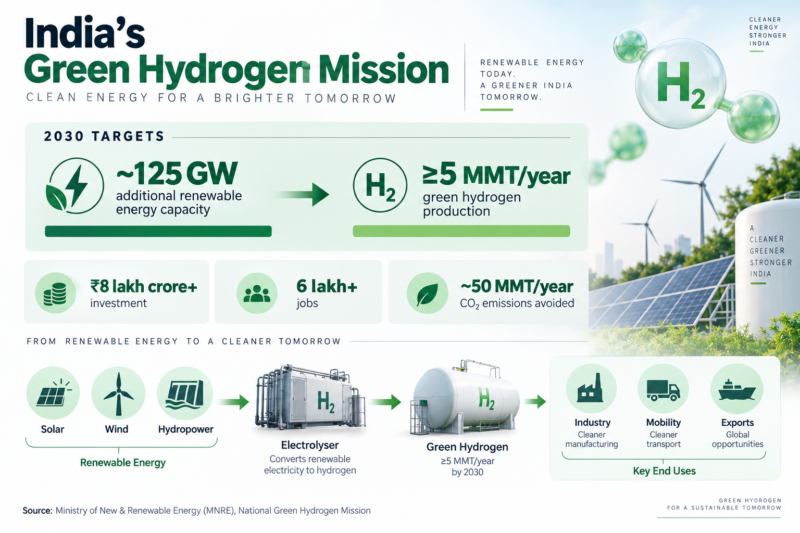
India’s National Green Hydrogen Mission, approved by the Union Cabinet in January 2023 with an outlay of ₹19,744 crore, aims to make the country a global hub for producing, using, and exporting green hydrogen. The headline target: at least 5 million metric tonnes (MMT) of green hydrogen production capacity annually by 2030, with the potential to scale up to 50 MMT as export demand grows.
The mission is built around a few key pillars:
- SIGHT scheme — ₹17,490 crore, nearly 89% of the mission’s total outlay, split between incentives for domestic electrolyser manufacturing and green hydrogen production itself.
- Electrolyser manufacturing push — by mid-2025, 15 companies including Reliance Industries, Adani New Industries, L&T Electrolysers, and BHEL had been awarded a combined 3,000 MW (3 GW) of electrolyser manufacturing capacity, up from just 1.5 GW in 2023.
- 125 GW of associated renewable energy capacity — the mission’s targets depend on adding this much new solar and wind capacity specifically to power electrolysis.
- Production already underway — as of the 2026 Union Budget review, the mission had enabled an annual production capacity of 862,000 tonnes of green hydrogen across 19 companies.
The government expects the mission to attract roughly ₹8 lakh crore in investment, create around 6 lakh jobs, and help abate nearly 50 MMT of CO₂-equivalent emissions annually by 2030 — while reducing India’s dependence on imported fossil fuels for hard-to-abate industries like steel, fertiliser, and refining.
Why Green Hydrogen Matters for the Clean Energy Transition
1. Decarbonising “Hard-to-Abate” Sectors Steel, cement, chemicals, and long-haul transport can’t simply run on batteries or solar panels. Green hydrogen offers one of the few realistic pathways to cut emissions in these industries at scale.
2. Energy Storage and Grid Flexibility Hydrogen can be produced when renewable energy is abundant and cheap, then stored and used later — acting as a long-duration energy storage medium that complements batteries and pumped hydropower.
3. Energy Security and Import Substitution Countries like India, heavily dependent on imported oil and gas, see green hydrogen as a way to build a domestic, renewable-powered fuel supply chain instead of importing fossil energy.
4. Export Potential Nations with abundant, cheap renewable energy — including India, Chile, and parts of the Middle East — are positioning themselves as future green hydrogen exporters to energy-hungry economies in Europe and East Asia.
5. Job Creation and Industrial Growth From electrolyser manufacturing to green hydrogen production hubs, the sector is expected to create hundreds of thousands of jobs globally as capacity scales up through the 2030s.
The Real Challenges Facing Green Hydrogen
Green hydrogen’s promise comes with real, well-documented obstacles that shouldn’t be glossed over:
- High production costs — green hydrogen still costs more than grey or blue hydrogen in most markets, with levelised costs in Europe ranging between USD 4.5–6/kg, compared to potentially under USD 1/kg for gas-based hydrogen with carbon capture.
- Electrolyser manufacturing slowdown — the IEA notes some deceleration in 2025 due to surplus manufacturing capacity and intense internal competition, particularly in China.
- Investment risk and project delays — the IEA’s global pipeline of announced projects actually shrank by 10 million tonnes in 2025, and more than 100 GW of announced electrolyser capacity risks missing 2030 timelines unless investment decisions are made soon.
- Renewable electricity dependency — producing genuinely green hydrogen requires large volumes of additional renewable energy, which competes with direct electricity needs elsewhere in the grid.
- Infrastructure gaps — pipelines, storage, and refuelling infrastructure for hydrogen remain limited, slowing adoption in transport and industrial applications.
- Policy and offtake uncertainty — without binding customer contracts and government support, many large projects are being delayed, downsized, or cancelled.
Green Hydrogen's Role in Global Climate Goals
Green hydrogen is central to most credible net-zero pathways because it addresses emissions that renewable electricity alone can’t touch. IRENA’s 1.5°C scenario calls for clean hydrogen production — largely green hydrogen — to grow to 523 million tonnes per year by 2050, requiring roughly USD 170 billion a year in investment through mid-century.
For India, the National Green Hydrogen Mission is explicitly linked to the country’s 2070 net-zero commitment and its broader clean energy transition, working alongside solar, wind energy, and pumped storage hydropower to decarbonise sectors that would otherwise remain dependent on fossil fuels for decades.
What's Next for Green Hydrogen: Trends to Watch
- Europe’s first large-scale projects go live — 2026 marks the year several major European green hydrogen projects are expected to begin commercial operation, even as slow policy implementation continues to hold back faster scale-up.
- Consolidation in electrolyser manufacturing — with a market correction underway, expect fewer, larger, better-capitalised electrolyser manufacturers rather than today’s fragmented landscape.
- A shift from announcements to final investment decisions — the industry is moving away from speculative project pipelines toward developments with secured funding, binding offtake agreements, and government backing.
- India’s domestic manufacturing ramp-up — expect continued SIGHT scheme tenders as India works to hit its 5 MMT production target and build export capacity.
- Falling costs through scale — as electrolyser manufacturing scales and renewable electricity gets cheaper, green hydrogen production costs are expected to inch closer to fossil-fuel parity in the most favourable regions by 2030.
Final Thoughts: Why Green Hydrogen Deserves More Attention
Green hydrogen isn’t yet a mainstream household term the way solar panels or electric cars are, but it’s quietly becoming one of the most closely watched bets in the clean energy transition. It offers a real answer to decarbonising industries that renewable electricity can’t reach on its own — and 2026’s doubling of electrolysis capacity shows the technology is finally moving from ambition to actual deployment.
As countries like India chase multi-million-tonne production targets and Europe brings its first large-scale plants online, green hydrogen’s trajectory over the next few years will say a lot about how seriously the world is taking the harder parts of the climate challenge. Understanding how it works, where it’s scaling fastest, and what’s still holding it back is the first step to seeing why this technology matters far beyond the headlines.
FAQs
Is green hydrogen the same as renewable energy? Not exactly — green hydrogen is a fuel produced using renewable energy, typically solar or wind electricity, through a process called electrolysis, making it a clean energy carrier rather than a primary energy source itself.
What is the difference between green, blue, and grey hydrogen? Grey hydrogen is made from fossil fuels without emissions capture, blue hydrogen uses fossil fuels with carbon capture, and green hydrogen is produced using renewable electricity and water, resulting in near-zero emissions.
What is India’s target for green hydrogen production? India’s National Green Hydrogen Mission targets at least 5 million metric tonnes of green hydrogen production capacity annually by 2030, with the potential to scale up to 50 MMT as demand grows.
Why is green hydrogen still expensive compared to other fuels? Green hydrogen currently costs more because electrolysers and renewable electricity add significant expense compared to fossil-fuel-based production, though costs are expected to fall as manufacturing scales and renewable energy gets cheaper.
Trusted by 50000+ Customers
Anya Green Energy is a leading solar company and Solar Energy service provider established in 2013. We are recognized by startup India and customer best choice award 2022.
Our Achievements :
Recognized by Startup India.
Purvanchal’s first solar company to operate exclusively with solar products.
Certified by well-known institutions such as MSME, IndiaMart, and Just Dial and many more.
Winner of the Best Customer Choice Award 2022.
Over 50,000 happy customers across India.
Products
-
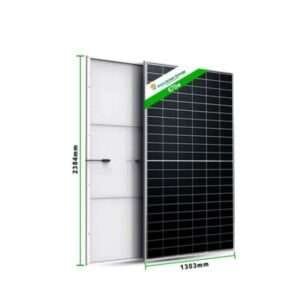 670W MONO PERC HALFCUT SOLAR PANEL
₹26,999.00Original price was: ₹26,999.00.₹23,999.00Current price is: ₹23,999.00. -
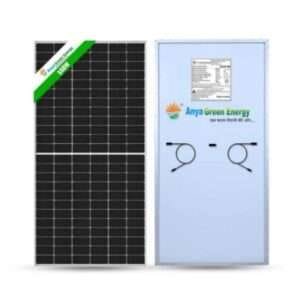 550W MONO PERC HALFCUT SOLAR MODULE
₹22,999.00Original price was: ₹22,999.00.₹19,999.00Current price is: ₹19,999.00. -
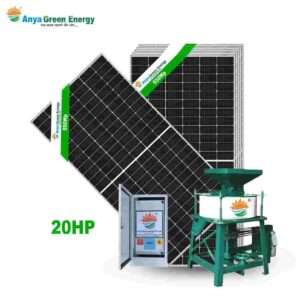 20HP Atta Chakki with Mone Perc Half cut 550W Panel
₹1,200,000.00Original price was: ₹1,200,000.00.₹1,060,000.00Current price is: ₹1,060,000.00. -
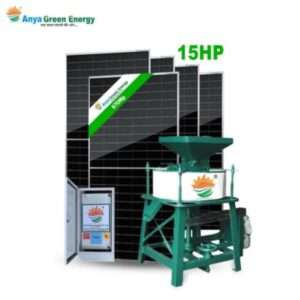 15HP Atta Chakki with Mone Perc Half cut 670W Panel
₹900,000.00Original price was: ₹900,000.00.₹850,000.00Current price is: ₹850,000.00. -
 10HP Atta Chakki with Mone Perc Half cut 550W Panel
₹650,000.00Original price was: ₹650,000.00.₹590,000.00Current price is: ₹590,000.00.