Is Solar a Good Career? What the 2026 Data Says About the Scope of Green Jobs in India

India’s green economy now employs over 35 million people — roughly 7% of the entire national workforce — spanning renewable energy, sustainable agriculture, waste management, ESG consulting, and climate finance. Within that, renewable energy alone accounts for more than 10 million jobs, making it the single largest green employer in the country. So is solar a good career, specifically, within that much bigger picture? The honest answer requires looking past the headline numbers into growth rates, salary data, and the real gaps that still exist.
This isn’t a hype piece. It’s a straight look at whether solar deserves the attention it’s getting as a career choice in 2026, using government projections, industry hiring data, and the genuine challenges that come with an industry moving this fast — the kind of evidence that should inform, not replace, your own answer to is solar a good career for you specifically.
Why People Are Asking "Is Solar a Good Career?" Right Now
The question is coming up more often because the numbers behind it have become genuinely hard to ignore. Technavio forecasts India’s solar power market will grow by USD 1,413.3 million between 2026 and 2030 at a CAGR of 49.5%, and that same outlook projects the sector could create more than one million green jobs by 2030 in India alone. Layer on India’s broader climate commitments — a 500 GW renewable energy capacity target by 2030 and a 2070 net-zero goal — and it’s clear this hiring wave isn’t tied to a single scheme or a temporary subsidy cycle.
For anyone weighing whether solar deserves serious consideration, the underlying question behind is solar a good career isn’t really “is this industry growing” — that part is well-documented. It’s whether the growth translates into stable, well-paying, accessible roles for the people entering it now.
The Scope of Green Jobs in India: The Bigger Picture
Solar doesn’t exist in isolation — it’s one piece of a much larger green employment story worth understanding for context when weighing whether solar is a good career choice:
- India’s green economy employed over 35 million people by 2026, representing approximately 7% of the total national workforce, spanning renewable energy, sustainable agriculture, waste management, ESG consulting, and environmental conservation.
- The renewable energy sector remains the largest single green employer, with over 10 million jobs, ahead of other green sectors like EV manufacturing and sustainable textiles.
- A joint SCGJ-Sattva Consulting report, backed by JP Morgan, projects solar energy specifically could host 3.26 million jobs by 2050, compared to 0.18 million for wind energy by 2030, 0.6 million for green hydrogen, and 0.27 million for bioenergy over the same period — numbers that answer is solar a good career with real, sector-specific scale rather than a vague trend.
- India has the potential to generate 35 million green jobs by 2047 according to a domestic “Gearing up the Workforce for a Green Economy” report, while globally, the World Economic Forum projects the green transition will create over 30 million jobs by 2030.
- Growth in this sector isn’t evenly spread — cities like Delhi, Mumbai, and Bengaluru are generating the highest demand, meaning opportunity can vary meaningfully depending on where you’re based and willing to relocate.
So, Is Solar a Good Career? Here's What the Evidence Shows
1. Genuine Structural Growth, Not a Temporary Boom On the question of is solar a good career, this is the strongest point in its favour: hiring is tied to binding national targets (500 GW by 2030) and international commitments, not a single subsidy cycle, meaning the underlying demand has policy-backed staying power rather than depending on one government scheme continuing indefinitely.
2. Faster Skill-to-Job Timelines Than Most Technical Careers Industry voices consistently point out that solar technology is simpler to train for than many other technical fields, meaning people can be trained in shorter time frames and start actual project work faster than in more credential-heavy industries.
3. Multiple Entry Points Across Skill Levels Solar job opportunities span everything from vocational technician roles to engineering, project management, procurement, sales, and finance — meaning the answer to is solar a good career depends heavily on which specific role you’re aiming for, not the industry as a monolith.
4. Real, Documented Wage Premiums for Specialised Skills Candidates with recognised solar diplomas earn 20–35% higher starting salaries than self-taught applicants, and specialised roles in adjacent fields like battery engineering already command 35–40% premiums over conventional manufacturing pay — evidence that skill investment in this space pays off measurably.
5. A Widening Talent Gap Working in Job-Seekers’ Favour Hiring across India’s climate sector remains fragmented, with many companies struggling to define roles clearly, and a persistent green skills gap means well-trained candidates entering now often face less competition than in more mature, oversaturated career paths.
The Honest Challenges: Where "Is Solar a Good Career" Gets Complicated
1. A Real, Persistent Green Skills Gap The same skills shortage that benefits well-trained candidates also reflects a genuine problem: many qualified people are filtered out by HR systems that haven’t adapted to how green sector skills actually map to traditional job titles, meaning navigating the hiring process itself can be harder than it should be, and complicates any simple answer to is solar a good career for a first-time applicant.
2. Uneven Gender Representation Women hold only 10% of green skills globally, compared to 17% among men, and the gender gap in green leadership specifically has widened by 25% over seven years — though India’s own Skills Report 2026 shows a positive countertrend, with women’s employability now at 54% versus 51.5% for men nationally.
3. Regional Concentration Job creation clusters around metro hubs and states with strong solar deployment rather than spreading uniformly, meaning candidates outside these regions may need to relocate or work remotely to access the strongest opportunities.
4. Automation Pressure on Generalist Roles Global data shows renewable energy employment growth slowing relative to capacity growth in recent years, partly due to automation — meaning generalist, low-skill entry points face more competition and displacement risk than specialised technical roles.
5. Fragmented, Still-Maturing Training Ecosystem Because solar and the broader green economy have grown so quickly, structured training pathways, certification standards, and career-mapping guidance haven’t fully caught up with the pace of hiring demand — making it harder for newcomers to identify a clear, credible path in.
Solar Job Opportunities by Career Track: Where the Roles Actually Are
To make “is solar a good career” more concrete, here’s how solar job opportunities break down by function:
- Technical and engineering roles — design, PV system engineering, O&M, and grid integration, typically requiring electrical, mechanical, or renewable energy engineering backgrounds
- Field and vocational roles — installation technicians, certified solar technicians, and O&M field staff, often accessible through shorter vocational or government-backed training programmes
- Business and commercial roles — sales, business development, procurement, and dealership/distribution, prioritising communication and negotiation skills over technical certification
- Project and operations roles — project management, logistics, and supply chain coordination across the full development-to-commissioning lifecycle
- Emerging cross-technology roles — EV charging infrastructure, battery storage, and hybrid systems work that increasingly blends solar with adjacent clean energy technologies
This spread matters because it means the honest answer to “is solar a good career” isn’t uniform — it depends heavily on matching your existing skills, education level, and risk tolerance to the right track within this list
International Partnerships Widening the Renewable Energy Career Scope
India’s renewable energy career scope increasingly extends beyond its own borders through structured skilling partnerships:
- The Indo-German Green Skills Programme, funded with €3 million, trains workers specifically in solar energy and electric vehicle technologies, with Germany separately committing up to €10 billion till 2030 for India’s broader green transition.
- The International Solar Alliance, co-founded by India and France, promotes solar energy deployment and training programmes across member countries, creating cross-border mobility for trained solar professionals.
- The Indo-French Year of Innovation in 2026 is expected to spotlight collaborative green technologies, opening further opportunities for Indian sustainability and solar professionals to work on joint international initiatives.
These partnerships mean solar job opportunities for well-trained Indian professionals increasingly extend into international placement, not just domestic hiring
Who Should (and Shouldn't) Bet on a Solar Career
Is solar a good career for you specifically? It’s likely a strong fit if you:
- Want structural, policy-backed job security rather than a role tied to a single company’s fortunes
- Are willing to specialise rather than stay a generalist, since specialised skills command real, documented wage premiums
- Can be flexible about location, since renewable energy career scope currently concentrates around specific metro and state hubs
- Have technical, business, or coordination skills that map to one of the many distinct tracks within the sector, rather than expecting one universal “solar job”
- Is solar a good career for you specifically? It may be a harder fit if you:
- Need a highly structured, well-established credentialing path, since the green skills gap partly reflects an ecosystem still building out consistent standards
- Are only interested in a narrow, single-technology skill set, given how much of the sector’s growth is happening at the intersection of solar, storage, and EV charging
- Expect immediate, uniform opportunity regardless of location, since regional concentration remains a real constraint
Final Thoughts: Is Solar a Good Career in 2026?
Based on the available data, yes — with real caveats worth taking seriously. The scope of green jobs in India is large and genuinely growing, backed by binding national targets rather than short-term incentives, and solar specifically sits at the center of that growth as the largest single renewable energy employer. Wage premiums for specialised skills are real and documented, and the persistent green skills gap currently works in favour of well-trained candidates rather than against them.
But it isn’t a guaranteed, friction-free path. Regional concentration, gender gaps, automation pressure on generalist roles, and a still-maturing training ecosystem are all real headwinds. The people best positioned to benefit from India’s renewable energy career scope are those who pick a specific track — technical, commercial, project-based, or emerging cross-technology — rather than treating “solar” as one undifferentiated career choice.
Trusted by 50000+ Customers
Anya Green Energy is a leading solar company and Solar Energy service provider established in 2013. We are recognized by startup India and customer best choice award 2022.
Our Achievements :
Recognized by Startup India.
Purvanchal’s first solar company to operate exclusively with solar products.
Certified by well-known institutions such as MSME, IndiaMart, and Just Dial and many more.
Winner of the Best Customer Choice Award 2022.
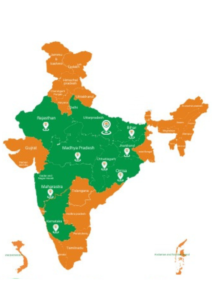
Over 50,000 happy customers across India.
Products
-
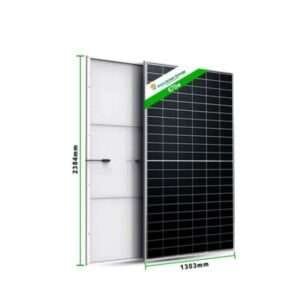 670W MONO PERC HALFCUT SOLAR PANEL
₹26,999.00Original price was: ₹26,999.00.₹23,999.00Current price is: ₹23,999.00. -
 550W MONO PERC HALFCUT SOLAR MODULE
₹22,999.00Original price was: ₹22,999.00.₹19,999.00Current price is: ₹19,999.00. -
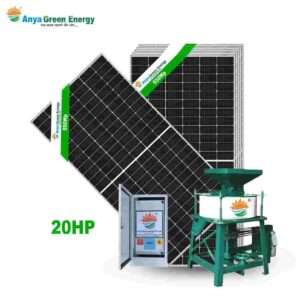 20HP Atta Chakki with Mone Perc Half cut 550W Panel
₹1,200,000.00Original price was: ₹1,200,000.00.₹1,060,000.00Current price is: ₹1,060,000.00. -
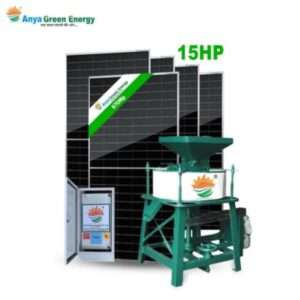 15HP Atta Chakki with Mone Perc Half cut 670W Panel
₹900,000.00Original price was: ₹900,000.00.₹850,000.00Current price is: ₹850,000.00. -
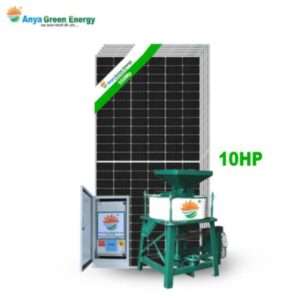 10HP Atta Chakki with Mone Perc Half cut 550W Panel
₹650,000.00Original price was: ₹650,000.00.₹590,000.00Current price is: ₹590,000.00.