
Renewable Purchase Obligation: The Policy Mechanism Driving India's Clean Energy Demand

Behind India’s rapid renewable energy growth sits a policy tool that rarely makes headlines but does enormous quiet work: renewable purchase obligation. In simple terms, renewable purchase obligation requires electricity distribution companies and certain large consumers to source a minimum percentage of their total power from renewable sources.
Rather than relying purely on voluntary adoption, renewable purchase obligation creates a legally mandated demand floor for renewable energy, ensuring that discoms and obligated entities cannot simply default back to cheaper fossil-fuel power indefinitely.
This mechanism has become one of the most important demand-side drivers behind India’s solar and wind capacity expansion, functioning as a steady, policy-backed pull rather than leaving renewable adoption entirely to market forces alone.
How Renewable Purchase Obligation Targets Work
Each state electricity regulatory commission sets its own renewable purchase obligation targets, specifying the minimum percentage of total power procurement that must come from renewable sources each year. These renewable purchase obligation targets typically increase progressively, pushing obligated entities toward higher renewable shares over time.
Targets are usually broken into separate categories — solar-specific obligations and non-solar obligations covering wind, small hydro, and biomass — allowing regulators to shape the technology mix rather than treating all renewables identically.
As one power sector regulator explained during a public consultation, “renewable purchase obligation targets only work if they’re enforced consistently — a target on paper with no penalty behind it is just an aspiration, not a policy.” That distinction between stated ambition and genuine enforcement sits at the center of ongoing debate around this mechanism.
RPO Compliance Mechanism: Meeting the Mandate
Obligated entities have several paths available for RPO compliance. The most direct route is purchasing renewable power through long-term power purchase agreements with solar or wind developers, directly meeting the obligation through physical procurement.
A second RPO compliance mechanism involves purchasing renewable energy certificates, which represent the environmental attributes of renewable generation without requiring direct physical power purchase from that specific source. This allows entities without easy access to renewable generation to still achieve RPO compliance through a tradable certificate market.
Ready to switch to Solar?
Solar solutions with Anya Green Energy and discover how you can reduce your electricity bills.
Contact UsRenewable Energy Certificates: The Flexibility Tool
Renewable energy certificates exist specifically to add flexibility into an otherwise rigid obligation structure. Each certificate corresponds to a fixed quantity of renewable generation, allowing buyers and sellers to trade compliance value independently of where the actual electricity physically flows.
Entities that generate more renewable power than needed for their own obligations can sell surplus renewable energy certificates, creating a secondary revenue stream for generators and a flexible compliance pathway for obligated buyers.
Renewable energy certificates are typically traded through dedicated power exchanges, with prices fluctuating based on overall supply and demand within the certificate market at any given time.
Quick Comparison: RPO Compliance Pathways
| Pathway | How It Works | Best Suited For |
|---|---|---|
| Direct power purchase | Long-term PPA with renewable generator | Entities with direct procurement access |
| Renewable energy certificates | Purchase tradable compliance certificates | Entities lacking direct renewable access |
| Captive/group generation | Self-owned or shared renewable capacity | Large industrial consumers |
| Penalty payment | Pay prescribed penalty for shortfall | Last-resort, discouraged by regulators |
RPO Penalty for Non-Compliance: Enforcement Challenges
A renewable purchase obligation is only as effective as its enforcement, and this is where the mechanism has historically faced real challenges. The RPO penalty for non-compliance varies by state, and in several cases, penalties have been inconsistently enforced or set too low to meaningfully change obligated entities’ behavior.
When the RPO penalty for non-compliance is weaker than the actual cost of purchasing renewable power or certificates, some obligated entities have simply chosen to pay penalties rather than comply, undermining the mechanism’s core purpose.
Strengthening RPO penalty enforcement consistently across states remains one of the most frequently cited reforms needed to make renewable purchase obligation genuinely effective nationwide, rather than variably effective depending on which state an entity operates in.
Advantages of This Policy Mechanism
- Guaranteed demand creation — renewable purchase obligation ensures a baseline market for solar and wind power regardless of short-term price competitiveness.
- Flexible compliance options — renewable energy certificates allow entities without direct access to still meet their obligations.
- Technology-specific targets — separate solar and non-solar categories help diversify the renewable energy mix.
- Investment certainty — a well-enforced renewable purchase obligation gives developers more confidence in long-term demand.
- Scalable framework — targets can be progressively increased as renewable costs fall and capacity grows.
- National alignment — state-level obligations collectively support India’s broader renewable energy targets.
Challenges Facing Renewable Purchase Obligation
Despite its importance, renewable purchase obligation faces persistent implementation gaps. Compliance rates vary significantly across states, with financially stressed discoms often struggling to meet their renewable purchase obligation targets even when they want to.
Inconsistent RPO penalty enforcement remains a core weakness, reducing the mechanism’s effectiveness in states where regulators have been reluctant to impose meaningful consequences for shortfalls.
Market liquidity for renewable energy certificates can also fluctuate considerably, sometimes making it harder for obligated entities to find available certificates at predictable prices, complicating compliance planning.
How This Connects to Discom Health
The effectiveness of renewable purchase obligation is closely tied to the financial condition of obligated discoms. Financially healthier distribution companies generally show stronger RPO compliance, since they have greater capacity to sign long-term renewable power purchase agreements or invest in certificate purchases without straining already limited budgets.
This connection reinforces why renewable purchase obligation cannot be evaluated in isolation from broader discom financial health reforms happening simultaneously across the sector.

Looking Ahead
As India’s renewable energy targets grow more ambitious, analysts expect renewable purchase obligation targets to rise correspondingly, alongside stronger, more consistent enforcement mechanisms across states.
Continued reform of RPO compliance frameworks, more liquid renewable energy certificates markets, and stricter RPO penalty enforcement will likely determine how effectively this mechanism continues driving India’s clean energy transition over the coming decade.
Frequently Asked Questions
Q1: What exactly is renewable purchase obligation?
A1: It’s a regulatory requirement mandating that electricity distribution companies and certain large consumers source a minimum percentage of their total power from renewable energy sources, creating guaranteed demand for solar and wind power.
Q2: How do obligated entities actually meet this requirement?
A2: Through direct power purchase agreements with renewable generators, by buying renewable energy certificates, through captive or group renewable generation, or by paying a prescribed penalty as a last resort.
Q3: What are renewable energy certificates, and why do they matter?
A3: These are tradable certificates representing the environmental attributes of renewable generation, allowing entities without direct access to renewable power to still achieve compliance by purchasing certificates on dedicated power exchanges.
Q4: What happens if an entity doesn’t comply?
A4: Non-compliant entities typically face a prescribed penalty, though enforcement and penalty levels vary significantly by state, which has historically weakened the mechanism’s overall effectiveness in some regions.
Q5: How does this relate to discom financial health?
A5: Financially stressed discoms often struggle to meet their obligations even when willing, since renewable power purchase agreements and certificate purchases require capital that weaker distribution companies may not have readily available.
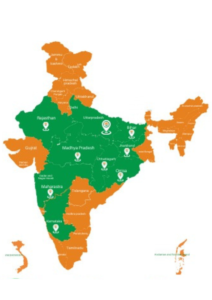
Trusted by 50000+ Customers
Anya Green Energy is a leading solar company and Solar Energy service provider established in 2013. We are recognized by startup India and customer best choice award 2022.
Our Achievements :
Recognized by Startup India.
Purvanchal’s first solar company to operate exclusively with solar products.
Certified by well-known institutions such as MSME, IndiaMart, and Just Dial and many more.
Winner of the Best Customer Choice Award 2022.
Over 50,000 happy customers across India.