Smart Solar Systems in 2026: How AI and Battery Storage Turn Panels Into an Energy Brain
Two homes can install identical panels on the same street and end up with very different results. The hardware is fixed the day the installer leaves. What changes the outcome over the next 25 years is the software sitting on top of it, deciding when to charge a battery, when to sell to the grid, when to run the washing machine and when to warn you that an inverter is about to fail. That software layer is what separates smart solar systems from a plain rooftop array.
For anyone comparing quotes in 2026, or considering a career in solar, this guide explains what smart solar systems actually do, what the evidence says about their savings, what they cost in India, and where the marketing runs ahead of reality.
What Are Smart Solar Systems?
Smart solar systems combine three layers that work as one:
- High-efficiency panels — modern n-type TOPCon or HJT modules that produce more power from limited roof space.
- A battery energy storage system (BESS) — usually lithium iron phosphate, which stores surplus midday power for the evening.
- AI-driven software — an energy management platform, the heart of AI solar optimization, that forecasts generation and household demand, then controls the panels, battery, grid connection and appliances in real time.
- A conventional grid-tied system is passive. It generates when the sun shines and exports whatever the home does not use. A smart system is active: it predicts, decides and adjusts continuously, which is the core idea. Industry analysts now describe this software as a core infrastructure layer rather than an optional extra, because the same hardware can perform at noticeably different levels depending on how well it is managed.
The Four Capabilities That Define Smart Solar Systems
1. Predictive load balancing The software combines weather forecasts with your household’s usage history to anticipate how much power will be generated and how much will be needed. It then decides in advance whether to charge the battery, hold reserve for an expected evening peak or route power directly to loads. Forecasting is increasingly the heart of storage control. NREL has noted that solar forecasting integrated into energy management is becoming more valuable, and that dispatching a battery is now as much a forecasting problem as an electrical one.
2. Dynamic grid export Instead of pushing all surplus power to the grid the moment it appears, the system chooses when export is worth it. Where tariffs change by time of day, it stores cheap midday power and sells or uses it during expensive evening hours. This matters most where rates are time-varying, and India is moving that way: time-of-day tariffs, which reward shifting load away from peak hours, are now live in multiple states.
3. Automated appliance scheduling Smart systems can shift flexible loads such as water heaters, EV chargers, washing machines and pumps into the hours when solar output is highest. The aim is simple: use your own generation directly rather than paying to store or export it. This is the cheapest form of optimisation, because it needs software and smart plugs rather than extra battery capacity.
4. Predictive maintenance for solar Traditional maintenance is reactive, meaning a fault is noticed after output has already dropped. Predictive maintenance for solar uses anomaly detection on performance data, thermal imaging and inverter logs to flag soiling, failing strings and degrading components early. A 2025 peer-reviewed review in Energy Informatics describes AI-based predictive maintenance as a key element in improving the reliability and life expectancy of photovoltaic systems. Separately, NREL reported that a physics-informed neural network could estimate battery health nearly 1,000 times faster than traditional models, which is what makes early warnings on battery ageing practical.
Smart Solar Systems by the Numbers: What the Evidence Shows
Claims about AI solar optimization range from modest to spectacular, so it helps to separate them.
- Industry analyses report that AI solar optimization can lift overall plant efficiency by roughly 5 to 15 percent in large projects, and that wind and solar optimisation delivers output improvements in a broad 1 to 20 percent range.
- One equipment maker claims machine-learning platforms deliver gains of up to 25 percent. Treat this as a best-case vendor figure, since conventional systems are said to lose 15 to 30 percent of potential output to soiling, weather and inefficient management.
- Analysts estimate AI can reduce unplanned generation outages by around 20 to 35 percent through predictive maintenance for solar.
- For commercial buildings with demand charges, one professional-engineer guide reports demand charge reductions of 25 to 35 percent, with payback of AI software in under six months. This applies specifically to large commercial users, not homes.
- One market estimate values AI in renewable energy at about USD 1 billion in 2025, growing to around USD 7 billion by 2035, a growth rate above 20 percent a year.
Almost all of these figures for smart solar systems come from vendors or industry blogs rather than independent field trials, so they are best read as plausible ranges, not guarantees. The consistent message is that gains are real but depend heavily on the tariff structure and the site.
The India Context: Why Smart Solar Systems Are Timely
Several Indian developments are making smart solar systems more valuable.
- Storage is scaling fast. India had roughly 1.8 GWh of grid-scale battery energy storage system capacity installed by March 2026, with most of it coming online in the final six months of the financial year. One industry review expects installed capacity to approach 5 GWh by the end of 2026.
- Policy is subsidising batteries at scale. Viability gap funding supports tens of gigawatt-hours of battery energy storage system capacity, with up to 40 percent of capital cost available for qualifying projects. In May 2026 the Cabinet approved a further round worth ₹5,400 crore for 30 GWh.
- Battery costs have fallen. Lithium iron phosphate prices have dropped by roughly 35 to 40 percent over the last two to three years, and storage tariffs have fallen sharply since 2022.
- Time-of-day tariffs and smart meters are spreading, which is precisely the pricing environment where predictive control earns its keep.
- The Ministry of Power has advised co-locating at least two hours of storage with solar projects, although for rooftop systems this remains an advisory rather than a rule.
What it means for a household. Under PM Surya Ghar, the central subsidy of up to ₹78,000 applies to the solar plant, and a hybrid system with a battery is allowed, but the battery reportedly receives no subsidy. Installers quote roughly ₹2 lakh for a basic on-grid system versus ₹3.5 to ₹4 lakh for a hybrid with storage, so the battery is where most of the extra cost sits. Confirm current eligibility on the official portal before you buy.
Solar Energy ROI: When Do Smart Systems Actually Pay Off?
Solar energy ROI from smart solar systems depends less on the technology than on your tariff and usage pattern.
Where the case is strong
- Commercial and industrial sites with demand charges or time-of-day pricing, where shaving peaks directly improves solar energy ROI.
- Homes with time-varying tariffs, where storing cheap solar for expensive evening hours has a clear value.
- Homes with frequent outages, where backup power replaces a separate inverter-and-battery set.
- Households with high daytime flexible loads, since appliance scheduling costs almost nothing.
Where it is weaker
- Under simple net metering, the grid effectively acts as a free battery, drawing your midday export back at night at little extra cost. Analysts have warned that adding storage can double the cost of a small rooftop system and stretch payback, which can make it unviable in some states.
- AI solar optimization on a flat-rate plan mostly adds value through self-consumption timing and fault protection, not dramatic bill cuts.
A sensible approach to solar energy ROI is to start with smart monitoring and load scheduling, which are cheap, and add a battery only when your tariff, outage history or export limits justify it. Many systems can be retrofitted with a compatible battery and third-party energy management software later, without replacing the inverter.
Real Challenges and Honest Caveats for Smart Solar Systems
- Vendor-driven numbers — performance claims are rarely independently audited, so ask installers for measured results from comparable sites.
- Upfront cost — a battery energy storage system and hybrid inverter add substantially to system price, and payback lengthens if tariffs do not reward storage.
- Interoperability — mixing brands of panels, inverters, batteries and software can cause compatibility problems, and battery operating voltages are not standardised.
- Grid and policy uncertainty — net metering rules and tariffs can change, which changes the economics of dynamic export.
- Data and cybersecurity — a connected energy system generates usage data and can be attacked, so check who owns and stores the data.
- Battery dependence on lithium — India’s storage sector relies heavily on lithium-ion, exposing it to global supply shocks, and domestic cell manufacturing is behind its targets.
- Skills gap — installers and O&M teams need data and software skills that many still lack.
How to Choose Smart Solar Systems
- Start with your bill. Check whether your tariff varies by time of day and how often you face outages.
- Ask what the software actually does. Request specifics on forecasting, scheduling and alerts, not just an app screenshot.
- Check the inverter. A hybrid inverter is the part that decides whether a system can support storage and smart control.
- Plan for expansion. Choose hardware that lets you add a battery later.
- Get the paperwork right. Confirm net metering approval, warranty terms for the battery and who handles data.
- Insist on monitoring. Without live data, predictive maintenance for solar is not possible.
What to Watch Through 2030
- Virtual power plants — aggregated home batteries selling flexibility to the grid, still early in India.
- Longer-duration and alternative battery chemistries as tendering agencies look beyond lithium-ion.
- Fully autonomous solar plants where AI handles cleaning schedules, dispatch and fault response.
- Standardised hybrid rooftop smart solar systems as storage costs keep falling.
- A growing job market for engineers who combine electrical, data and software skills, from smart-system design to O&M analytics.
Final Thoughts: Smart Is About the Software, Not Just the Hardware
The most useful way to think about smart solar systems is that panels and batteries generate and store energy, but software decides how much value you capture from them. The evidence suggests real gains from AI solar optimization, especially for commercial users and homes on time-varying tariffs, alongside genuine uncertainty about how large those gains are for a typical household. For most people the sensible path is incremental: begin with monitoring and scheduling, then add storage when your tariff and outage pattern justify it. Buyers who ask sharp questions and demand measured results will be best placed to improve their solar energy ROI and benefit from smart solar systems.

Trusted by 50000+ Customers
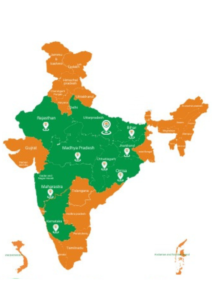
Anya Green Energy is a leading solar company and Solar Energy service provider established in 2013. We are recognized by startup India and customer best choice award 2022.
Our Achievements :
Recognized by Startup India.
Purvanchal’s first solar company to operate exclusively with solar products.
Certified by well-known institutions such as MSME, IndiaMart, and Just Dial and many more.
Winner of the Best Customer Choice Award 2022.
Over 50,000 happy customers across India.