10 Smart Ways Solar for Schools and Colleges Wins Today!

Educational institutions across India spend lakhs of rupees every month running classrooms, computer labs, libraries, science centers, and large air-conditioned auditoriums. Electricity bills rank among the top three operational expenses for private and government-funded institutions alike. Installing solar for schools and colleges turns massive unused rooftop spaces into long-term income-generating assets that lower utility costs while serving as real-time learning hubs for students.
Adopting solar panels for educational institutions insulates campuses against rising grid tariffs, lowers diesel generator dependence, and creates a greener footprint. This complete guide outlines setup models, daily sizing, hardware pricing, and long-term financial benefits.
1. Why Educational Institutions Need Rooftop Solar
Educational campuses possess a unique advantage when adopting solar power: their peak energy usage directly matches sunlight hours. While commercial businesses or residences face fluctuating loads, schools and universities draw heavy power during daytime hours when rooftop solar plants generate maximum yield.
Tariff Protection: Commercial grid tariffs for institutional consumers are high and rise continuously year over year.
Daytime Load Matching: Computers, lighting, fans, HVAC units, and water pumps operate primarily during peak solar generation hours (8:00 AM to 4:00 PM).
Space Utilization: Institutional campuses feature extensive flat concrete and metal rooftops that are otherwise unused.
Transitioning to solar for schools and colleges enables campus administrators to reallocate savings from utility bills directly into educational infrastructure, technology upgrades, and student sports facilities.
2. Types of Solar Systems for Campuses
Choosing the right system architecture ensures maximum solar energy savings for colleges and schools based on grid stability and local utility rules.
On-Grid Solar Systems (Net Metering)
Connected directly to the electricity grid, on-grid systems pass solar power directly to your campus loads. Surplus energy generated during weekend closures or holidays exports back to the utility grid via net metering, accumulating billing credits. On-grid installations provide the highest return on investment and feature the lowest upfront capital requirement.
Hybrid Solar Systems
Combining solar panels, hybrid inverters, and battery banks, hybrid setups maintain power continuity even during grid outages. They serve as clean replacements for expensive, noisy diesel generators during critical hours like examinations or laboratory testing.
3. Calculating System Capacity: 10kW to 250kW+
Determining the ideal system capacity requires analyzing monthly electricity bills, available shadow-free rooftop space, and peak demand profiles. As a thumb rule, every 1 kW of solar capacity requires roughly 100 sq. ft. of clear roof space and produces about 4 units (kWh) of power per day.
| Institution Type | Typical Plant Capacity | Roof Area Needed | Daily Solar Generation | Annual Electricity Offset |
| Primary / Secondary School | 10 kW – 25 kW | 1,000 – 2,500 sq. ft. | 40 – 100 units | 14,000 – 36,000 kWh |
| Large Senior Secondary School | 25 kW – 50 kW | 2,500 – 5,000 sq. ft. | 100 – 200 units | 36,000 – 72,000 kWh |
| Degree College / Professional Institute | 50 kW – 100 kW | 5,000 – 10,000 sq. ft. | 200 – 400 units | 72,000 – 145,000 kWh |
| Large University / Medical Campus | 100 kW – 250 kW+ | 10,000 – 25,000+ sq. ft. |
4. Breakdown of School Solar System Cost in India
Investing in rooftop solar for schools offers clear economies of scale: larger capacities deliver a lower cost per watt. Hardware typically utilizes high-efficiency Mono PERC or TOPCon glass-to-glass panels paired with commercial multi-string inverters.
| System Size | Total Estimated Installation Cost | Major Components Included |
| 10 kW System | ₹4,500,00 – ₹5,500,00 | Mono-PERC panels, 10kW Inverter, Mounting structures, ACDB/DCDB, Cabling |
| 25 kW System | ₹11,000,00 – ₹13,500,00 | TOPCon/Mono PERC, String Inverter, Net Metering, Earthing & Lightning Arrester |
| 50 kW System | ₹21,000,00 – ₹25,000,00 | High-wattage modules, Industrial Inverter, Walkways, Monitoring Gateway |
| 100 kW System | ₹38,000,00 – ₹45,000,00 | Tier-1 Bifacial panels, Dual Inverters, High-rise structures, Remote SCADA |
5. CAPEX vs. RESCO Ownership Models
Institutions can fund solar panels for educational institutions through two primary commercial arrangements:
CAPEX Model (Capital Expenditure / Own & Save)
The institution buys and owns the solar power plant upfront.
Pros: Complete ownership, maximum long-term savings, eligibility for Accelerated Depreciation (AD) tax benefits.
Payback Period: Typically 3 to 4.5 years, after which generated electricity is virtually free for 20+ years.
RESCO Model (Renewable Energy Service Company / Zero Upfront)
A third-party solar developer builds, owns, and maintains the rooftop system on campus.
Pros: Zero upfront capital requirement from the school or college.
PPA Agreement: The school signs a Power Purchase Agreement (PPA) to buy generated solar electricity at a fixed rate (typically 30% to 50% cheaper than grid rates) for 15 to 25 years.
6. Solar Energy Savings for Colleges and Universities
The economic argument for solar energy savings for colleges is straightforward. Standard institutional power costs ₹8.50 to ₹11.50 per unit in urban regions. Solar power levelized generation costs work out to under ₹2.20 per unit over the lifetime of the system.
Average Monthly Savings: A 100kW plant saves between ₹80,000 and ₹1,20,000 on monthly utility charges.
Annual Reduction: Up to ₹10 Lakhs to ₹14 Lakhs saved per year.
Lifetime Savings: Over ₹2.5 Crores in cumulative operational savings over 25 years.
7. Educational & Environmental Value
Beyond financial returns, solar for schools and colleges serves as a live hands-on laboratory.
Practical STEM Learning: Physics and engineering students analyze live solar generation datasets, inverter efficiencies, and weather impact profiles via mobile monitoring apps.
Carbon Offset Leadership: A 50kW solar system offsets nearly 60 tonnes of $\text{CO}_2$ emissions per year, equivalent to planting over 1,400 mature trees.
Green Campus Accreditation: On-site renewable energy capacity improves NAAC grading, NIRF rankings, and overall sustainability credentials for universities.
8. Technical Feasibility & Installation Timeline
Deploying rooftop solar for schools involves a straightforward multi-step project cycle:
Structural Roof Assessment: Inspecting concrete slabs or metal sheet trusses to verify wind load resistance and weight bearing capacity.
DISCOM Sanction & Net Metering: Submitting net metering clearance applications to the regional power distribution utility.
Hardware Erection: Installing hot-dip galvanized mounting structures, cabling, walk-ways, inverter panels, and solar modules.
Commissioning & Synchronization: Performing safety testing, earthing verification, and grid synchronization.
9. Upkeep & Maintenance Best Practices
Maintaining high energy yield across solar panels for educational institutions requires simple maintenance protocols:
Regular Module Cleaning: Cleaning panels every 15 to 20 days removes dust, leaf debris, and bird droppings to keep solar absorption high.
Remote Monitoring: Utilizing web portal dashboards to detect string-level voltage drops or equipment faults in real time.
Annual Health Checkups: Checking cabling insulation, earthing continuity, and inverter thermal performance once a year.
How to Get Started Today
Transitioning to solar for schools and colleges is a clear win for financial budgets and environmental stewardship. Contact a certified commercial solar installer to conduct a site audit, analyze your annual electricity bills, and build a tailored rooftop solar plan for your campus


Trusted by 50000+ Customers
Anya Green Energy is a leading solar company and Solar Energy service provider established in 2013. We are recognized by startup India and customer best choice award 2022.
Our Achievements :
Recognized by Startup India.
Purvanchal’s first solar company to operate exclusively with solar products.
Certified by well-known institutions such as MSME, IndiaMart, and Just Dial and many more.
Winner of the Best Customer Choice Award 2022.
Over 50,000 happy customers across India.
Products
-
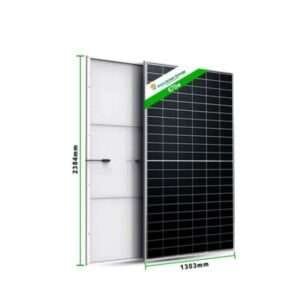 670W MONO PERC HALFCUT SOLAR PANEL
₹26,999.00Original price was: ₹26,999.00.₹23,999.00Current price is: ₹23,999.00. -
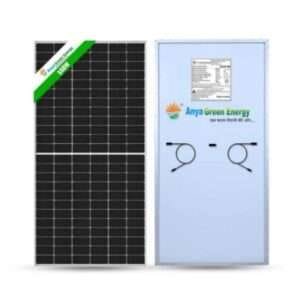 550W MONO PERC HALFCUT SOLAR MODULE
₹22,999.00Original price was: ₹22,999.00.₹19,999.00Current price is: ₹19,999.00. -
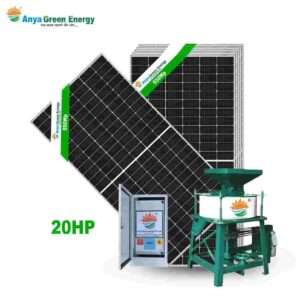 20HP Atta Chakki with Mone Perc Half cut 550W Panel
₹1,200,000.00Original price was: ₹1,200,000.00.₹1,060,000.00Current price is: ₹1,060,000.00. -
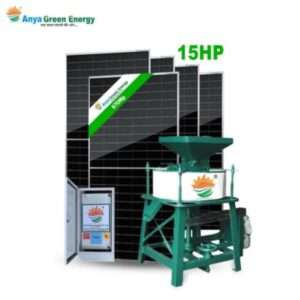 15HP Atta Chakki with Mone Perc Half cut 670W Panel
₹900,000.00Original price was: ₹900,000.00.₹850,000.00Current price is: ₹850,000.00. -
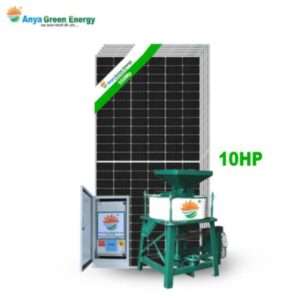 10HP Atta Chakki with Mone Perc Half cut 550W Panel
₹650,000.00Original price was: ₹650,000.00.₹590,000.00Current price is: ₹590,000.00.