10 Mind-Blowing Benefits of PM Surya Sarovar Yojana: India’s Game-Changing Floating Solar Revolution!
When India sets its sights on clean energy milestones, it does not merely follow global trends—it sets them. In a landmark move to revolutionize clean energy generation without taking up precious agricultural land, the Government of India has unveiled the PM Surya Sarovar Yojana. As industry analysts across the nation have noted, “India has opened a new front in its renewable build-out—and this one does not need a single acre of land.”
By combining floating photovoltaic tech with large-scale reservoirs, dams, and lakes, the PM Surya Sarovar Yojana bridges the gap between land scarcity and high green power targets. Whether you are a clean tech enthusiast, an infrastructure developer, or a citizen keen on understanding government initiatives, this comprehensive guide breaks down everything you need to know about the PM Surya Sarovar Yojana.
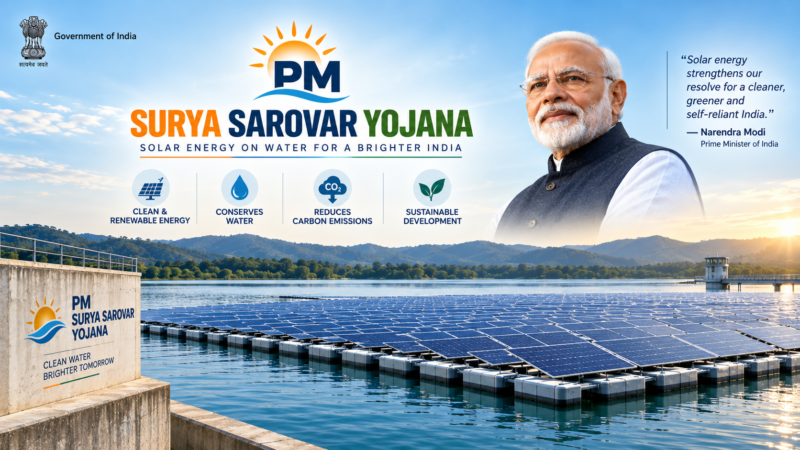
What is PM Surya Sarovar Yojana?
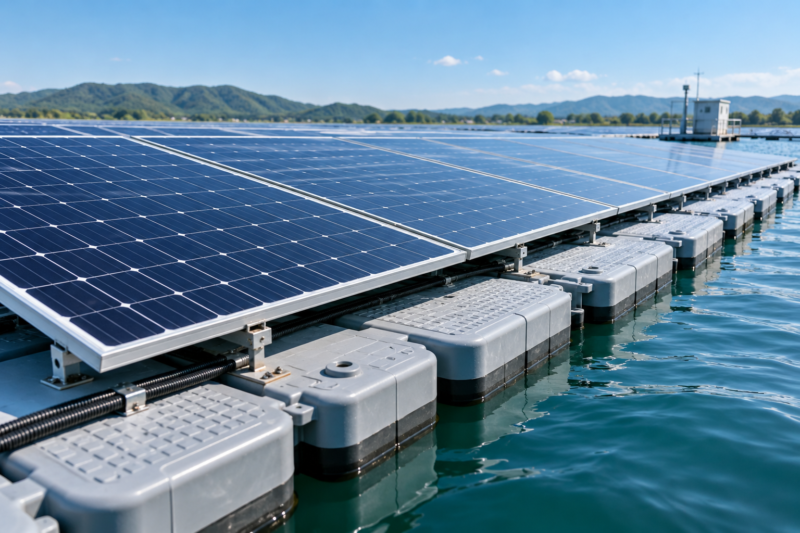
The PM Surya Sarovar Yojana is a central sector initiative approved with a massive ₹5,070 crore outlay under the Ministry of New and Renewable Energy (MNRE). Designed to install 5,000 MW of capacity across inland reservoirs, industrial ponds, and irrigation dams, this scheme aims to scale up sustainable power generation exponentiallyEvery single floating solar project launched under this ambitious policy uses buoyant structures anchored securely to inland water surfaces. By deploying panels over water, India eliminates land acquisition delays while capturing clean sunshine year-round.
1. Land-Neutral Energy Generation: Zero Agricultural Impact
Adopting these varied types of renewable energy offers advantages far beyond lowering carbon emissions.
Long-Term Cost Savings: Solar panels and wind installations harvest free fuel sources (sunlight and atmospheric air), insulating businesses and consumers from unpredictable fossil fuel price spikes.
Energy Independence: Harvesting local, non-depletable resources reduces dependence on foreign oil and gas imports, boosting national energy security.
Health and Environmental Quality: Replacing fossil combustion with clean energy sources removes sulfur dioxide, nitrogen oxides, and fine particulate matter from the air, improving public health and reducing environmental degradation.
2. Unlocking Massive Financial Support Through Renewable Energy Subsidy
Building on water costs roughly 25% more than building on dry land due to floatation equipment, anchoring rigs, and moisture-resistant electrical gear. To bridge this gap, the Central Government offers a substantial renewable energy subsidy to project developers and state utilitiesUnder the financial rules of the PM Surya Sarovar Yojana, developers receive up to ₹1 crore per megawatt post-commissioning. Furthermore, the government allocates up to ₹50 lakh per project for pre-construction bathymetry and hydrographic surveys. This target-driven renewable energy subsidy dramatically compresses payback schedules, encouraging private investors to join the initiative.
3. Mandatory Integration of Advanced Solar Energy Storage
A common criticism of renewable power is its intermittency—solar output drops when the sun goes down. The PM Surya Sarovar Yojana solves this by mandating built-in battery systems.
Every installation approved under the framework must integrate co-located solar energy storage systems capable of storing at least 2 hours of peak output. Across the target 5,000 MW capacity, this creates an aggregate 10,000 MWh of solar energy storage capacity. Storing excess daytime power allows utilities to discharge electricity into the national grid during peak evening hours, boosting grid stability.
4. Higher Output via Natural Water Cooling Mechanics
Solar panel efficiency naturally drops when silicon cells get overheated during scorching summer days. When panels are installed over water, the underlying water body acts as a natural cooling system.
Each floating solar project deployed under the scheme benefits from reduced operating temperatures. Operating cooler allows these setups to generate up to 5% to 10% more power compared to identical ground-mounted arrays exposed to extreme ground heat. This natural thermal buffer boosts total annual generation without adding operational costs
5. Preventing Reservoir Evaporation and Preserving Freshwater
Water scarcity is an ongoing challenge across drought-prone agricultural regions in India. Shading reservoir surfaces yields an immediate environmental benefit: it drastically lowers evaporation lossBy expanding water body solarization, covered reservoirs retain millions of liters of fresh water that would otherwise evaporate into the atmosphere. Furthermore, blocking direct sunlight prevents excessive harmful algal blooms, maintaining better water quality for municipal and irrigation use.
6. Synergizing Hydroelectric Dams with Floating Photovoltaics
India already operates hundreds of hydroelectric dams and thermal power stations surrounded by large reservoirs. The PM Surya Sarovar Yojana prioritizes installing arrays directly on these existing facilities.
Co-locating a floating solar project at an existing hydroelectric dam lets developers share existing transmission lines, sub-stations, and grid connection points. During daylight hours, the floating array powers the grid, allowing the dam to conserve its water reserves. At night, the dam releases water to generate power, creating a continuous 24/7 clean energy ecosystem.
7. Streamlined Feasibility Grants for Site De-Risking
loating installations require specialized engineering to handle changing water levels, underwater currents, and anchor stability. Recognizing these technical challenges, the PM Surya Sarovar Yojana provides pre-investment financial support to de-risk projects.
Developers can claim a specialized renewable energy subsidy grant of up to ₹50 lakh specifically dedicated to initial site surveys. Covering hydrographic mapping, depth checks, and environmental safety assessments ensures every floating solar project is engineered safely before capital investment begins.
8. Boosting Livelihoods: Aquaculture and Rural Employment
Community participation is central to national infrastructure schemes. Beyond generating electricity, the PM Surya Sarovar Yojana supports local economies by integrating controlled aquaculture and local employment opportunities.
Integrated Fisheries: The spaces between floating platforms provide shaded habitats for fish farming, helping local fishing communities thrive.
Local Job Creation: Operation, routine panel cleaning, and safety maintenance create direct technical jobs for rural youth across every participating district.
Decentralized Energy: Local power generation reduces transmission losses, delivering cleaner and more reliable power to nearby rural communities.
Structured water body solarization turns quiet rural reservoirs into active hubs for green energy and community revenue.
9. Slashing Massive Carbon Emissions to Reach Net-Zero Targets
ndia aims to achieve 500 GW of non-fossil fuel capacity by 2030 and net-zero carbon emissions by 2070. The PM Surya Sarovar Yojana plays a major role in reaching these national climate goalsPaired with battery-backed solar energy storage, generating 5,000 MW of clean floating solar power will reduce CO₂ emissions by roughly 10 million tonnes every year. Replacing fossil fuel generation with clean floating power accelerates the nation’s transition toward sustainable growth.
10. Driving Local Manufacturing and Engineering Innovation
To qualify for government incentives under national renewable frameworks, projects must prioritize high-efficiency components and robust construction standards.
The roll-out of the PM Surya Sarovar Yojana is driving strong demand for specialized domestic components, including HDPE floats, corrosion-resistant mooring lines, and high-efficiency panels. As domestic manufacturers expand production to support these installations, India is building a resilient supply chain that lowers costs and positions the nation as a global leader in floating solar technology.
Summary: The Future of PM Surya Sarovar Yojana
he launch of the PM Surya Sarovar Yojana marks a major shift in how clean energy projects interact with land and water resources. By combining targeted incentives, mandatory battery backups, and unused reservoir surfaces, India is creating a scalable blueprint for sustainable growth.
                        ┌─────────────────────────────────────┐
                        │   DOES YOUR SITE HAVE AN INLAND     │
                        │   RESERVOIR OR WATER RESOURCE?      │
                        └──────────────────┬──────────────────┘
                                           │
                        ┌──────────────────┴──────────────────┐
                        ▼                                     ▼
                     [ YES ]                               [ NO ]
                        │                                     │
                        ▼                                     ▼
      ┌───────────────────────────────────┐ ┌───────────────────────────────────┐
      │ Leverage PM Surya Sarovar Yojana  │ │ Explore PM Surya Ghar Rooftop     │
      ├───────────────────────────────────┤ ├───────────────────────────────────┤
      │ • Claim ₹1 Cr/MW Subsidy          │ │ • Claim up to ₹78,000 Subsidy     │
      │ • Deploy Floating Solar Project   │ │ • Zero Land Requirement           │
      │ • Add Mandatory Battery Storage   │ │ • Household Electricity Savings   │
      └───────────────────────────────────┘ └───────────────────────────────────┘
By supporting every approved floating solar project with a performance-linked renewable energy subsidy, expanding systematic water body solarization, and mandating utility-scale solar energy storage, the PM Surya Sarovar Yojana is set to turn the nation’s blue reservoirs into powerful engines of green energy for generations to come.
Trusted by 50000+ Customers
Anya Green Energy is a leading solar company and Solar Energy service provider established in 2013. We are recognized by startup India and customer best choice award 2022.
Our Achievements :
Recognized by Startup India.
Purvanchal’s first solar company to operate exclusively with solar products.
Certified by well-known institutions such as MSME, IndiaMart, and Just Dial and many more.
Winner of the Best Customer Choice Award 2022.
Over 50,000 happy customers across India.