Hydropower in 2026: How the World's Oldest Renewable Energy Is Powering the Clean Energy Future
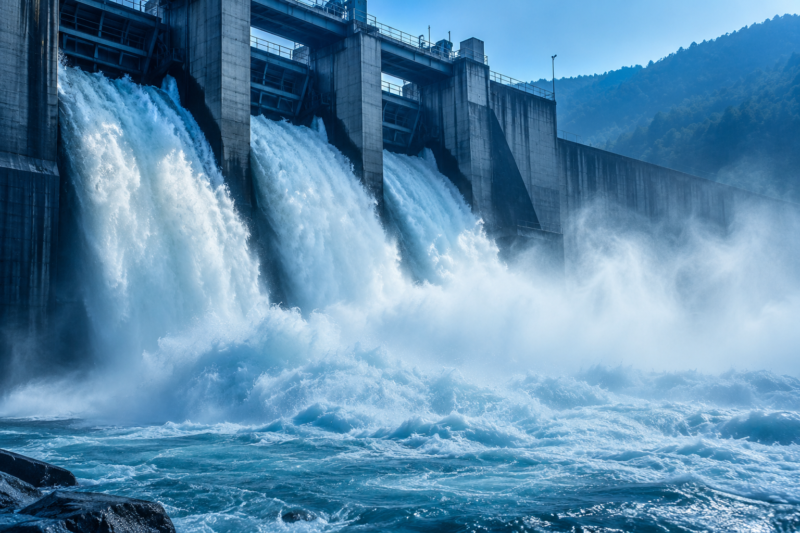
Water has been turning wheels and generating power for over a century, yet in 2026 hydropower is having one of its biggest moments in decades. While solar and wind dominate the headlines, this century-old technology quietly remains the backbone of the world’s clean electricity system — and it’s evolving fast, from giant dams to “water batteries” that keep entire grids stable.
If you’ve ever wondered how a river can light up a city, or why governments from New Delhi to Beijing are suddenly racing to build pumped storage projects, this guide breaks it all down — in plain language, backed by the latest numbers.
What Is Hydropower, Really?
At its core, hydropower is electricity generated by using the force of moving or falling water to spin a turbine connected to a generator. It’s one of the oldest forms of renewable energy known to humankind, and unlike solar or wind, it doesn’t depend on sunshine or breeze — it depends on gravity and flow.
There are a few main types worth knowing:
- Conventional (reservoir) hydropower — water is stored behind a dam and released through turbines on demand.
- Run-of-river hydropower — electricity is generated from the natural flow of a river with little to no storage.
- Pumped storage hydropower — often called a “water battery,” this system pumps water uphill when electricity is cheap and releases it downhill through turbines when demand spikes.
- Small hydropower — smaller-scale plants (usually under 10 MW) that power local communities or micro-grids.
Each type plays a different role, but together they make this resource the most flexible form of clean energy available today.
Hydropower by the Numbers: The Current Global Picture
Here’s where it gets interesting. According to the International Hydropower Association’s 2026 World Hydropower Outlook, global hydropower capacity reached roughly 1,469 GW in 2025, with pumped storage crossing the 200 GW mark for the first time in history — making it the world’s largest source of long-duration energy storage.
A few standout figures from recent reports by IRENA and the IHA:
- It remains the single largest source of renewable electricity worldwide, supplying around 14–17% of global power generation.
- Global capacity grew by about 28 GW in 2025 alone, following a 24.6 GW increase in 2024.
- China accounted for over 40% of new additions in 2025, including massive pumped storage projects.
- The IRENA 2026 statistical review put total renewable hydropower capacity at around 1,296 GW, roughly a quarter of all installed renewable energy capacity worldwide.
- The global development pipeline for new hydropower and pumped storage now exceeds 1,075 GW, spread across more than 150 countries.
Despite solar and wind grabbing most of the new capacity added each year, this steady, dependable growth shows why the sector continues to be treated as critical infrastructure rather than a legacy technology.
India's Hydropower Story: A Regional Powerhouse in the Making
If you’re tracking clean energy trends in South Asia, India’s hydropower journey is one of the most compelling stories of 2026. As of mid-2026, India’s installed large hydropower capacity stood at about 52 GW, contributing close to 10% of the country’s total power capacity. During 2025–26, India added roughly 3,687 MW of new capacity — its highest annual addition in years — and moved past Russia to become the world’s fifth-largest country by total installed capacity.
But the real headline is pumped storage. India currently has only around 3.5–5 GW of operational pumped storage capacity, yet the government’s roadmap targets:
- 50–57 GW by 2032
- Up to 100 GW by 2035–36
The Central Electricity Authority has already identified 288 GW of pumped storage potential across the country, with states like Odisha alone mapping over 34 GW across 45 potential sites. Large basins such as the Brahmaputra are being planned for a mix of conventional and pumped storage capacity to balance the rapid growth of solar and wind power.
Why the sudden urgency? India’s energy storage requirement is projected to jump from current levels to 62 GW by 2029–30 and as much as 476 GW by 2046–47. Pumped hydropower offers a cost-effective, long-duration way to fill that gap — something batteries alone can’t yet do affordably at grid scale.
Why Hydropower Still Matters in a Solar-and-Wind World
It’s easy to assume solar panels and wind turbines have made hydropower old news. In reality, the opposite is happening — it has become the glue that holds renewable-heavy grids together. Here’s why:
1. Grid Flexibility and Balancing Solar and wind are variable — they generate power only when the sun shines or the wind blows. Hydropower plants, especially pumped storage units, can ramp up or down in minutes, absorbing excess renewable energy and releasing it exactly when the grid needs it.
2. Long-Duration Storage Batteries are excellent for short bursts of power, but pumped storage can store and discharge energy for hours or even days, making it the world’s dominant form of long-duration energy storage by far.
3. Water Security and Multi-Use Infrastructure Beyond electricity, its reservoirs support irrigation, flood control, and drinking water supply — a dimension often overlooked when comparing it to solar or wind.
4. Economic and Employment Impact Large hydropower and pumped storage projects create long-term construction and operations jobs, particularly in developing regions where new capacity is being built fastest — including Africa, which more than doubled its additions in recent years.
5. Energy Security Countries with strong domestic river systems can reduce dependence on imported fuels by leaning on it as a stable, homegrown source of clean energy.
The Real Challenges Facing Hydropower
No conversation about this sector is complete without acknowledging its trade-offs. This isn’t a “perfect” energy source, and awareness means understanding both sides.
- Long construction timelines and high upfront costs — large-scale projects can take a decade or more to build, requiring significant capital before generating any return.
- Environmental and social impact — dam construction can displace communities, alter river ecosystems, and affect biodiversity, which is why environmental clearances often take years.
- Geological and site constraints — not every region has the right terrain or water resources to support new development.
- Financing and revenue uncertainty — in liberalised electricity markets, falling prices and short-term contracts can make it harder to justify multi-decade investments.
- Climate vulnerability — ironically, generation itself can be affected by changing rainfall patterns and droughts linked to climate change.
Modern planning increasingly focuses on “sustainable hydropower” — designing projects with better fish passages, minimal displacement, and smarter reservoir management to reduce these downsides.
Hydropower's Role in Global Climate Goals
The world’s climate targets depend heavily on scaling up renewable energy, and hydropower is quietly one of the pillars supporting that ambition. The COP28 pledge to triple global renewable energy capacity to over 11 TW by 2030 assumes continued, steady growth from this sector alongside solar and wind. With global renewable capacity hitting 5,149 GW by the end of 2025 — a record 15.5% jump in a single year — its contribution, while smaller in percentage terms than solar, remains foundational because of the reliability it brings to the mix.
Net-zero roadmaps in major economies, including India’s 2070 net-zero target and its 500 GW non-fossil fuel capacity goal for 2030, explicitly count on hydropower and pumped storage capacity to firm up intermittent renewable energy and keep grids stable as coal is phased down.
What's Next for Hydropower: Trends to Watch
- The pumped storage boom — expect continued global investment as grid operators race to add long-duration storage; pumped storage capacity is expected to roughly double over the next decade.
- Mega-projects in Asia — China’s Yarlung Zangbo hydropower project, expected to generate nearly three times the output of the Three Gorges Dam, signals how ambitious the next generation of development will be.
- Repowering and modernisation — many older hydropower plants in Europe and North America are being upgraded rather than replaced, extending their lifespan and boosting efficiency.
- Private sector participation — countries like India are opening up hydropower and pumped storage development to private players through competitive bidding, easing pressure on public budgets.
- Hybrid renewable energy parks — pairing hydropower plants with solar and wind at the same site is becoming a popular way to maximise land and grid connections.
Final Thoughts: Why Hydropower Deserves More Attention
Hydropower rarely trends the way solar rooftops or electric vehicles do, but it remains one of the most important pieces of the global clean energy puzzle. It’s the quiet workhorse balancing grids, storing renewable energy for when it’s needed most, and giving countries like India a realistic path toward their climate and energy security goals.
As the world races to triple renewable energy capacity by 2030, its role isn’t shrinking — it’s transforming. Understanding how it works, where it’s growing, and what challenges remain is the first step toward appreciating why this century-old technology is still central to tomorrow’s clean energy story.
FAQs
Is hydropower a renewable energy source? Yes, hydropower is classified as a renewable energy source because it relies on the natural water cycle, which is continuously replenished by rainfall and snowmelt.
What is pumped storage hydropower used for? Pumped storage hydropower stores excess electricity by pumping water uphill and releasing it through turbines when demand rises, making it the world’s largest source of long-duration energy storage.
Which country has the largest hydropower capacity? China leads global hydropower capacity by a wide margin, followed by countries like Brazil, the United States, Canada, and India, which recently became the fifth-largest globally.
Is hydropower better than solar or wind? Each renewable energy source has its strengths. Hydropower offers reliable, dispatchable power and storage, while solar and wind are cheaper to deploy quickly but depend on weather conditions.
Trusted by 50000+ Customers
Anya Green Energy is a leading solar company and Solar Energy service provider established in 2013. We are recognized by startup India and customer best choice award 2022.
Our Achievements :
Recognized by Startup India.
Purvanchal’s first solar company to operate exclusively with solar products.
Certified by well-known institutions such as MSME, IndiaMart, and Just Dial and many more.
Winner of the Best Customer Choice Award 2022.
Over 50,000 happy customers across India.
Products
-
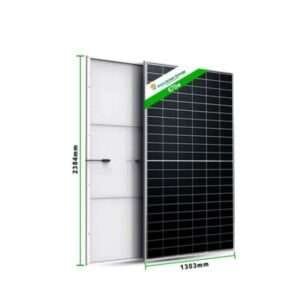 670W MONO PERC HALFCUT SOLAR PANEL
₹26,999.00Original price was: ₹26,999.00.₹23,999.00Current price is: ₹23,999.00. -
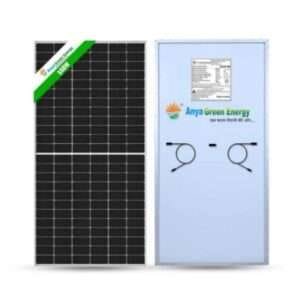 550W MONO PERC HALFCUT SOLAR MODULE
₹22,999.00Original price was: ₹22,999.00.₹19,999.00Current price is: ₹19,999.00. -
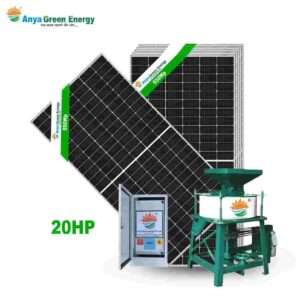 20HP Atta Chakki with Mone Perc Half cut 550W Panel
₹1,200,000.00Original price was: ₹1,200,000.00.₹1,060,000.00Current price is: ₹1,060,000.00. -
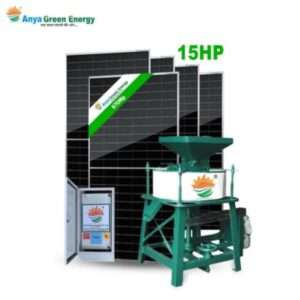 15HP Atta Chakki with Mone Perc Half cut 670W Panel
₹900,000.00Original price was: ₹900,000.00.₹850,000.00Current price is: ₹850,000.00. -
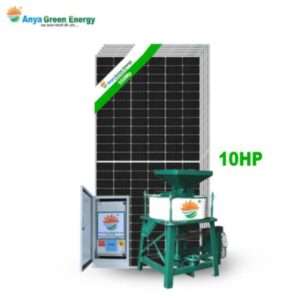 10HP Atta Chakki with Mone Perc Half cut 550W Panel
₹650,000.00Original price was: ₹650,000.00.₹590,000.00Current price is: ₹590,000.00.