Non-Engineering Solar Careers: The Roles Powering India's Solar Boom Without a Technical Degree

Ask most people what a solar career looks like, and they’ll picture someone climbing onto a roof with a toolbox. But India added roughly 19 GW of solar capacity in FY2024–25 alone, and the vast majority of it moved through a dealer-installer channel — a network built on project coordination, procurement, logistics, and business relationships, not just engineering. Industry leaders are blunt about it: from liaison officers to business development and finance roles, demand across every non-technical function is rising just as fast as demand for engineers.
If you’ve got skills in coordination, negotiation, supply chain, or business operations and assumed solar wasn’t for you without a technical degree, this guide walks through exactly where non-engineering solar careers exist today, what they pay, and how to get into them — grounded in real 2025–2026 hiring data.
Why Non-Engineering Roles Matter as Much as Technical Ones
A solar project moves through distinct phases — development, engineering, procurement, construction, commissioning, and years of operation afterward — and engineers are only directly involved in a few of those stages. Industry executives consistently describe demand rising across business development, project management, sales, corporate finance, product management, and service roles alongside the more visible technical hiring.
As one industry HR leader put it, companies look for supply chain and logistics expertise with a focus on strategic sourcing and quality assurance just as urgently as they look for design engineers — because a solar project without the right materials arriving on time, or the right vendor terms negotiated, simply doesn’t get built on schedule.
The Main Non-Engineering Solar Careers Worth Knowing
1. Solar Project Management Solar project management professionals oversee the entire lifecycle — from development and permitting through engineering handoffs, procurement, construction supervision, and final commissioning. Responsibilities typically include liaising with local authorities for approvals, coordinating EPC and subcontractor performance, managing budgets and schedules, and mitigating risks that could delay a project. This is one of the most senior, well-compensated career tracks, since project directors often carry executive oversight across the entire development-to-handover chain.
2. Solar Procurement People in solar procurement jobs source modules, inverters, cabling, and balance-of-system components, negotiate vendor contracts, and manage supplier relationships. Solar procurement jobs increasingly require ERP and supply chain software experience, strong negotiation skills, and — at senior levels — 6 to 8 years of experience sourcing engineering goods and services, often carried over from manufacturing or telecom backgrounds rather than solar specifically.
3. Solar Logistics and Supply Chain Solar logistics careers cover coordinators who manage vendor coordination, inventory control, and material movement across rooftop and ground-mount projects. This function spans everything from warehouse and distribution network management to real-time inventory tracking in ERP or SAP systems, and it has become critical as India’s rooftop segment scales rapidly.
4. Solar Dealership and Distribution Perhaps the most accessible entry point of all, a solar dealership business lets entrepreneurs sell, install (through subcontracted crews), and support solar systems under an established brand’s franchise or channel partner model — without needing to build manufacturing, R&D, or deep technical capability from scratch.
5. Sales, Business Development, and Finance Beyond direct dealership, plenty of non-engineering solar careers exist in corporate business development, sales leadership, and finance functions supporting project financing, power purchase agreements, and investor relations.
Non-Engineering Solar Careers by the Numbers: The 2025–2026 Picture
The scale of demand in these functions is well-documented across current hiring data:
- India added approximately 19 GW of solar capacity in FY2024–25, with residential rooftop growing threefold year-on-year — and the vast majority delivered through the dealer-installer channel rather than direct corporate EPC teams, according to JMK Research.
- MNRE data shows over 20,000 registered solar vendors in India as of 2025, though most still operate as solo EPCs rather than structured multi-partner dealer networks — a gap that represents real room for growth in the solar dealership business space.
- India has crossed 150 GW of installed solar capacity, adding nearly 50 GW in just 14 months, positioning the country as the world’s second-largest solar market by annual installations in 2026, according to the National Solar Energy Federation of India.
- Major brands including Waaree Energies, Adani Solar, Vikram Solar, and Tata Power Solar all run active dealer and channel partner programmes for these non-engineering solar careers, with typical dealer margins ranging from 3% to 7% depending on the brand and product category.
- Job listings for solar logistics careers and procurement roles on platforms like Indeed and Glassdoor consistently show postings for SCM coordinators, procurement leads, and supply chain analysts, often paying ₹50,000–60,000 per month at the mid-level, alongside parallel demand for project coordinators and project management professionals.
- Most rooftop solar dealers recover their initial investment within 18 to 30 months, according to industry data, making dealership one of the faster-payback entry points into the broader renewable energy sector.
Why These Roles Are a Smart Entry Point Into Solar
1. No Engineering Degree Required Solar project management, procurement, logistics, and dealership roles prioritise coordination, negotiation, and business skills over technical certification — opening the sector to commerce, business administration, and even liberal arts graduates.
2. Lower Capital and Faster Payback for Entrepreneurs A solar dealership business, particularly under a franchise or channel partner model, bypasses years of brand-building and regulatory learning, since the franchisor typically handles net metering applications, DISCOM coordination, and subsidy processing on the dealer’s behalf.
3. Transferable Skills From Other Industries Solar logistics careers and procurement roles actively recruit from manufacturing, telecom, and general supply chain backgrounds — meaning experienced professionals from unrelated sectors can move in without starting from zero.
4. Career Ladder Into Senior Leadership This career track is consistently described as one of the more senior, well-paid options in the industry, with project coordinators progressing into project managers, project directors, and eventually PMO leadership roles overseeing entire portfolios.
5. Recurring, Not One-Time, Income Potential Dealership owners among non-engineering solar careers benefit from referral networks, add-on opportunities like EV charging integration, and repeat business as satisfied customers refer neighbours and businesses — creating income that compounds rather than resetting with every new deal.
The Real Challenges to Know About
- Fragmented dealer networks — with most of India’s 20,000+ registered vendors operating as solo EPCs, dealers scaling into multi-partner or channel-dealer models often lack the CRM and reporting systems needed to track sub-installer performance effectively.
- Franchise deposit risk — some franchise or solar dealership business models require refundable security deposits ranging from roughly ₹2 lakh to ₹25 lakh, so vetting a franchisor’s track record before committing capital matters.
- Procurement complexity — solar procurement jobs increasingly require managing DCR (domestic content requirement) compliance and ALMM-listed suppliers, adding regulatory complexity beyond simple vendor negotiation.
- Logistics bottlenecks in tier-2/3 markets — solar logistics careers based outside major metro warehouses can face slower supply chains and less mature distribution infrastructure.
- Margin pressure in dealership models — with dealer margins typically in the 3–7% range, profitability depends heavily on volume and operational efficiency rather than per-unit markup alone, a real consideration for anyone weighing non-engineering solar careers by earning potential.
- Coordination-heavy, not purely desk-based work — solar project management in particular requires constant liaison across EPCs, local authorities, and subcontractors, which can mean high stress during commissioning phases.
How to Break Into Non-Engineering Solar Careers
- Leverage existing sales, supply chain, or coordination experience — most solar procurement jobs and adjacent supply chain roles value transferable experience from manufacturing, telecom, or general B2B sectors over solar-specific background.
- Target established brand dealer programmes — companies like Waaree Energies, Adani Solar, Vikram Solar, and Tata Power Solar all run structured, MNRE-aligned dealer and channel partner programmes that reduce the learning curve for anyone new to dealership.
- Build CRM and reporting discipline early — dealers and project coordinators using structured CRM tools consistently outperform those managing partner pipelines informally, since visibility into every deal’s stage directly drives conversion.
- Learn the regulatory basics — understanding net metering, DISCOM processes, and PM Surya Ghar subsidy flows, even without technical depth, makes candidates far more credible in project management and dealership interviews.
- Consider a project coordinator role as an entry point — many companies hire project coordinators with 1–3 years of general project or operations experience, using the role as a stepping stone into full project management responsibility
What's Next for Non-Engineering Solar Careers: Trends to Watch
- Continued growth in dealer-led rooftop installation — as India’s rooftop segment keeps outpacing utility-scale growth in certain markets, expect dealership-driven non-engineering solar careers to expand further into tier-2 and tier-3 cities.
- Rising sophistication in solar procurement — as ALMM and DCR compliance requirements tighten, procurement professionals with regulatory fluency will become increasingly valuable beyond pure negotiation skill.
- Digital tools reshaping solar logistics careers — ERP and SAP-based inventory management is becoming standard, rewarding candidates comfortable with digital supply chain systems over manual tracking methods.
- EV charging and storage bundling for dealers — as dealerships add EV charging integration and battery storage to their offerings, adjacent roles are expected to grow alongside core solar sales.
- PMO-style project management maturing — as project sizes and portfolios grow, expect more structured, PMO-style roles across non-engineering solar careers replacing informal, single-person project coordination.
Final Thoughts: Solar Careers Aren't Just for Engineers
The data makes it clear that India’s solar boom runs on far more than technical talent — it runs on people who can manage timelines, negotiate with suppliers, move inventory efficiently, and build dealer networks that reach customers engineers rarely interact with directly. Whether it’s overseeing a multi-crore commissioning schedule, securing ALMM-compliant modules on time, keeping warehouses stocked across seven states, or running a dealership built from a modest franchise investment, non-engineering solar careers offer a genuine, well-documented path into one of India’s fastest-growing sectors.
For anyone with strong coordination, negotiation, or business skills wondering whether solar is only for engineers — or whether a solar dealership business is worth exploring — the honest answer, and the whole point of exploring non-engineering solar careers, is clearly no, it isn’t only for engineers.
Trusted by 50000+ Customers
Anya Green Energy is a leading solar company and Solar Energy service provider established in 2013. We are recognized by startup India and customer best choice award 2022.
Our Achievements :
Recognized by Startup India.
Purvanchal’s first solar company to operate exclusively with solar products.
Certified by well-known institutions such as MSME, IndiaMart, and Just Dial and many more.
Winner of the Best Customer Choice Award 2022.
Over 50,000 happy customers across India.
Top rated products
-
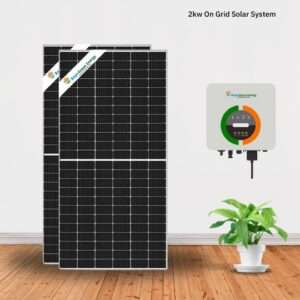 2kW On-Grid Solar System with Mono Perc half Cut 540/550W Panel (DCR Approved)
₹150,000.00Original price was: ₹150,000.00.₹145,000.00Current price is: ₹145,000.00. -
 20HP Atta Chakki with Mone Perc Half cut 550W Panel
₹1,200,000.00Original price was: ₹1,200,000.00.₹1,060,000.00Current price is: ₹1,060,000.00. -
 55 Wt Poly Solar Panel
₹5,000.00Original price was: ₹5,000.00.₹3,900.00Current price is: ₹3,900.00. -
 3kW On-Grid system with Mono Perc half Cut 540/550W Panel (DCR Approved)
₹210,000.00Original price was: ₹210,000.00.₹190,000.00Current price is: ₹190,000.00. -
 550W MONO PERC HALFCUT SOLAR MODULE
₹22,999.00Original price was: ₹22,999.00.₹19,999.00Current price is: ₹19,999.00.