
Will Commercial Solar Installation Become More Expensive After 31 December 2026?
India’s solar energy sector is entering an important phase of regulatory changes. With the implementation of domestic solar cell sourcing requirements under the Approved List of Models and Manufacturers (ALMM) framework, commercial solar buyers need to understand how upcoming regulations may affect Solar Panel Price in India project costs.
The deadline of 31 December 2026 is particularly important for certain net-metering and open-access solar projects. After this date, applicable projects will need to comply with ALMM List-II requirements for solar PV cells.
But does this mean every commercial solar installation will become more expensive from January 2027? Will the solar panel price in India increase? And what should business owners consider before investing in a commercial solar system?
Let’s understand the regulations, their possible Solar Panel Price in India impact on solar prices and what commercial solar buyers should know.
Why Is 31 December 2026 Important for Commercial Solar Projects?
The Ministry of New and Renewable Energy (MNRE) has introduced ALMM List-II for solar PV cells to strengthen domestic solar manufacturing and improve supply-chain reliability.
Under the latest policy clarification issued on 18 July 2026, MNRE provided a limited exemption to certain net-metering and open-access renewable energy projects. These projects can be commissioned without complying Solar Panel Price in India with ALMM List-II for solar PV cells up to 31 December 2026.
This is not a blanket extension for all solar installations. The applicable requirements depend on the project’s category and commissioning date.
From 1 January 2027, projects covered by the requirement will need to use solar PV cells included in ALMM List-II, subject to applicable exemptions and transitional provisions.
This change may influence panel procurement options and project economics.
What Is ALMM List-II and Why Does It Matter?
ALMM stands for Approved List of Models and Manufacturers. It is a framework introduced by MNRE to regulate eligible solar PV Solar Panel Price in India modules and cells used in specified solar projects.
The framework has two important components:
ALMM List-I: Covers approved solar PV module models and manufacturers.
ALMM List-II: Covers approved solar PV cell models and manufacturers.
The purpose of ALMM List-II is to encourage domestic solar cell manufacturing and ensure that eligible solar projects use cells sourced from approved manufacturers.
As the requirement becomes applicable to more project categories, solar module manufacturers may need to adjust their cell procurement and production processes.
This could influence the availability and pricing of different solar panel categories in the Indian market.
Ready to switch to Solar?
Solar solutions with Anya Green Energy and discover how you can reduce your electricity bills.
Contact UsWill Commercial Solar Panel Price Increase After December 2026?
The commercial solar panel price may experience upward pressure for projects that become subject to the domestic cell sourcing Solar Panel Price in India requirement.
There are several reasons behind this possibility:
1. Domestic Cell Sourcing
Manufacturers supplying eligible projects will need to source cells from manufacturers included in ALMM List-II. Changes in sourcing requirements may affect procurement costs.
2. Limited Procurement Options
If the available supply of compliant solar cells does not grow at the same pace as demand, manufacturers may face procurement challenges.
3. Manufacturing and Supply-Chain Costs
Domestic manufacturing capacity, raw material prices, production efficiency and logistics can all influence the final price of solar modules.
4. Changes in Market Demand
As more projects require compliant modules Solar Panel Price in India and cells, demand patterns may change. This could influence the pricing of different solar technologies.
However, it is important to understand that a price increase is possible, not guaranteed. Actual commercial solar panel price will depend on manufacturers, technology, supply, demand and project requirements.
DCR vs Non-DCR Solar Panels: What Is the Difference?
One common misconception among solar buyers is that DCR and ALMM List-II are the same thing. They are not.
DCR stands for Domestic Content Requirement. Solar Panel Price in India It generally requires the use of domestically manufactured solar cells and modules in schemes where DCR conditions apply.
ALMM List-II, on the other hand, is a list of approved solar PV cell models and manufacturers.
Here is a simple comparison:
| Parameter | DCR Solar Panels | Non-DCR Solar Panels |
|---|---|---|
| Domestic cell requirement | Required under applicable DCR rules | Not necessarily required |
| Domestic module requirement | Required under applicable DCR rules | Depends on applicable regulations |
| ALMM List-II | Must be assessed separately | Must be assessed separately |
| Application | Specified government schemes and programmes | Other eligible applications, subject to regulations |
Therefore, buyers should not assume that every commercial solar project will require DCR panels after 31 December 2026.
The applicable ALMM and DCR requirements must be checked separately.
Will Every Commercial Solar Installation Become Expensive?
No. Not every commercial solar installation will automatically become more expensive due to the 31 December 2026 deadline.
The regulatory treatment depends on how the solar system is connected and used.
Behind-the-Meter Captive Solar Systems
According to MNRE’s ALMM clarification, Solar Panel Price in India behind-the-meter solar power plants used solely for captive consumption by a consumer or group of consumers are exempt from the relevant ALMM requirements, subject to the applicable conditions.
This distinction is particularly important for businesses installing solar systems to meet their own electricity requirements.
Net-Metering Solar Projects
Certain net-metering projects have Solar Panel Price in India received a temporary exemption from ALMM List-II until 31 December 2026. Projects commissioned after this deadline will need to comply with the applicable requirements.
Open-Access Solar Projects
Open-access renewable energy projects also fall under the temporary exemption window. After the deadline, applicable projects will need to follow the relevant ALMM List-II provisions.
Thus, commercial buyers should evaluate their project category before making assumptions about future solar costs.
What Factors Will Determine Solar Panel Price in India in 2027?
Apart from regulatory changes, several market factors influence the solar panel price in India.
Solar Cell Technology: TOPCon, Mono PERC and other technologies have different manufacturing costs and efficiencies.
Domestic Manufacturing Capacity: The Solar Panel Price in India availability of domestically manufactured cells can influence procurement prices.
Raw Material Costs: Aluminium, glass, silver, silicon and other materials affect manufacturing expenses.
Supply and Demand: Changes in domestic and international demand can influence module prices.
Government Policies: ALMM, DCR and other applicable regulations can affect product eligibility and procurement.
Project Capacity: Bulk procurement and project size can influence the final quotation.
Therefore, customers should compare complete system quotations rather than making decisions based only on the per-watt panel price.
Should Businesses Install Solar Before 31 December 2026?
Businesses planning to install solar should evaluate their requirements, project category and expected electricity consumption before deciding when to invest.
Here are a few important considerations:
Identify whether your project is captive, net-metered or open-access.
Check whether ALMM List-I and List-II requirements apply.
Verify whether any DCR requirement applies to your project.
Compare quotations from reliable solar system providers.
Evaluate panel efficiency, inverter performance, structure quality and warranty.
Calculate expected electricity savings and the project’s payback period.
Installing a solar system before the deadline Solar Panel Price in India may be relevant for projects eligible for the temporary exemption. However, businesses should not rush into an investment without checking the commissioning requirements and project economics.
Final Thoughts: Will Commercial Solar Become More Expensive in 2027?
The 31 December 2026 deadline marks an important transition for certain commercial solar projects in India.
The implementation of ALMM List-II requirements may influence solar module sourcing, availability and procurement costs for affected projects. As a result, the commercial solar panel price could experience upward pressure in some market segments.
However, it would be incorrect to claim that every commercial solar installation will become expensive or that all non-DCR panels will become prohibited after this date.
The best approach is to understand the applicable regulations, evaluate your electricity consumption and select a solar solution that meets your business requirements.
Planning to install solar for your commercial business?
Anya Green Energy helps businesses explore solar energy solutions designed around their power requirements. Make an informed investment decision and take a step towards reducing your dependence on conventional electricity.
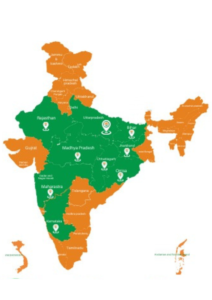
Trusted by 50000+ Customers
Anya Green Energy is a leading solar company and Solar Energy service provider established in 2013. We are recognized by startup India and customer best choice award 2022.
Our Achievements :
Recognized by Startup India.
Purvanchal’s first solar company to operate exclusively with solar products.
Certified by well-known institutions such as MSME, IndiaMart, and Just Dial and many more.
Winner of the Best Customer Choice Award 2022.
Over 50,000 happy customers across India.