Solar Energy: The Definitive Guide to Technology, Cost Savings, and India's Clean Energy Future
Sunlight is the most abundant clean energy resource on Earth, providing more power to the planet’s surface in a single hour than global human civilization consumes in an entire year.
As electricity demand continues to rise across India, solar energy has evolved from an experimental alternative power source into a dominant driver of national infrastructure growth and corporate energy strategy.
Homeowners, commercial enterprises, and industrial facility managers are increasingly adopting solar energy to protect against rising grid electricity tariffs while reducing carbon emissions.
Driven by dramatic declines in solar photovoltaic module prices, technological advancements in cell efficiency, and strong government policy support, solar energy now offers one of the lowest levelized costs of electricity among all generation sources in the country.
Understanding how solar energy works, evaluating its financial returns, and choosing the right system architecture is essential for any property owner considering a transition to clean power.
How Solar Energy Systems Convert Sunlight into Electricity
At the core of every solar energy installation is the photovoltaic effect, a physical process discovered in the nineteenth century that converts light directly into electrical energy.
When photons from sunlight strike a silicon solar cell, they transfer energy to electrons within the semiconductor material, creating an electrical current.
Modern solar energy systems combine multiple engineered components to transform this direct current into usable alternating current for building appliances:
- Solar panels — arrays of photovoltaic cells connected in series to capture sunlight and generate direct current power.
- Solar inverter — the central electronic engine that converts direct current power into alternating current electricity synced with the building’s electrical panel or the public power grid.
- Mounting structures — engineered aluminum or galvanized steel racking that secures solar modules to rooftops or ground surfaces at optimal tilt angles.
- Balance of system — specialized electrical wiring, circuit breakers, isolation switches, surge protection devices, and net metering equipment ensuring safe power distribution.
As one veteran solar engineering consultant noted during an industrial clean energy summit, “a solar energy system is not just a collection of hardware on a roof — it is a micro-power plant engineered to deliver reliable, lower-cost electricity for over twenty-five years.”
Ready to switch to Solar?
Solar solutions with Anya Green Energy and discover how you can reduce your electricity bills.
Contact UsUnderstanding the Different Types of Solar Energy Installations
Choosing the right system architecture is a critical step when evaluating solar energy for residential, commercial, or agricultural properties.
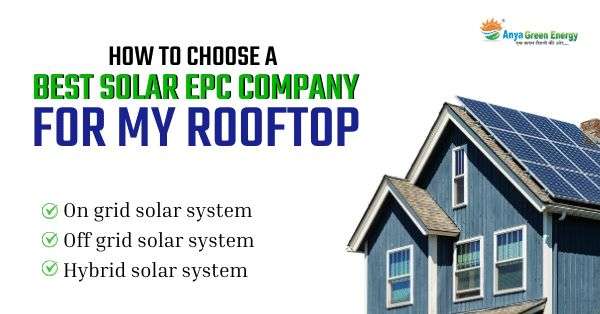
Different installation configurations suit different operational needs, grid availability levels, and financial goals:
On-Grid Solar Systems
On-grid solar energy systems remain the most popular choice for urban homes, commercial buildings, and industrial facilities with reliable access to the public electricity grid.
These systems connect directly to the local distribution network without requiring expensive battery storage.
Excess electricity generated during sunny daytime hours is exported back to the grid through a net meter, earning energy credits that offset power drawn from the grid during nighttime hours.
On-grid solar energy setups offer the lowest capital cost per kilowatt and deliver the fastest payback period for property owners.
Off-Grid Solar Systems
Off-grid solar energy systems operate completely independently of the public power grid, making them ideal for remote rural areas, agricultural farms, or regions experiencing frequent, prolonged power outages.
These installations pair solar arrays with deep-cycle battery storage systems and off-grid inverters to store excess daytime energy for use during nighttime or cloudy conditions.
While off-grid solar energy setups require a higher initial capital investment due to battery storage costs, they deliver absolute energy independence in locations where grid connectivity is unreliable or unavailable.
Hybrid Solar Systems
Hybrid solar energy installations combine the best features of both on-grid and off-grid configurations, offering an ideal solution for businesses and homes that require uninterrupted power supply alongside net metering benefits.
Hybrid systems stay connected to the public grid while incorporating dedicated battery backup.
During standard operation, the system utilizes solar energy to power building loads and exports excess power via net metering; during grid power outages, the hybrid inverter seamlessly switches to battery power to keep critical appliances running.
Quick Comparison: On-Grid vs Off-Grid vs Hybrid Systems
| System Type | Grid Connection | Battery Storage | Best Suited For | Initial CAPEX |
|---|---|---|---|---|
| On-Grid Solar | Connected with Net Metering | None | Urban homes, commercial buildings, factories | Lowest |
| Off-Grid Solar | Completely Disconnected | Required (Lithium/Lead-Acid) | Remote farms, rural sites, off-grid facilities | Highest |
| Hybrid Solar | Connected with Net Metering | Included (Flexible Capacity) | Hospitals, IT parks, homes with frequent outages | Moderate-High |
At the core of every solar energy installation is the photovoltaic effect, a physical process discovered in the nineteenth century that converts light directly into electrical energy.
When photons from sunlight strike a silicon solar cell, they transfer energy to electrons within the semiconductor material, creating an electrical current.
Modern solar energy systems combine multiple engineered components to transform this direct current into usable alternating current for building appliances:
- Solar panels — arrays of photovoltaic cells connected in series to capture sunlight and generate direct current power.
- Solar inverter — the central electronic engine that converts direct current power into alternating current electricity synced with the building’s electrical panel or the public power grid.
- Mounting structures — engineered aluminum or galvanized steel racking that secures solar modules to rooftops or ground surfaces at optimal tilt angles.
- Balance of system — specialized electrical wiring, circuit breakers, isolation switches, surge protection devices, and net metering equipment ensuring safe power distribution.
As one veteran solar engineering consultant noted during an industrial clean energy summit, “a solar energy system is not just a collection of hardware on a roof — it is a micro-power plant engineered to deliver reliable, lower-cost electricity for over twenty-five years.”
Advancements in Solar Energy Module Technology
The performance and power output of modern solar energy installations have improved significantly due to rapid innovations in photovoltaic cell engineering.
Understanding these module technology choices helps property owners select the right equipment for their specific roof space and budget:
Monocrystalline Solar Panels
Monocrystalline modules represent the industry standard for high-efficiency solar energy systems.
Manufactured from single-crystal silicon, these panels feature a uniform dark appearance and achieve conversion efficiencies ranging between 20 and 23 percent.
Monocrystalline panels perform exceptionally well in limited roof spaces, generating higher wattage per square meter than older module designs.
Half-Cut and Multi-Busbar Technology
Modern monocrystalline solar energy modules frequently incorporate half-cut cell layouts and multi-busbar designs.
By splitting standard solar cells in half, electrical resistance inside the module is reduced, improving efficiency and lowering internal heat generation.
Half-cut cell solar energy panels also handle partial shading far better than traditional modules; if dirt or shade covers the lower half of a panel, the upper half continues generating power at full capacity.
TOPCon and Bifacial Solar Modules
Tunnel Oxide Passivated Contact technology represents the next generation of high-efficiency silicon solar energy engineering.
TOPCon modules achieve conversion efficiencies exceeding 22 to 24 percent while offering superior performance in high-temperature environments.
When paired with bifacial module design — which captures light from both the front and rear surfaces using reflective ground light — bifacial TOPCon solar energy arrays can increase total energy yield by an additional 10 to 20 percent.
Financial Benefits and ROI of Adopting Solar Energy
Investing in a solar energy system delivers substantial financial returns that surpass traditional fixed-income investments, making clean energy adoption an attractive capital allocation decision for businesses and homeowners alike.
The economic advantages of deploying solar energy extend across multiple operational dimensions:
- Drastic electricity bill reduction — generating power on-site reduces monthly utility bills by 70 to 90 percent, insulating property owners against rising grid tariffs.
- Accelerated payback period — commercial and industrial solar energy installations typically achieve full payback within 3 to 5 years, while residential systems achieve payback within 4 to 6 years.
- Twenty-five-year operational lifespan — tier-1 solar energy modules come backed by linear performance warranties guaranteeing at least 80 percent power output after 25 years of continuous operation.
- Accelerated depreciation tax benefits — commercial enterprises adopting solar energy in India can claim accelerated depreciation benefits under tax regulations, significantly reducing corporate tax liabilities during the initial years of operation.
- Increased property valuation — buildings equipped with high-performance solar energy infrastructure command higher market resale values and rental yields due to lower ongoing operating costs.
Government Policies, Subsidies, and Net Metering Frameworks
The rapid expansion of solar energy across India has been supported by progressive policy frameworks established by the Ministry of New and Renewable Energy and state electricity regulatory commissions.
These policy mechanisms are designed to make solar energy accessible and financially viable across all consumer segments:
PM-Surya Ghar: Muft Bijli Yojana
For residential consumers, central government schemes like the PM-Surya Ghar scheme provide direct capital subsidies for rooftop solar energy systems up to 3 kW capacity.
These financial subsidies are transferred directly to bank accounts upon successful installation and discom inspection, significantly lowering the entry barrier for middle-income households wanting to adopt solar energy.
Net Metering Policies
Net metering is the regulatory framework that enables on-grid solar energy system owners to export excess power back to the local distribution grid.
Under net metering rules, a bi-directional electricity meter measures both the power drawn from the discom and the excess solar energy fed into the grid.
At the end of each billing cycle, the consumer is billed only for the net electricity consumed, ensuring that every unit of solar energy generated delivers direct financial value.
Open-Access Solar Regulations
For large commercial and industrial consumers with limited rooftop space, open-access solar energy regulations allow businesses to procure clean power from off-site utility-scale solar farms through the existing transmission grid.
Open-access agreements enable corporate entities to meet 100 percent of their electricity demand using low-cost solar energy without requiring capital expenditure on physical rooftop assets.
Environmental Impact: Decarbonizing India's Power Grid
Beyond compelling economic returns, deploying solar energy is the single most effective action a property owner or business can take to reduce their environmental footprint.
India’s traditional electricity grid remains heavily dependent on coal-fired power generation, which releases significant volumes of carbon dioxide, sulfur dioxide, and particulate matter into the atmosphere.
Every kilowatt-hour of electricity produced by a solar energy system offsets approximately 0.82 kilograms of carbon dioxide emissions that would otherwise be generated by fossil-fuel power plants.
A standard 10 kW residential solar energy installation eliminates over 12 to 14 tonnes of carbon dioxide annually, equivalent to planting over 600 mature trees every year.
On a commercial scale, a 100 kW industrial solar energy array offsets over 3,000 tonnes of carbon emissions over its operational lifespan, making clean power adoption a cornerstone of corporate ESG and net-zero strategies.
Furthermore, as highlighted in resource policy studies, switching to solar energy conserves millions of liters of freshwater that would otherwise be consumed for cooling in coal-fired thermal power plants, supporting national water security in drought-prone regions.
Key Factors to Evaluate Before Installing a Solar Energy System
To ensure that a solar energy installation delivers maximum energy yield and financial returns over its 25-year lifespan, property owners must conduct a thorough site evaluation before procuring hardware:
- Roof structural integrity — confirm that the roof surface can support the weight of solar energy panels, mounting racking, and ballasts for over two decades without structural degradation.
- Shadow-free solar access — identify and eliminate potential shading from nearby trees, adjacent buildings, water tanks, or parapet walls between 9:00 AM and 4:00 PM when solar energy generation peaks.
- Roof orientation and tilt angle — in India, solar energy arrays deliver maximum annual energy yield when oriented facing south at a tilt angle matching the local latitude (typically between 12 and 28 degrees).
- Sanctioned grid load — review your monthly electricity bill to verify your property’s sanctioned load; state discoms generally permit rooftop solar energy installations up to 100 percent of the sanctioned load.
- Quality of balance of system hardware — ensure that your EPC contractor specifies high-grade UV-resistant copper cabling, IP65-rated junction boxes, and certified aluminum racking to prevent electrical faults and corrosion.
- Tier-1 equipment selection — select solar energy modules and inverters manufactured by ALMM-approved brands that offer local warranty support and proven degradation track records
Step-by-Step Roadmap for Implementing Solar Energy Projects
Successfully transitioning your home or business to clean power requires a structured project execution strategy:
- Conduct an energy audit — analyze 12 months of utility electricity bills to determine average monthly consumption patterns and identify peak load requirements.
- Select an experienced EPC partner — partner with an accredited solar energy engineering company with a proven track record, certified installers, and local service infrastructure.
- Execute site survey and system design — obtain a detailed 3D shadow analysis, structural feasibility report, and single-line electrical diagram tailored for your property.
- Apply for discom approvals and net metering — submit technical applications to local electricity distribution companies to secure grid connection feasibility and net meter approval.
- Procure equipment and install racking — install engineered mounting structures and lay heavy-duty cabling before mounting solar energy panels and connecting the inverter.
- Commissioning and net meter installation — perform insulation testing, grid synchronization, and final discom inspection to install the bi-directional net meter and energize the system.
- Set up digital monitoring — connect the solar energy inverter to Wi-Fi monitoring portals to track real-time power generation, daily yield, and system health via smartphone apps.
Maintenance Best Practices for Long-Term Solar Performance
While solar energy systems feature no moving mechanical parts and require minimal maintenance compared to diesel generators or HVAC units, establishing a routine care schedule ensures optimal energy production year after year:
- Regular module surface cleaning — clean solar energy panels every two to three weeks using clean water and soft brushes or micro-fiber mops to remove dust, bird droppings, and industrial soot.
- Inspect electrical connections annually — arrange annual maintenance checks by certified technicians to verify cable insulation, tighten electrical terminal screws, and inspect DC isolator switches.
- Monitor thermal performance — utilize thermal imaging cameras during annual inspections to detect hot spots or micro-cracks in solar energy cells before they impact system output.
- Maintain shading clearances — trim overhanging tree branches regularly to prevent new shading from developing over solar energy arrays.
- Track daily generation logs — compare daily generation metrics against seasonal benchmarks using mobile monitoring software to catch potential inverter faults or string drops immediately.
Where Anya Green Energy Stands
At Anya Green Energy, we deliver end-to-end solar energy solutions engineered to maximize financial returns and operational reliability for residential, commercial, and industrial clients across India.
From initial site feasibility analysis and customized 3D system engineering to discom net metering approvals, tier-1 hardware procurement, and long-term operations maintenance, our experienced team manages every phase of your clean energy transition.
We utilize state-of-the-art monocrystalline TOPCon modules, certified mounting racking, and intelligent inverter monitoring systems to ensure that every solar energy installation performs at peak efficiency for over twenty-five years.
Whether you want to reduce electricity bills for your home, lower operating overheads for your factory, or fulfill corporate sustainability commitments, Anya Green Energy provides the expertise and local service support required to turn your solar energy vision into reality.
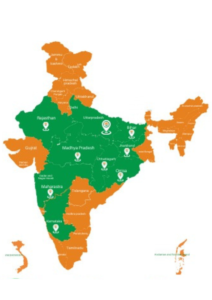
Trusted by 50000+ Customers
Anya Green Energy is a leading solar company and Solar Energy service provider established in 2013. We are recognized by startup India and customer best choice award 2022.
Our Achievements :
Recognized by Startup India.
Purvanchal’s first solar company to operate exclusively with solar products.
Certified by well-known institutions such as MSME, IndiaMart, and Just Dial and many more.
Winner of the Best Customer Choice Award 2022.
Over 50,000 happy customers across India.