
Why Green Energy Careers Are the Ultimate Future-Proof Option for Students

If you’re a student trying to pick a career that won’t feel outdated in fifteen years, look at what the US government’s own labour statistics just confirmed: the two fastest-growing jobs in America through 2034 aren’t in AI or finance — they’re wind turbine service technicians and solar photovoltaic installers. That’s not a prediction from a think tank. That’s the Bureau of Labor Statistics’ actual employment projection, and it’s one of the clearest signals yet that green energy careers are becoming the safest long-term bet a student can make.
This isn’t hype. It’s demand backed by real hiring numbers, real government targets, and a workforce gap that employers are struggling to fill fast enough — the clearest sign of a genuinely durable field. Here’s what the 2025–2026 data actually shows about why this field deserves a serious look.
What Falls Under This Field?
This field covers a far wider range of roles than most students imagine. It’s not just people installing solar panels — it spans:
- Systems engineering — designing, testing, and optimising solar, wind, hydropower, and green hydrogen systems.
- Installation and field technician roles — hands-on work commissioning and maintaining solar plants, wind farms, and battery storage systems.
- Grid and storage specialists — managing how variable renewable power gets integrated into electricity grids.
- Policy, finance, and ESG roles — the sustainability careers side of the sector, covering climate finance, carbon markets, and corporate sustainability reporting.
- Manufacturing and supply chain jobs — producing solar panels, wind turbine components, batteries, and electrolysers.
Because the clean energy transition touches manufacturing, construction, IT, finance, and policy all at once, students from engineering, business, and even law backgrounds can find a genuine entry point into clean energy jobs.
Green Energy Careers by the Numbers: The 2025–2026 Global Picture
According to the IRENA-ILO Renewable Energy and Jobs Annual Review 2025, released in January 2026, the scale of this workforce is already massive and still expanding:
- Global renewable energy employment reached at least 16.6 million jobs in 2024, up from 13.7 million just two years earlier in 2022.
- Solar photovoltaics remains the single largest employer within the sector, accounting for 7.3 million jobs, followed by liquid biofuels (2.6 million), hydropower (2.3 million), and wind energy (1.9 million).
- China alone accounted for 7.3 million green energy jobs in 2024 — 44% of the global total — while the European Union held steady at 1.8 million and Brazil reached 1.4 million.
- In the United States, the Bureau of Labor Statistics projects wind turbine service technicians to grow 49.9% and solar photovoltaic installers to grow 42.1% between 2024 and 2034 — the two fastest-growing occupations of any kind tracked in the entire US economy, ahead of nurse practitioners, data scientists, and cybersecurity analysts.
- The IEA’s World Energy Employment 2025 report puts total global energy sector employment at 76 million people, with clean energy roles now representing the fastest-growing share and the power sector overtaking fuel supply as the single largest energy employer for the first time.
The honest caveat: IRENA also flagged that global job growth in this sector slowed to just 2.3% in 2024 despite record renewable capacity additions, driven by automation and uneven regional investment. That doesn’t undercut the opportunity — it actually strengthens the case for students who build specialised, technical skills now, since generalist roles are exactly where automation pressure is highest.
India's Green Energy Careers Story: A Massive Skilling Push
India offers one of the clearest pictures of how fast this field is scaling for students specifically. The Skill Council for Green Jobs (SCGJ), working under the National Skill Development Mission, projects India could create 3.5 million green jobs by 2047 across renewable energy, electric vehicles, green construction, and sustainable textiles, based on a 2025 SCGJ-Sattva Consulting study supported by JP Morgan.
Some concrete numbers worth knowing:
- As of FY2025, SCGJ had trained 167,082 individuals in solar energy alone, alongside 1,985 in wind, 600 in green hydrogen, and 478 in small-hydro roles.
- The National Council of Applied Economic Research projects that in a 50% renewables-by-2030 scenario, direct employment in the sector could rise from 3.9 million to 4.5 million.
- India already counted over 1 million green jobs by 2023, with hydropower and solar PV forming the bulk of that employment — and the country ranks fifth globally for solar capacity installed.
- Government programmes like the National Solar Mission and the National Green Hydrogen Mission are actively fuelling demand for specialised renewable energy engineering skills, while the National Education Policy 2020 has begun integrating sustainability careers content directly into academic curricula.
- International partnerships are opening doors too — Germany alone needs an additional 350,000 skilled energy transition workers by 2030, and Indo-German skilling programmes are already training Indian students in solar and EV technologies for both domestic and overseas roles.
For a student in India specifically, this means clean energy jobs aren’t a niche bet — they sit at the intersection of a national policy priority, a global skills shortage, and a real, funded training pipeline.
Why Green Energy Careers Are Genuinely Future-Proof
1. Structural, Not Cyclical, Demand Unlike industries that boom and bust with economic cycles, green energy careers are backed by legally binding climate targets — India’s 500 GW non-fossil capacity goal for 2030, the global pledge to triple renewable capacity by 2030, and dozens of national net-zero commitments. That policy floor gives the sector a demand baseline that isn’t going away, which is exactly what separates future-proof jobs from short-lived hiring trends.
2. A Skills Gap Employers Can’t Fill Fast Enough Solar panels are going up faster than trained technicians can install them, and wind farms are being commissioned in regions with too few qualified maintenance engineers. This isn’t a future risk — it’s a current bottleneck, which means students entering now face genuinely favourable hiring conditions rather than crowded competition.
3. Resistance to Automation, Unlike Many Desk Jobs While software and administrative roles face growing AI disruption, most green energy careers involve physical infrastructure — climbing turbines, commissioning solar arrays, managing grid hardware — work that’s far harder to automate away than routine digital tasks.
4. Genuine Cross-Industry Mobility Skills built in renewable energy engineering, storage, or grid integration transfer across solar, wind, hydropower, and green hydrogen alike, giving graduates flexibility that narrower, single-industry careers don’t offer.
5. Strong Pay Relative to Entry Requirements (Rare Among Future-Proof Jobs) In the US, wind turbine service technicians earn a median of over $62,000 and solar photovoltaic installers over $51,000 — both above the median wage for all occupations — often without requiring a four-year degree, making these some of the more accessible future-proof jobs available for students weighing career paths.
6. Global Portability Because the clean energy transition is a worldwide priority, not a single-country trend, skills in solar, wind, or storage systems translate across borders — evident in the growing India-Germany and India-France skilling partnerships specifically designed to place trained workers abroad.
The Real Challenges Students Should Know About
Being realistic matters here — even the most promising future-proof jobs aren’t a guaranteed, friction-free path, and being aware of it will help students plan smarter:
- Uneven regional demand — job growth is concentrated in China, the EU, the US, Brazil, and India; students elsewhere may need to be mobile to access the biggest opportunities.
- Slower-than-expected job growth relative to capacity growth — IRENA’s own data shows employment rising more slowly than installations, partly due to automation, meaning students should aim for specialised, harder-to-automate skills rather than generic entry-level roles.
- Fragmented training standards — certification and training quality still vary significantly between countries and even between states within India, making it important to choose accredited programmes.
- Wage variation by role and geography — while technician roles pay well relative to entry requirements, some entry-level and manufacturing-floor jobs in the sector pay less than engineering or policy-track roles.
- Rapid technology shifts — someone trained purely on today’s solar panel technology may need continuous upskilling as green hydrogen, battery storage, and grid technologies evolve.
How Students Can Actually Get Into Green Energy Careers
- Engineering and technical students — renewable energy engineering, electrical engineering, and mechanical engineering degrees remain the most direct route into design, R&D, and systems roles across solar, wind, and hydropower.
- Vocational and diploma routes — technician-track green energy careers, like solar installation or wind turbine maintenance, often require certification rather than a full engineering degree, making them accessible and fast to enter.
- Business and policy students — sustainability careers in ESG reporting, climate finance, and carbon markets are growing rapidly as companies and governments formalise net-zero commitments.
- Government skilling programmes — in India, bodies like the Skill Council for Green Jobs offer structured, often subsidised training pathways directly aligned with employer demand.
- Internships and apprenticeships — many renewable energy companies now run dedicated internship pipelines specifically to address the skills shortage highlighted by IRENA and IEA
What's Next for Green Energy Careers: Trends to Watch
- Continued outpacing of traditional energy jobs — as fossil fuel employment plateaus or declines in many economies, green energy careers are expected to keep absorbing a growing share of the overall energy workforce.
- Rising demand for storage and grid specialists — as pumped storage hydropower, batteries, and green hydrogen scale up, expect technical demand to shift beyond generation toward storage and grid integration.
- Automation reshaping entry-level roles — students should expect manufacturing and routine maintenance roles to face more automation pressure than specialised technical and engineering positions.
- Deeper international skilling partnerships — programmes like the Indo-German Green Skills initiative suggest more cross-border training and placement pipelines opening up for students willing to relocate.
- Growth in adjacent sustainability careers — expect demand to keep expanding beyond pure engineering into ESG, climate risk, and green finance roles as regulation around corporate emissions reporting tightens globally.
Final Thoughts: Why Students Should Take Green Energy Careers Seriously
The data leaves little room for doubt: green energy careers sit at the rare intersection of structural policy support, a genuine global skills shortage, strong entry-level pay, and resistance to the automation pressures reshaping so many other industries. Whether it’s an engineering student drawn to renewable energy engineering, a vocational student eyeing a wind technician role, or a business student aiming for sustainability careers in climate finance, this is one of the rare future-proof jobs categories that’s actively short of people, not short of demand.
As governments keep expanding renewable energy targets and companies keep struggling to hire fast enough, students who build clean energy jobs skills now — technical, financial, or policy-focused — are positioning themselves in one of the few career paths where the growth curve and the future-proof label genuinely match the numbers behind them.
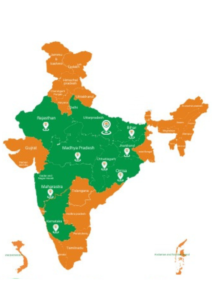

Trusted by 50000+ Customers
Anya Green Energy is a leading solar company and Solar Energy service provider established in 2013. We are recognized by startup India and customer best choice award 2022.
Our Achievements :
Recognized by Startup India.
Purvanchal’s first solar company to operate exclusively with solar products.
Certified by well-known institutions such as MSME, IndiaMart, and Just Dial and many more.
Winner of the Best Customer Choice Award 2022.
Over 50,000 happy customers across India.
Products
-
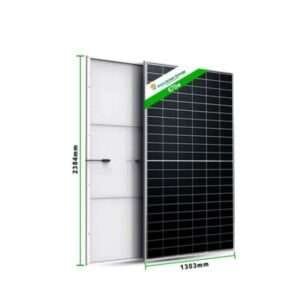 670W MONO PERC HALFCUT SOLAR PANEL
₹26,999.00Original price was: ₹26,999.00.₹23,999.00Current price is: ₹23,999.00. -
 550W MONO PERC HALFCUT SOLAR MODULE
₹22,999.00Original price was: ₹22,999.00.₹19,999.00Current price is: ₹19,999.00. -
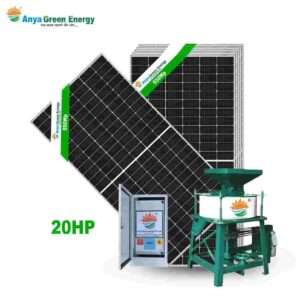 20HP Atta Chakki with Mone Perc Half cut 550W Panel
₹1,200,000.00Original price was: ₹1,200,000.00.₹1,060,000.00Current price is: ₹1,060,000.00. -
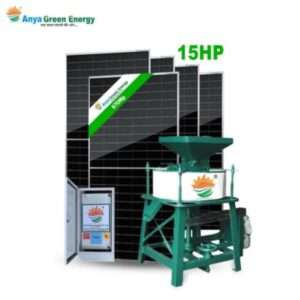 15HP Atta Chakki with Mone Perc Half cut 670W Panel
₹900,000.00Original price was: ₹900,000.00.₹850,000.00Current price is: ₹850,000.00. -
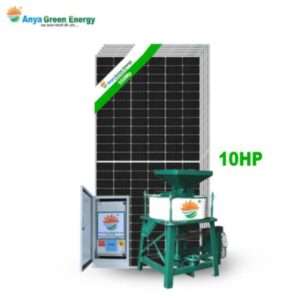 10HP Atta Chakki with Mone Perc Half cut 550W Panel
₹650,000.00Original price was: ₹650,000.00.₹590,000.00Current price is: ₹590,000.00.