How to Become a Certified Solar Technician in 2026: A Step-by-Step Guide

Solar panels are going up faster than the workforce can install and maintain them. In the US, the Bureau of Labor Statistics projects solar photovoltaic installers to be the second-fastest-growing occupation in the entire economy through 2034, and the IREC National Solar Jobs Census found that over 86% of employers already report difficulty finding qualified workers. In India, government-backed training programmes have certified barely a fraction of the technicians the sector needs to hit its 2030 renewable energy targets.
If you’re weighing whether this is one of the renewable energy jobs worth your time, the honest answer is: the demand is real, the entry barriers are lower than most careers with this kind of pay, and there are now more structured paths — government, vocational, and private — to get certified than ever before. Here’s exactly how the process works in 2026.
What Does a Certified Solar Technician Actually Do?
A certified solar technician handles solar PV installation from start to finish — wiring, testing, and maintaining the panels, inverters, mounting structures, and battery setups that convert sunlight into usable electricity. Day-to-day work typically includes:
- Reading site layouts and technical drawings before installation
- Mounting solar panels on rooftops, ground structures, or carports
- Wiring panels to inverters and connecting systems to the electrical grid or battery storage
- Testing system performance and troubleshooting faults
- Carrying out routine maintenance and safety inspections on existing solar PV installation projects
Solar technician certification matters because it verifies these skills to employers. While it isn’t always a strict legal requirement for basic work, most serious employers — and virtually all government-recognised solar projects in India — require some form of verified training before hiring.
Step 1: Understand the Certification Pathways Available in 2026
Government-backed training (India) The Suryamitra Skill Development Programme, run by the National Institute of Solar Energy (NISE) under the Ministry of New and Renewable Energy, has trained over 51,500 candidates since 2015 through a 600-hour, three-month residential course covering classroom training, lab practicals, and on-the-job exposure. Assessment and solar technician certification are handled jointly by the Skill Council for Green Jobs (SCGJ) or other MSDE-approved institutions, and this remains the most widely recognised public route .
Private solar academies A growing number of private institutes now train candidates to become a certified solar technician through hybrid or fully practical formats with their own certification. Anya Green Energy Solar Academy (AGESA), based in Varanasi, Uttar Pradesh, is one such provider — its solar training course lineup ranges from a 30-day online programme to a 60-day programme with on-site practical training, each ending in a certificate aimed at both domestic and international job placement.
International certification (for global mobility) In the US, the North American Board of Certified Energy Practitioners (NABCEP) is the most recognised path to becoming a certified solar technician, while regional efforts — like the IRENA-Arizona State University partnership building harmonised training standards for West Africa — show this model spreading globally.
Step 2: Build the Foundational Skills Employers Actually Want
Regardless of which certification path you choose, most programmes for an aspiring certified solar technician and employers expect competency in:
- Basic electrical theory — voltage, current, wiring, and circuit safety
- Reading solar system design layouts and load calculations
- Mounting and structural techniques used in solar PV installation
- Inverter types (string, hybrid, micro) and battery storage integration
- Net metering and grid-connection procedures
- Workplace safety standards, often aligned with ISO 45001
Programmes that combine online theory with in-person, hands-on practice on a working solar plant consistently produce a more job-ready certified solar technician than purely online courses — a point most training providers, including AGESA and NISE’s Suryamitra programme, now build directly into their course design.
Step 3: Get Hands-On Practical Training
Theory alone won’t make you employable. The strongest solar training course options include:
- Live installation practice — wiring actual panels, inverters, and mounting structures rather than just watching demonstrations
- On-the-job exposure — time spent on a live solar PV installation site under supervision
- Battery and hybrid system practice — since more residential and commercial systems now include storage
- Fault-finding and troubleshooting drills — the skill that separates a junior installer from a technician employers trust unsupervised
This is exactly where the tiered course structures offered by academies like AGESA — moving from a base online-only certificate up to a package that includes on-site training — become relevant: the additional practical component is what actually builds job readiness, not just the paperwork
Step 4: Get Certified and Build a Portfolio
Once training is complete, solar technician certification is typically awarded after:
- A theory assessment covering electrical fundamentals and system design
- A practical skills evaluation, often involving a live or simulated installation
- In government programmes like Suryamitra, a formal certificate issued jointly with SCGJ
After certification, building a small portfolio — photos and notes from any installations you’ve assisted with, even during training — significantly strengthens job applications, since employers in this field weigh demonstrated hands-on experience heavily.
Solar Technician Careers by the Numbers: The 2025–2026 Picture
The data backing this career path is unusually strong for an entry-level trade:
- The US Bureau of Labor Statistics projects solar photovoltaic installer employment to grow 42.1% between 2024 and 2034, adding 12,000 new positions, with a 2024 median annual wage of $51,860 — second only to wind turbine service technicians as the fastest-growing occupation in the entire US economy.
- The IREC National Solar Jobs Census 2024 found that over 86% of employers report difficulty finding qualified solar workers, confirming the shortage isn’t a future risk but a current hiring bottleneck.
- India’s NISE has trained more than 51,500 Suryamitras since the programme launched in 2015, alongside parallel programmes producing Varunmitras (solar water pumping) and Vayumitras (wind technicians).
- SCGJ data through FY2025 shows 167,082 individuals trained in solar energy specifically, out of a broader green jobs pipeline the Council projects could reach 3.5 million by 2047.
- Career progression in India typically follows Junior Installer → Solar Technician → Senior Technician → Site Supervisor → Solar Project Manager, with experienced technicians in specialised roles earning ₹7–20+ lakh per annum depending on responsibility and location.
Why This Career Path Is Worth Serious Consideration
1. Low Entry Barrier, Strong Pay Ceiling Most routes to becoming a certified solar technician don’t require a four-year degree — vocational and short-course paths can get you job-ready in a few months, yet the career ladder extends into well-paid design, supervisory, and consultancy roles.
2. Genuine, Documented Labour Shortage With employer difficulty finding staff running above 86% in the US and India still short of its skilling targets, this is one of the few fields where demand for renewable energy jobs clearly outpaces the supply of trained candidates.
3. Physical, Hands-On Work Resistant to Automation Installing and maintaining solar PV systems on rooftops and in the field is far harder to automate than desk-based or routine digital work, giving this career more durability than many entry-level office roles.
4. Multiple Entry Points Whether through a government programme like Suryamitra, a vocational ITI trade, or a private academy like AGESA offering flexible online-plus-practical formats, there’s a realistic pathway regardless of your starting budget or location.
5. Career Mobility Across Renewable Energy Jobs Skills built as a certified solar technician — electrical fundamentals, system troubleshooting, safety compliance — transfer reasonably well into adjacent renewable energy jobs in wind, battery storage, and even green hydrogen as those sectors scale.
The Real Challenges to Plan For
- Uneven quality across training providers — not every solar technician certification carries the same recognition, so it’s worth checking whether a programme is government-affiliated (SCGJ, NISE, ITI) or a private credential before paying for it.
- Physically demanding work — rooftop and field installation involves heights, weather exposure, and manual labour that isn’t suited to everyone.
- Regional demand variation — job availability tracks closely with local solar deployment, so technicians in high-growth solar markets will see more opportunities than those in slower-adopting regions.
- Continuous upskilling needed — as battery storage, hybrid inverters, and smart grid features become standard, technicians need to keep updating their practical skills beyond initial certification.
- Placement outcomes vary — private academies vary widely in actual job placement support, so verifying real outcomes (not just marketing claims) before enrolling matters.
What's Next for Aspiring Solar Technicians: Trends to Watch
- Growing role of private academies alongside government programmes — as demand for a solar training course outpaces what NISE and ITI networks alone can train, expect more private providers, including academies like AGESA, to fill regional and flexible-format gaps.
- Deeper integration of battery and hybrid system training — certification content is expected to expand beyond pure solar PV installation to cover storage and hybrid inverter systems as standard curriculum.
- International placement pipelines opening up — skilling partnerships between India and countries like Germany are beginning to create pathways for certified technicians to work abroad.
- Rising employer-sponsored training — with hiring difficulty this high, more solar EPC companies are expected to sponsor or subsidise certification for promising candidates directly.
Final Thoughts: Is Becoming a Certified Solar Technician Worth It?
The numbers make a compelling case: a fast-growing occupation, a well-documented labour shortage, multiple accessible entry points, and pay that compares favourably to other trades without requiring years of formal education. Whether you train through a government route like NISE’s Suryamitra programme, a vocational ITI trade, or a private academy like AGESA offering flexible online-and-practical formats, the core requirement is the same — real, hands-on competency that employers can trust.
For students and career-changers looking at renewable energy jobs specifically, becoming a certified solar technician remains one of the more accessible ways into a sector that, by every available data point, still doesn’t have enough trained people to meet demand.


Trusted by 50000+ Customers
Anya Green Energy is a leading solar company and Solar Energy service provider established in 2013. We are recognized by startup India and customer best choice award 2022.
Our Achievements :
Recognized by Startup India.
Purvanchal’s first solar company to operate exclusively with solar products.
Certified by well-known institutions such as MSME, IndiaMart, and Just Dial and many more.
Winner of the Best Customer Choice Award 2022.
Over 50,000 happy customers across India.
Products
-
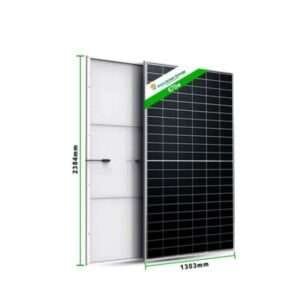 670W MONO PERC HALFCUT SOLAR PANEL
₹26,999.00Original price was: ₹26,999.00.₹23,999.00Current price is: ₹23,999.00. -
 550W MONO PERC HALFCUT SOLAR MODULE
₹22,999.00Original price was: ₹22,999.00.₹19,999.00Current price is: ₹19,999.00. -
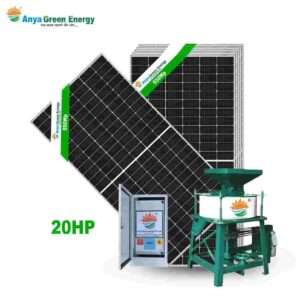 20HP Atta Chakki with Mone Perc Half cut 550W Panel
₹1,200,000.00Original price was: ₹1,200,000.00.₹1,060,000.00Current price is: ₹1,060,000.00. -
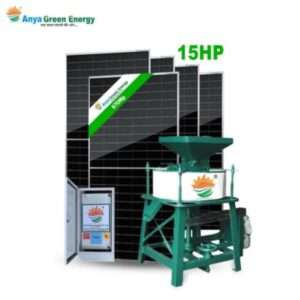 15HP Atta Chakki with Mone Perc Half cut 670W Panel
₹900,000.00Original price was: ₹900,000.00.₹850,000.00Current price is: ₹850,000.00. -
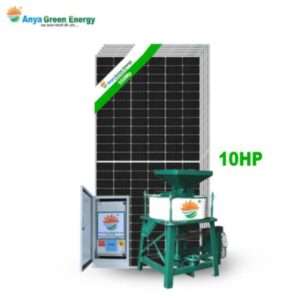 10HP Atta Chakki with Mone Perc Half cut 550W Panel
₹650,000.00Original price was: ₹650,000.00.₹590,000.00Current price is: ₹590,000.00.