Green Hydrogen for Steel and Fertilizers: Decarbonizing India's Hardest-to-Abate Industries
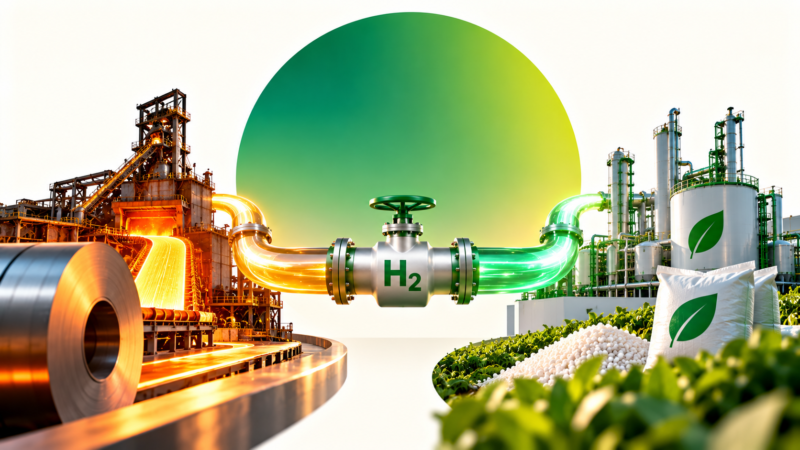
Steel and fertilizer production together account for a significant share of global industrial emissions. Both industries rely on fossil fuels not just for energy, but as a core chemical input in the manufacturing process itself.
This is exactly why green hydrogen for steel and fertilizers has become such a closely watched decarbonization pathway. Unlike sectors that can simply switch to renewable electricity, these industries need a clean substitute for the chemical role fossil fuels currently play.
Green hydrogen for steel and fertilizers offers precisely that substitute, since hydrogen itself is already a necessary input in both processes — only the method of producing it needs to change
How Steel Production Uses Hydrogen
Traditional steelmaking relies on coking coal to chemically strip oxygen from iron ore, a process that releases large volumes of carbon dioxide. Green hydrogen in steel production replaces that coal-based reduction step with hydrogen gas instead.
When hydrogen reacts with iron ore, it strips away oxygen just as coal does — but the byproduct is water vapor rather than carbon dioxide. This single substitution is why green hydrogen in steel production is considered one of the most promising routes to near-zero-emission steel.
Several global steelmakers have already begun piloting direct reduced iron facilities powered by green hydrogen in steel production, though commercial-scale deployment remains limited. The broader push toward green hydrogen for steel and fertilizers depends heavily on these pilot projects proving both technically and economically viable.
How Fertilizer Production Uses Hydrogen
Fertilizer manufacturing already depends on hydrogen, but today that hydrogen comes almost entirely from natural gas through a carbon-intensive process. Green hydrogen in fertilizer production simply swaps the hydrogen source, without changing the fundamental chemistry that follows.
Ammonia, the key building block for nitrogen-based fertilizers, is produced by combining hydrogen with nitrogen from the air. When that hydrogen comes from electrolysis powered by renewable electricity, the resulting green ammonia production carries a dramatically smaller carbon footprint than conventional ammonia manufacturing.
As one industrial decarbonization expert noted in a recent sector briefing, “fertilizer plants were arguably hydrogen consumers long before anyone used the word hydrogen economy — we’re just finally cleaning up where that hydrogen comes from.” This framing captures why green hydrogen for steel and fertilizers fits so naturally into existing industrial infrastructure.
Ready to switch to Solar?
Solar solutions with Anya Green Energy and discover how you can reduce your electricity bills.
Contact UsGreen Ammonia Production: The Fertilizer Connection
Green ammonia production sits at the intersection of the hydrogen economy and global food security, since nitrogen fertilizer underpins a large share of modern agricultural output. Scaling green ammonia production would simultaneously decarbonize fertilizer manufacturing and strengthen the broader case for green hydrogen for steel and fertilizers as a combined industrial strategy.
Several countries with strong renewable resources, including India, have identified green ammonia production as a strategic export opportunity, since ammonia is easier to transport and store than hydrogen gas itself. This makes green ammonia production a practical near-term entry point into the broader green hydrogen for steel and fertilizers transition.
Quick Comparison: Conventional vs Green Pathways
| Factor | Conventional Process | Green Hydrogen Pathway |
|---|---|---|
| Hydrogen source | Natural gas (steel) / natural gas (fertilizer) | Water electrolysis using renewable electricity |
| Key emission | Carbon dioxide | Water vapor (steel), lower-carbon ammonia synthesis |
| Cost today | Lower | Higher, but falling |
| Technology maturity | Fully commercial | Early pilot to early-commercial stage |
| Strategic value | Established | Export and decarbonization potential |
Decarbonizing Hard-to-Abate Industries: The Bigger Picture
Steel and fertilizers belong to a broader category that policymakers call hard-to-abate industries — sectors where emissions are deeply embedded in core chemical processes rather than just energy use. Decarbonizing hard-to-abate industries is widely considered one of the toughest remaining challenges in the global climate transition.
Green hydrogen for steel and fertilizers represents the most credible pathway currently available for decarbonizing hard-to-abate industries at meaningful scale. Few other technologies offer a direct chemical substitute capable of slotting into existing industrial processes without a complete manufacturing redesign.
This is also why national hydrogen strategies, including India’s own policy framework, place such heavy emphasis on green hydrogen for steel and fertilizers specifically, rather than treating hydrogen purely as a transport fuel or power-sector solution.
India's Position: Opportunity and Urgency
India is one of the world’s largest steel producers and fertilizer consumers, making green hydrogen for steel and fertilizers particularly relevant to the country’s industrial emissions profile. Both sectors also carry significant strategic weight, given fertilizer’s role in food security and steel’s role in infrastructure and manufacturing growth.
India’s low-cost renewable energy resources give it a potential cost advantage in producing the clean hydrogen these industries need. Successfully scaling green hydrogen for steel and fertilizers domestically could reduce import dependence on both natural gas and finished steel, while also supporting broader climate commitments.
Advantages of This Approach
- Direct chemical substitution — green hydrogen for steel and fertilizers replaces fossil-based inputs without requiring entirely new industrial processes.
- Dual-sector impact — a single clean hydrogen supply chain can serve both steel and fertilizer manufacturing simultaneously.
- Export potential — green ammonia production offers a practical, transportable product for international markets.
- Strategic alignment — this pathway directly supports decarbonizing hard-to-abate industries, a priority few other technologies address as directly.
- Renewable demand driver — large-scale adoption would significantly expand demand for domestic solar and wind capacity.
- Energy security — reduces dependence on imported natural gas for both steel and fertilizer production.
Challenges Still to Overcome
Despite its promise, green hydrogen for steel and fertilizers faces real cost and infrastructure barriers today. Clean hydrogen currently costs considerably more to produce than fossil-based alternatives, meaning sustained policy support remains essential for near-term adoption.
Retrofitting existing steel and fertilizer plants to use hydrogen-based processes requires significant capital investment and, in some cases, entirely new facility designs. Green hydrogen in steel production in particular requires direct reduced iron infrastructure that most existing steel plants were never built to accommodate.
Supply chain readiness is another concern. Scaling green hydrogen for steel and fertilizers nationally will require electrolyzer manufacturing capacity, dedicated renewable generation, and storage infrastructure to all mature in parallel, rather than any single piece advancing in isolation.
Looking Ahead
Most industry analysts expect green hydrogen for steel and fertilizers to move from pilot projects to early commercial deployment over the next several years, as electrolyzer costs fall and renewable electricity prices continue declining. Steel is generally expected to decarbonize somewhat faster than fertilizers, given the clearer technical pathway through direct reduced iron.
For India specifically, continued investment in green ammonia production capacity, supportive policy under the National Green Hydrogen Mission, and growing industrial demand will likely determine how quickly green hydrogen for steel and fertilizers becomes a mainstream industrial practice rather than a pilot-stage ambition.
Frequently Asked Questions
Q1: Why is hydrogen important for steel and fertilizer production specifically?
A1: Both industries already use hydrogen as a core chemical input — steel uses it to remove oxygen from iron ore, and fertilizer production uses it to make ammonia. Switching to clean hydrogen eliminates the fossil-fuel emissions tied to how that hydrogen is currently produced.
Q2: How does hydrogen-based steelmaking actually reduce emissions?
A2: Instead of using coal to strip oxygen from iron ore, hydrogen performs the same chemical function but produces water vapor instead of carbon dioxide as a byproduct, dramatically reducing the process’s emissions footprint.
Q3: What is green ammonia, and why does it matter?
A3: Green ammonia is produced by combining hydrogen made through renewable-powered electrolysis with nitrogen from the air, creating a lower-carbon version of the ammonia used in nitrogen fertilizers, and one that’s also easier to transport than hydrogen gas itself.
Q4: Is this technology commercially available today?
A4: Not at full scale. Most steel and fertilizer applications remain at the pilot or early-commercial stage, with cost and infrastructure barriers still limiting widespread adoption, though progress is accelerating.
Q5: Why does India care about this specifically?
A5: India is among the world’s largest steel producers and fertilizer consumers, and its low-cost renewable energy resources give it a potential competitive advantage in producing the clean hydrogen both industries will increasingly need.
Trusted by 50000+ Customers
Anya Green Energy is a leading solar company and Solar Energy service provider established in 2013. We are recognized by startup India and customer best choice award 2022.
Our Achievements :
Recognized by Startup India.
Purvanchal’s first solar company to operate exclusively with solar products.
Certified by well-known institutions such as MSME, IndiaMart, and Just Dial and many more.
Winner of the Best Customer Choice Award 2022.
Over 50,000 happy customers across India.