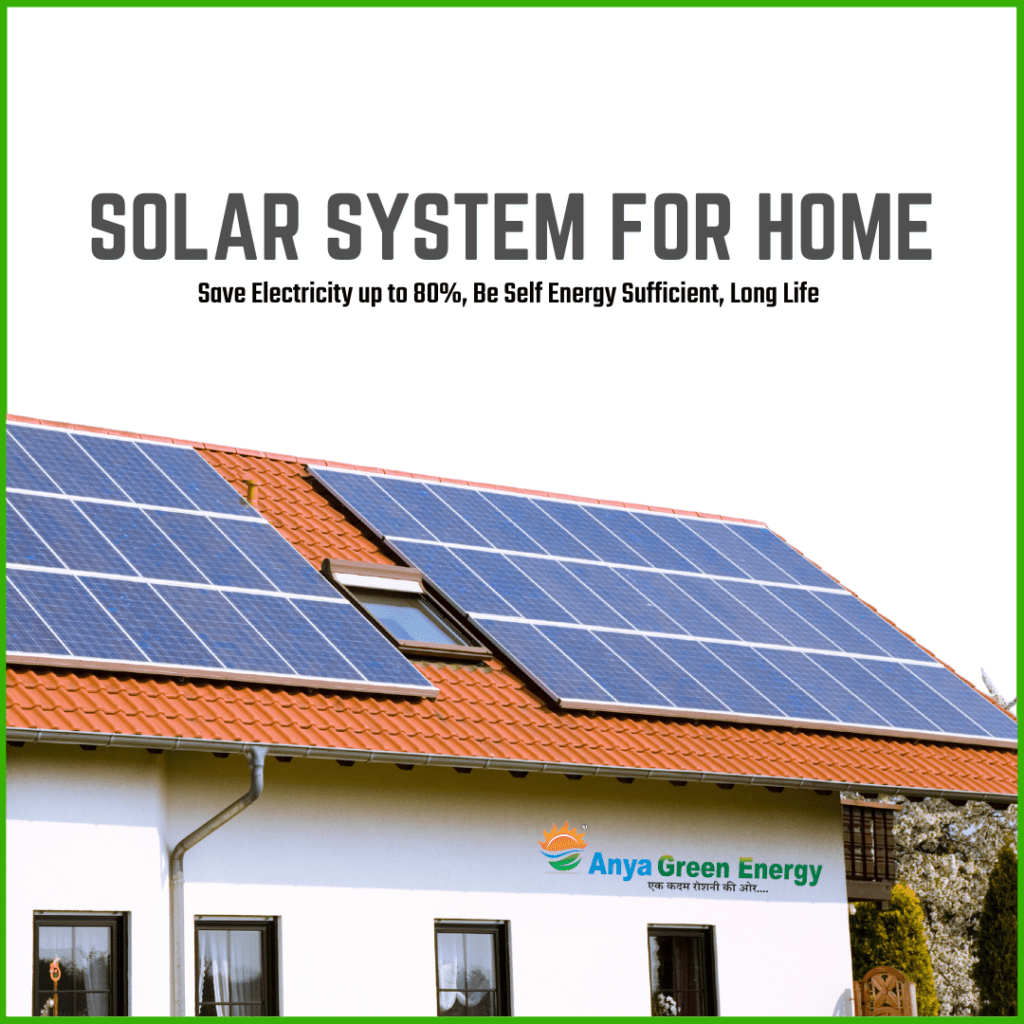
How Much Do Solar Panel Cost in India in 2026?
With electricity tariffs rising across Indian states and the government aggressively promoting solar panel cost clean energy, switching to rooftop solar has transformed from an environmental luxury into a smart financial investment.
However, when homeowners and business owners start researching solar, the biggest question is always: What is the true, all-inclusive cost?
The quick answer is that standalone solar panels in India cost between ₹22 and ₹36 per watt depending on technology. But solar panel cost are only one part of an operational system. When factoring in inverters, mounting structures, wiring, net-metering approvals, and installation, a complete rooftop system costs ₹55,000 to ₹75,000 per kW before subsidies.
With the central government’s PM Surya Ghar: Muft Bijli Yojana, direct subsidies reduce the net out-of-pocket expense significantly.

The price of a individual solar panel depends heavily solar panel cost on module efficiency, cell technology, and manufacturer reputation.
-
Monocrystalline PERC (₹22 – ₹28 per watt): Currently the standard for residential rooftops in India, offering 19%–21% efficiency.
-
Mono Bifacial (₹25 – ₹32 per watt): Absorbs sunlight from both front and back surfaces, ideal for high-yield elevated setups.
-
N-Type TOPCon (₹28 – ₹36 per watt): The latest high-efficiency standard (21%–23%+ efficiency) with lower annual degradation, performing better in hot summer climates.
-
Polycrystalline (₹18 – ₹22 per watt): Older technology primarily restricted to commercial/budget installations due to lower efficiency (15%–17%).
Leading domestic brands listed solar panel cost on the MNRE’s Approved List of Models and Manufacturers (ALMM)—such as Waaree Energies, Tata Power Solar, Adani Solar, Vikram Solar, and Luminous—fall comfortably within these per-watt ranges.
2. Complete Rooftop System Costs & PM Surya Ghar Subsidy
For residential homes, solar panel cost is usually installed as an On-Grid (Grid-Tied) system. Under the national PM Surya Ghar: Muft Bijli Yojana, the government provides fixed direct subsidies credited directly to your bank account:
-
1 kW to 2 kW Systems: ₹30,000 per kW
-
3 kW to 10 kW Systems: Capped at a maximum subsidy of ₹78,000
2026 Residential Solar Cost Table (On-Grid)
| System Capacity | Estimated Total Cost (Before Subsidy) | PM Surya Ghar Subsidy | Net Effective Cost | Avg. Monthly Generation |
| 1 kW | ₹55,000 – ₹75,000 | ₹30,000 | ₹25,000 – ₹45,000 | ~120 Units |
| 2 kW | ₹1,10,000 – ₹1,40,000 | ₹60,000 | ₹50,000 – ₹80,000 | ~240 Units |
| 3 kW (Most Popular) | ₹1,65,000 – ₹2,10,000 | ₹78,000 | ₹87,000 – ₹1,32,000 | ~360 Units |
| 5 kW | ₹2,70,000 – ₹3,30,000 | ₹78,000 | ₹1,92,000 – ₹2,52,000 | ~600 Units |
| 10 kW | ₹5,00,000 – ₹6,50,000 | ₹78,000 (Capped) | ₹4,22,000 – ₹5,72,000 | ~1,200 Units |
3. On-Grid vs. Off-Grid vs. Hybrid: Cost Impact
System architecture plays a major role in overall expenditure:
-
On-Grid Systems (Lowest Cost): Connected directly solar panel cost to the DISCOM grid using a bi-directional net meter. Excess power is sent to the grid for electricity bill credits.
-
Off-Grid Systems (+30% to 50% Higher Cost): Requires heavy battery storage solar panel cost (Lithium-ion or Lead-Acid) to store power locally. A 3 kW off-grid setup costs ₹2.2 Lakh to ₹2.8 Lakh.
-
Hybrid Systems (+40% to 60% Higher Cost): Combines grid-tied net metering solar panel cost with battery backup. Hybrid inverters and batteries increase costs, making a 5 kW hybrid setup range from ₹3.8 Lakh to ₹4.5 Lakh.
4. Key Factors Influencing Your Total Bill
-
Inverter Technology: High-efficiency string solar panel cost inverters (Growatt, Solis, Sungrow, Luminous) are standard. Upgrading to microinverters (Enphase) adds roughly ₹8,000 to ₹12,000 per kW.
-
Mounting Structure: A standard galvanized iron (GI) roof mount is economical, but raised super-structures (walk-under setups) add ₹8,000 to ₹15,000 per kW in structural steel costs.
-
Net-Metering & DISCOM Fees: Application processing, bi-directional meter testing, and DISCOM inspection fees usually range between ₹3,000 and ₹10,000 depending on your local power distribution utility.
5. Return on Investment (ROI) and Payback Period
A well-installed rooftop solar system in India yields an average daily generation of 4 to 4.5 units (kWh) per kW capacity.
For a 3 kW system producing ~360 units per month:
-
Monthly Savings: ~₹2,800 to ₹3,500 (assuming an average DISCOM tariff of ₹8/unit).
-
Annual Savings: ~₹35,000 to ₹42,000.
-
Net Cost After Subsidy: ~₹95,000.
-
Payback Period: 2.5 to 3.5 years.
Since top-tier solar panels carry a performance warranty of 25 years, your solar system generates free electricity for over 20 years after reaching its payback milestone.
Conclusion
Installing solar panels in India is more accessible and affordable than ever. A standard 3 kW home setup costs roughly ₹90,000 to ₹1.2 Lakh net after claiming the PM Surya Ghar subsidy. By opting for ALMM-approved domestic manufacturers, choosing an experienced EPC installer, and taking advantage of government incentives, you can eliminate up to 90% of your monthly electricity expenses while securing clean power for decades.