How to Start a Solar EPC and Installation Business in 2026: A Step-by-Step Guide

India’s biggest residential solar programme just crossed a milestone that most new entrepreneurs overlook: as of mid-2026, over 47 lakh households have been solarised under PM Surya Ghar, against a target of one crore homes by March 2027 — and every single one of those installations was completed by an empanelled solar EPC business, not by the government itself. That gap between demand and empanelled installers is exactly where the opportunity sits right now.
If you’re an electrical contractor, an engineer, or simply someone eyeing renewable energy as a business rather than a career, this guide walks through exactly what it takes to start a solar EPC business in 2026 — registration, empanelment, capital, and the real operational challenges — grounded in current rules and numbers.
What Does a Solar EPC Business Actually Do?
EPC stands for Engineering, Procurement, and Construction. A solar EPC business handles the complete lifecycle of a solar project — from initial site assessment and system design through equipment sourcing, installation, testing, and grid connection — which sets it apart from a narrower solar installation company handling only physical setup. This is different from a pure solar installation company or dealership, which may only handle the physical mounting and wiring without full design or project management responsibility.
Depending on scale, this kind of company can operate across a few distinct segments:
- Residential rooftop — small systems (1–10 kW), largely driven today by the PM Surya Ghar subsidy scheme.
- Commercial and industrial (C&I) rooftop — larger systems for factories, warehouses, and offices, often built around long-term power purchase agreements.
- Ground-mounted utility-scale — large solar parks requiring SECI or state-level registration and significantly higher capital.
- Solar pump and agricultural installations — systems built under schemes like PM-KUSUM for irrigation and rural electrification.
Most new entrants start with residential or small commercial rooftop work, since it requires the lowest capital and fastest empanelment timelines for this type of venture.
Step 1: Register Your Company and Get Compliant
Before you can bid for any government-linked project, solar EPC registration and basic tax compliance need to be in place:
- Company incorporation — most new entrants register their solar installation company as a Limited Liability Partnership (LLP) or Private Limited Company, both of which are generally required to bid on government tenders and pursue MNRE empanelment.
- PAN, TAN, and GST registration — GST registration is mandatory for fiscal compliance and to claim input tax credits; solar panels currently attract 12% GST while installation services are taxed at 18%.
- Electrical Contractor Licence — most states require electrical installation work to be supervised by licensed personnel, so this licence is typically non-negotiable before you can legally execute installations.
This foundational paperwork usually takes a few weeks and should be completed before pursuing any empanelment, since incomplete registration is one of the most common causes of delayed applications.
Step 2: Get MNRE Empanelment and PM Surya Ghar Vendor Status
Once solar EPC registration is complete, the next step actually unlocks government-linked demand through a two-layer process:
- National portal enrollment — register your solar EPC business on the PM Surya Ghar national portal (pmsuryaghar.gov.in). This layer typically takes 7–15 working days to activate.
- State DISCOM empanelment — separately, you must get empanelled with the specific state DISCOM or nodal agency covering the districts you plan to operate in. This adds another 15–45 days depending on the state, and empanelment in one DISCOM area doesn’t automatically extend to a neighbouring one.
To qualify as a PM Surya Ghar vendor, most states require:
- Valid GST registration
- At least 5 completed rooftop solar installations with documented proof
- A technically qualified principal officer (Diploma or B.E. in Electrical or Mechanical Engineering)
- A minimum net worth of around ₹2 lakh as per the last audited balance sheet
- No history of blacklisting by any government agency
For projects larger than 50 kW, or for participating in government tenders, separate registration with MNRE or the Solar Energy Corporation of India (SECI) is required on top of your PM Surya Ghar vendor status.
Step 3: Understand the Investment Required
Capital requirements for a solar EPC business scale sharply with the size of operation you’re targeting:
- Small dealership or consultant model — around ₹2–10 lakh, often starting from home with a focus on lead generation and sales before scaling into full installation.
- Medium-scale EPC operation — typically ₹15–50 lakh, covering a warehouse for inventory, a base for your technical team, and working capital for material procurement ahead of subsidy disbursal.
- Larger C&I or utility-scale ambitions — often financed through structured debt rather than self-funding.
A few funding routes worth knowing:
- Startup India Seed Fund Scheme (SISFS) — tech-enabled solar startups can apply for grants up to ₹20 lakh for prototype development and up to ₹50 lakh in debt or convertible debentures for market entry.
- SIDBI’s Mission Solar programme — offers loans of up to ₹50 crore, covering up to 75% of project costs, over terms of up to 10 years.
Working capital planning matters more than most first-time entrepreneurs expect: even after a system is installed, the real-world average time from installation to subsidy disbursal under PM Surya Ghar is 45 to 90 days, not the official 30-day target, so your solar EPC business needs enough buffer to cover material and labour costs while waiting on government payouts.
Step 4: Master the Technical Compliance Requirements
MNRE compliance in 2026 isn’t a one-time checkbox — it’s an ongoing discipline that determines whether your empanelment stays active:
- ALMM compliance — from June 1, 2026, all solar modules used must comply with both ALMM List I (finished modules) and be manufactured using domestically produced cells under ALMM List II, with only limited exemptions available through the national portal.
- BIS-certified inverters — inverters must meet MNRE technical standards and Bureau of Indian Standards certification requirements.
- IS 16270 safety standards — installer training aligned with this safety standard is increasingly treated as a baseline expectation, not an optional extra.
- Ongoing documentation — tracking ALMM listings, BIS certificates, and technical compliance records is now an audit-aware discipline; several vendors faced temporary or permanent delisting in the first quarter after a 2025 empanelment revision for failing to maintain this documentation.
Building these compliance habits into your standard workflow from day one — rather than treating them as paperwork to handle later — is one of the clearest differences between operators that keep their empanelment and those that lose it.
Solar EPC Business by the Numbers: The 2025–2026 Opportunity
The scale of current demand makes a strong case for entering this business now:
- PM Surya Ghar Muft Bijli Yojana targets one crore households by March 2027, backed by a ₹75,021 crore central allocation, with over 2 crore households registering interest on the national portal within the scheme’s first year alone.
- As of July 2026, 47.26 lakh households had been solarised, with an interim government target of 75 lakh by December 2026 — meaning a substantial share of the total demand pipeline is still unbuilt.
- The central subsidy is capped at ₹78,000 for systems up to 3 kW, paid directly to the customer via Direct Benefit Transfer after DISCOM commissioning, creating consistent demand for every registered PM Surya Ghar vendor rather than relying purely on private willingness to pay.
- Job postings for solar design and installation roles across India — from Hyderabad to Pune to Delhi — show steady demand for AutoCAD- and PVsyst-trained technical staff following solar EPC registration, with entry-level design salaries typically ranging from roughly ₹3–8 lakh per annum depending on experience and city.
- PM-KUSUM remains a second major demand channel specifically for rural-focused EPCs with working capital headroom, alongside the CPSU Scheme for larger, government-building rooftop projects funded through viability gap funding tenders.
Why Now Is a Genuinely Good Time to Start a Solar EPC Business
1. A Demand Pipeline Larger Than Current Supply With roughly half of PM Surya Ghar’s one-crore-home target still unbuilt as of mid-2026, empanelled vendors have a multi-year runway of government-backed demand rather than having to create the market from scratch.
2. Multiple Entry Points by Capital Level Whether you can invest ₹2 lakh or ₹50 lakh, there’s a realistic path in — starting as a solar consultant or dealer, then scaling toward full EPC and installation capability as revenue and experience build.
3. Structured Financing Support Programmes like the Startup India Seed Fund and SIDBI’s Mission Solar reduce the capital barrier that would otherwise keep many technically capable entrepreneurs out of the sector.
4. Compliance as a Competitive Moat Because MNRE’s 2026 rules have tightened ALMM and documentation requirements, EPCs that build genuine technical compliance discipline early gain a real advantage over competitors who treat approval as a one-time formality.
5. Diversification Beyond Residential Rooftop Once established, a solar EPC business can expand into commercial and industrial rooftop, agricultural pumping under PM-KUSUM, or eventually utility-scale work — giving room to grow well beyond the initial residential entry point.
The Real Challenges to Plan For
- Slow subsidy disbursal timelines — the 45–90 day real-world gap between installation and payment requires careful working capital management, especially for small operators.
- Fragmented state-level empanelment — since DISCOM empanelment doesn’t transfer between states or even between districts in some cases, expanding geographically means repeating parts of the registration process.
- Tightening compliance requirements — ALMM List II rules, BIS certification, and IS 16270 training expectations mean ongoing investment in documentation and staff training, not just a one-time setup cost.
- Price and margin pressure — as more EPCs enter the market chasing the same subsidy-driven demand, competitive bidding can compress margins, particularly in residential rooftop work.
- Technical staffing gaps — as covered in job postings across Indian cities, finding AutoCAD- and PVsyst-trained design staff remains a genuine bottleneck for scaling EPCs.
- Delisting risk — vendors who fail to maintain compliance documentation risk temporary or permanent removal from empanelment lists, directly cutting off access to subsidy-linked customers.
What's Next for the Solar EPC Business Landscape
- Continued tightening of ALMM enforcement — expect ongoing scrutiny of both List I and List II compliance as MNRE works to strengthen domestic manufacturing linkages.
- Growth in commercial and industrial demand — as residential rooftop competition intensifies, more EPCs are expected to diversify into C&I projects with steadier margins.
- Rise of CRM and compliance automation tools — as documentation requirements grow more complex, expect wider EPC adoption of software specifically built to track ALMM status, BIS certificates, and empanelment renewals.
- State-level top-up schemes expanding demand — programmes like Surya Gujarat and Tamil Nadu’s state solar scheme add subsidy layers on top of the central PM Surya Ghar amount, creating additional regional demand for empanelled EPCs.
- PM-KUSUM growth for rural-focused EPCs — as the second-largest government demand channel, agricultural solar pumping is expected to remain a significant opportunity for EPCs with rural reach.
Final Thoughts: Is Starting a Solar EPC Business Worth It in 2026?
The data makes a fairly clear case: a national subsidy scheme with more than half its target still unbuilt, structured financing support at multiple capital levels, and a genuine shortage of technically compliant, empanelled vendors relative to demand. None of this means the path is easy — compliance requirements have tightened, subsidy disbursal remains slow, and margins face real competitive pressure — but for someone willing to build proper registration, empanelment, and technical compliance discipline from day one, a solar EPC business remains one of the more accessible ways to build a company inside India’s broader renewable energy growth story.
Getting the fundamentals right — solar EPC registration, MNRE empanelment, working capital planning, and ongoing technical compliance — matters far more to long-term success in this sector than any single sales pitch or subsidy headline.
Trusted by 50000+ Customers
Anya Green Energy is a leading solar company and Solar Energy service provider established in 2013. We are recognized by startup India and customer best choice award 2022.
Our Achievements :
Recognized by Startup India.
Purvanchal’s first solar company to operate exclusively with solar products.
Certified by well-known institutions such as MSME, IndiaMart, and Just Dial and many more.
Winner of the Best Customer Choice Award 2022.
Over 50,000 happy customers across India.
Products
-
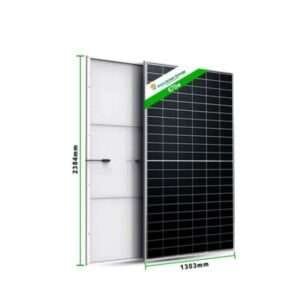 670W MONO PERC HALFCUT SOLAR PANEL
₹26,999.00Original price was: ₹26,999.00.₹23,999.00Current price is: ₹23,999.00. -
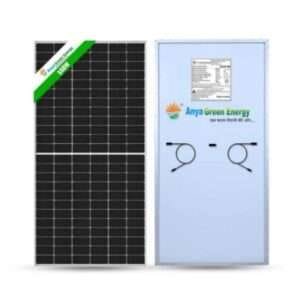 550W MONO PERC HALFCUT SOLAR MODULE
₹22,999.00Original price was: ₹22,999.00.₹19,999.00Current price is: ₹19,999.00. -
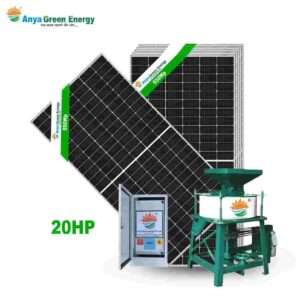 20HP Atta Chakki with Mone Perc Half cut 550W Panel
₹1,200,000.00Original price was: ₹1,200,000.00.₹1,060,000.00Current price is: ₹1,060,000.00. -
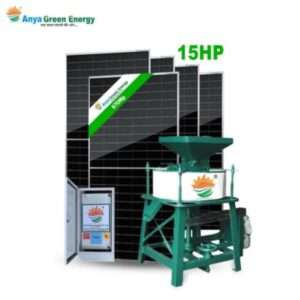 15HP Atta Chakki with Mone Perc Half cut 670W Panel
₹900,000.00Original price was: ₹900,000.00.₹850,000.00Current price is: ₹850,000.00. -
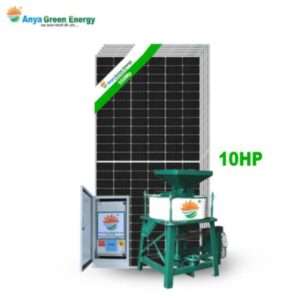 10HP Atta Chakki with Mone Perc Half cut 550W Panel
₹650,000.00Original price was: ₹650,000.00.₹590,000.00Current price is: ₹590,000.00.