Why India Is Pushing for Solar Energy So Hard in 2026
India already imports 85–90% of its crude oil and 45–50% of its fossil gas, exposing the country to price shocks every time global energy markets get volatile — and that volatility has been near-constant given the conflict currently unfolding in the Middle East. That single fact goes a long way toward explaining why India is pushing for solar energy with a level of urgency that goes well beyond climate rhetoric. This is as much an energy security strategy as an environmental one.
If you’ve noticed the constant stream of headlines about India’s solar targets, subsidy schemes, and manufacturing push and wondered why India is pushing for solar energy this hard, this guide breaks down the real reasons — economic, strategic, and environmental — using current 2025–2026 data.
Reason 1: India's 500 GW Renewable Energy Target Is a Hard Deadline, Not a Slogan
The single biggest driver behind why India is pushing for solar energy is a binding national commitment: the India 500 GW renewable energy target for 2030, with solar power expected to contribute roughly 280–293 GW of that total. This isn’t an aspirational talking point — it’s tied to India’s Paris Agreement commitments and its 2070 net-zero pledge, and progress is tracked publicly and consistently, which is part of why India is pushing for solar energy with such measurable urgency.
The country is making real headway toward it:
- India’s non-fossil fuel capacity had already reached 262.74 GW as of early 2026, putting the country on a clear trajectory toward the India 500 GW renewable energy target.
- India’s total solar capacity surpassed 100 GW in FY2025, making it the world’s third-largest solar market by installed capacity, according to IRENA’s 2025 statistics.
- Solar tariffs have declined by nearly 80% over the past decade, and renewable energy paired with storage is increasingly cost-competitive with conventional power — a key economic reason behind why India is pushing for solar energy rather than treating the target as purely aspirational.
- The price of solar photovoltaic modules has fallen an astonishing 95%, from over ₹200 per watt in 2010 to less than ₹9 per watt in 2024, according to research from UC Berkeley’s India Energy and Climate Center.
Reason 2: Cutting India's Fossil Fuel Import Dependence
Perhaps the most strategically urgent reason why India is pushing for solar energy is India fossil fuel import dependence itself. The numbers are stark:
- India imports 85–90% of its crude oil and 45–50% of its fossil gas, leaving the economy exposed to global price volatility whenever geopolitical tensions flare up.
- India also imports roughly 85–90% of its solar cells from China, which means even the clean energy transition currently carries its own version of import dependence — a vulnerability policymakers are actively working to correct.
- This concern intensified after the 2020 Galwan Valley border clash, after which Indian policymakers increasingly began viewing technological dependence on China as a direct security concern, not just an economic one — another layer of why India is pushing for solar energy on national security grounds.
- The government’s response to India fossil fuel import dependence includes the Approved List of Models and Manufacturers (ALMM), mandating domestically produced solar panels for government projects, with ALMM List-II for solar cells taking effect from June 2026 specifically to strengthen the domestic supply chain.
- Despite this push, domestic manufacturing still operates at only 40–45% of total capacity, producing about 7 GW — meeting just 35% of India’s growing solar demand, illustrating why India fossil fuel import dependence is being addressed as a decades-long structural project, not a quick fix.
Reason 3: PM Surya Ghar Is Turning Rooftops Into Policy Infrastructure
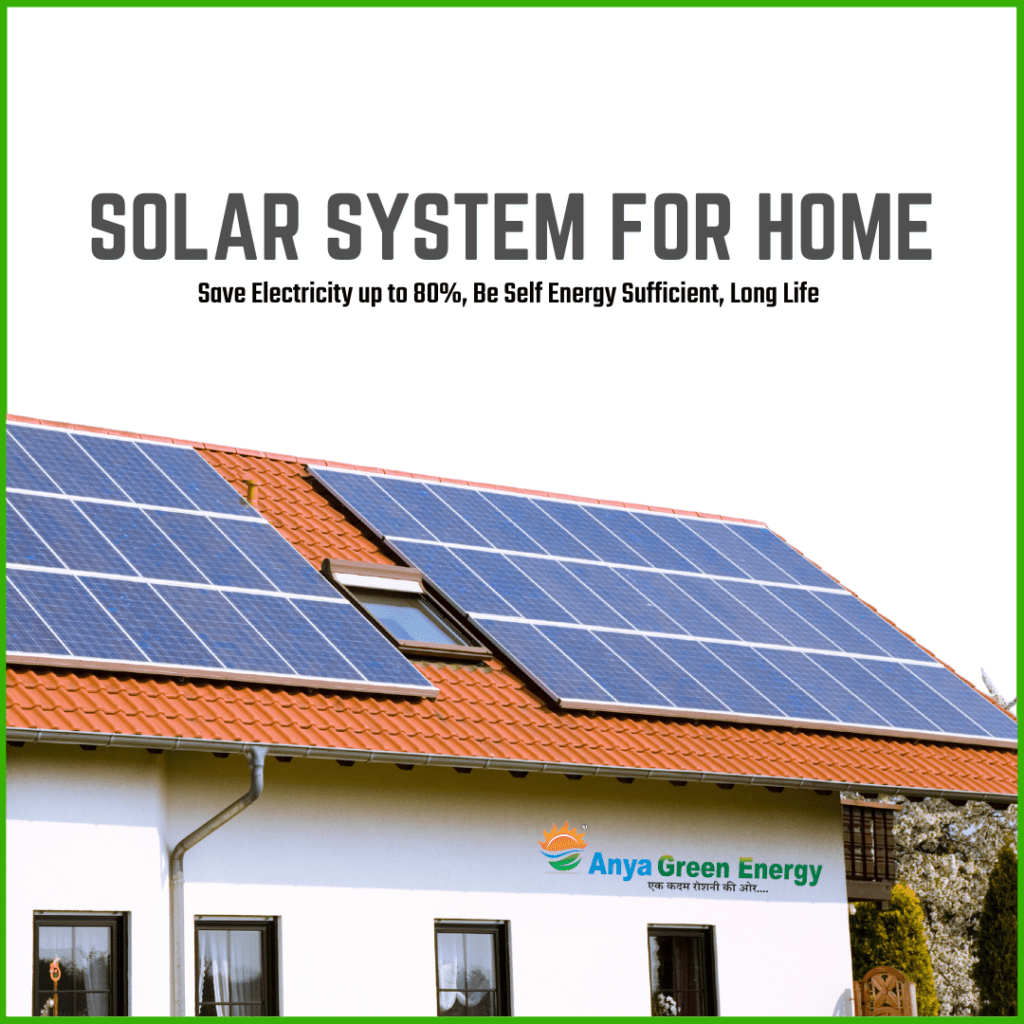
A major part of why India is pushing for solar energy so visibly at the household level comes down to the PM Surya Ghar Muft Bijli Yojana subsidy scheme, launched to put solar panels directly onto residential rooftops at scale:
- The PM Surya Ghar Muft Bijli Yojana subsidy targets one crore (10 million) households and offers subsidies of up to ₹78,000 for a 3 kW residential system.
- Within its first 10 months, the scheme facilitated 7 lakh rooftop solar installations, contributing to 59 GW of new capacity added in 2024 alone — a 53% increase over 2023.
- By December 2025, approximately 23.9 lakh homes had installed rooftop solar under the PM Surya Ghar Muft Bijli Yojana subsidy programme, with the government continuing to push toward its full one-crore-household target.
- Beyond electricity bill savings for households, the scheme is explicitly designed to reduce dependence on fossil fuels at the household level, lower carbon footprints, and support local employment — a household-level answer to why India is pushing for solar energy so visibly through subsidy design.
Reason 4: Solar Energy Adoption in India Is Reshaping Rural Electrification Too
Solar energy adoption in India isn’t limited to rooftops and utility-scale parks — it’s actively transforming rural electrification and agriculture through parallel schemes:
- The PM-KUSUM scheme promotes solar-powered agricultural pumps, with over 10 lakh solar pumps installed or targeted, directly reducing diesel dependence in farming.
- Off-grid and mini-grid rooftop and pump installations added roughly 48 GW in 2024, a 182% increase from 2023, significantly enhancing solar energy adoption in India across rural and remote areas.
- India’s exceptional solar resource — 300 to 330 sunny days annually with strong solar radiation of 4–7 kWh/m² per day — is itself a geographic answer to why India is pushing for solar energy in a way few other major economies can match.
- Beyond agriculture, solar is increasingly used for street lighting, microgrids, and standalone home systems, extending electricity access to communities that grid infrastructure hasn’t reliably reached.
Reason 5: Climate Commitments and Global Leadership
Beyond domestic energy security, why India is pushing for solar energy also connects directly to international climate commitments and India’s positioning as a global clean energy leader:
- Solar expansion directly supports India’s pledge of 500 GW non-fossil capacity by 2030 and net-zero emissions by 2070, commitments made under the Paris Agreement and reaffirmed at COP28.
- India ranks third globally in solar capacity per IRENA’s 2025 data and leads the International Solar Alliance, a coalition it co-founded with France to promote solar deployment and cooperation among member countries.
- At the World Economic Forum 2026, India specifically highlighted its model for delivering affordability, sustainability, and rapid execution simultaneously — a global-leadership dimension of why India is pushing for solar energy, positioning its solar transition as a template other developing economies could follow.
- India’s solar module exports recorded a 23-fold increase between FY2022 and FY2025, showing the country is increasingly exporting its solar manufacturing capability, not just building domestic capacity.
The Real Challenges India Still Faces
Being fully honest about why India is pushing for solar energy also means acknowledging the obstacles that remain, since no explanation of why India is pushing for solar energy is complete without its real constraints:
- Persistent import dependence on raw materials — India still relies heavily on imported polysilicon and wafers, with local value addition in solar manufacturing at only 30–40%.
- Transmission and grid evacuation constraints — India must significantly expand transmission capacity to match its 292 GW solar target by 2030, and grid bottlenecks remain a major barrier in solar-rich states.
- Right of Way disputes — inconsistent compensation for land and infrastructure corridors leads to frequent project delays despite government guidelines.
- Rooftop programme lag — schemes like PM Surya Ghar face lower-than-expected penetration in some regions due to financing gaps and DISCOM-related bottlenecks.
- Storage and intermittency — limited domestic R&D and the high cost of battery storage continue to hinder large-scale integration of variable solar power, particularly during monsoon and cloudy periods.
- Land availability — large utility-scale solar parks require significant land, which remains a constraint in densely populated or agriculturally valuable regions.
What's Next: The Trajectory Through 2030
- Continued domestic manufacturing push — expect further ALMM tightening and PLI-scheme-backed investment as India works to reduce both India fossil fuel import dependence and its solar-component dependence on China simultaneously.
- Hybrid and round-the-clock renewable projects — as solar capacity scales, hybrid projects combining solar with wind, storage, and sometimes hydropower are becoming a policy priority to address intermittency.
- Deeper rural solar penetration — continued expansion of PM-KUSUM and mini-grid programmes is expected to keep extending solar energy adoption in India into agriculture and remote electrification.
- Rising private investment — companies like Adani and Waaree are actively building integrated domestic solar value chains, aiming to reduce reliance on imported components over the next several years.
- Steady progress toward the India 500 GW renewable energy target — with non-fossil capacity already past 262 GW, most projections suggest India remains broadly on track for its 2030 goal, even as component-level import dependence remains a genuine risk to watch.

Final Thoughts: Why India Is Pushing for Solar Energy Isn't a Single Story
The honest answer is that why India is pushing for solar energy has never been about just one motivation — it’s energy security given crippling fossil fuel import costs, it’s economic given crashing solar costs and manufacturing ambitions, it’s social given rural electrification and household subsidy schemes, and it’s geopolitical given the desire to reduce both oil dependence and component dependence on any single foreign supplier. The India 500 GW renewable energy target, the PM Surya Ghar Muft Bijli Yojana subsidy, and the steady rise in solar energy adoption in India all point toward the same underlying reality: this is now core national infrastructure strategy, not an environmental side project.
Trusted by 50000+ Customers
Anya Green Energy is a leading solar company and Solar Energy service provider established in 2013. We are recognized by startup India and customer best choice award 2022.
Our Achievements :
Recognized by Startup India.
Purvanchal’s first solar company to operate exclusively with solar products.
Certified by well-known institutions such as MSME, IndiaMart, and Just Dial and many more.
Winner of the Best Customer Choice Award 2022.
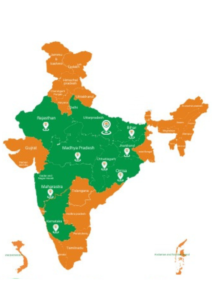
Over 50,000 happy customers across India.
Products
-
 670W MONO PERC HALFCUT SOLAR PANEL
₹26,999.00Original price was: ₹26,999.00.₹23,999.00Current price is: ₹23,999.00. -
 550W MONO PERC HALFCUT SOLAR MODULE
₹22,999.00Original price was: ₹22,999.00.₹19,999.00Current price is: ₹19,999.00. -
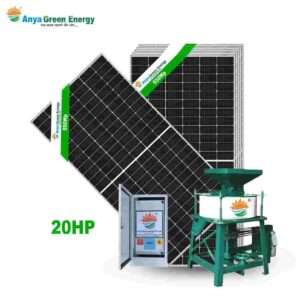 20HP Atta Chakki with Mone Perc Half cut 550W Panel
₹1,200,000.00Original price was: ₹1,200,000.00.₹1,060,000.00Current price is: ₹1,060,000.00. -
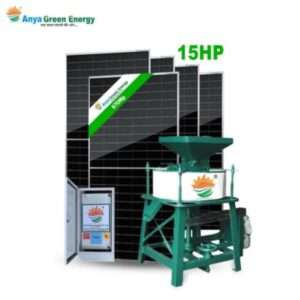 15HP Atta Chakki with Mone Perc Half cut 670W Panel
₹900,000.00Original price was: ₹900,000.00.₹850,000.00Current price is: ₹850,000.00. -
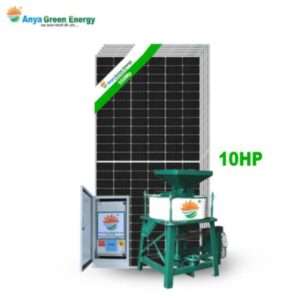 10HP Atta Chakki with Mone Perc Half cut 550W Panel
₹650,000.00Original price was: ₹650,000.00.₹590,000.00Current price is: ₹590,000.00.