
National Green Hydrogen Mission: India's Blueprint for a Hydrogen-Powered Future
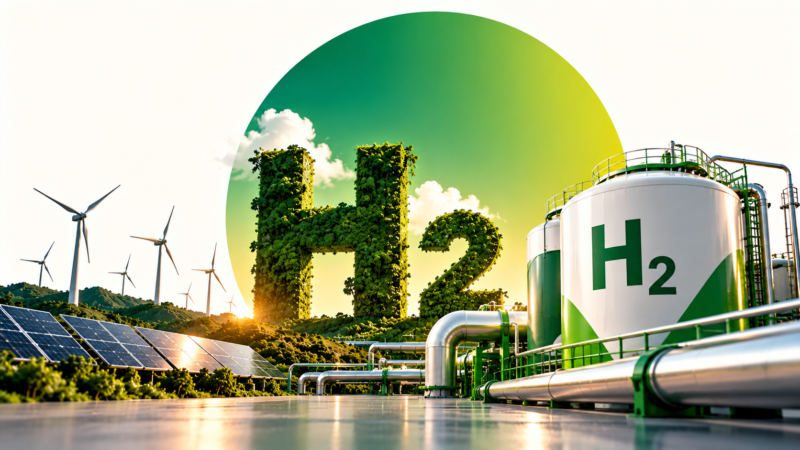
Launched as one of India’s most ambitious industrial policy interventions in recent memory, the National Green Hydrogen Mission represents a coordinated national effort to position the country as a global hub for green hydrogen production, consumption, and export. Rather than treating hydrogen as a niche technology bet, the National Green Hydrogen Mission ties together manufacturing incentives, infrastructure development, research funding, and export ambition under a single, unified policy umbrella.
At its core, the National Green Hydrogen Mission aims to catalyze demand for green hydrogen across hard-to-abate sectors like refining, fertilizer production, steel manufacturing, and heavy transport — industries where direct electrification remains technically difficult or prohibitively expensive. By bringing together both the supply side and demand side of the hydrogen economy, the National Green Hydrogen Mission seeks to avoid the classic chicken-and-egg problem that has slowed clean hydrogen adoption in many other markets.
Green Hydrogen Production Targets Under the Mission
One of the most closely watched elements of this policy is its green hydrogen production targets, which set an ambitious national benchmark for annual electrolytic hydrogen output by the end of the decade. The National Green Hydrogen Mission frames these green hydrogen production targets not as an isolated manufacturing goal, but as the anchor around which renewable capacity additions, electrolyzer manufacturing, and export infrastructure are all expected to scale in parallelMeeting these green hydrogen production targets will require a dramatic scale-up in dedicated renewable energy capacity, since every unit of green hydrogen produced depends on clean electricity feeding the electrolysis process. This is precisely why the National Green Hydrogen Mission is often described as a renewable energy policy and an industrial policy rolled into one.
Electrolyzer Manufacturing Incentives: Building the Supply Chain
Recognizing that India currently imports most of the specialized equipment needed for large-scale hydrogen production, a central pillar of the National Green Hydrogen Mission involves electrolyzer manufacturing incentives designed to build a domestic supply chain rather than relying indefinitely on imported hardware. These electrolyzer manufacturing incentives are structured to reward manufacturers who achieve both scale and increasing levels of domestic value addition over time.
As one energy policy analyst noted in a recent industry briefing, “you can’t build a hydrogen economy on imported electrolyzers any more than you built a solar manufacturing base on imported panels forever — at some point, domestic capability has to catch up.” This observation captures exactly why electrolyzer manufacturing incentives sit at the heart of the National Green Hydrogen Mission’s broader industrial strategy, rather than functioning as a minor supporting measure.
Ready to switch to Solar?
Solar solutions with Anya Green Energy and discover how you can reduce your electricity bills.
Contact UsThe SIGHT Scheme Green Hydrogen Framework
Within the broader policy architecture, the SIGHT scheme green hydrogen component — Strategic Interventions for Green Hydrogen Transition — functions as the primary financial mechanism translating the mission’s ambitions into tangible incentive payments. The SIGHT scheme green hydrogen framework is divided into two distinct components: one supporting domestic electrolyzer manufacturing, and another incentivizing actual green hydrogen production once facilities come online.
By structuring incentives this way, the National Green Hydrogen Mission ensures that financial support flows to both ends of the value chain simultaneously, rather than creating a bottleneck where manufacturing capacity exists without corresponding production demand, or vice versa. The SIGHT scheme green hydrogen mechanism is widely regarded as one of the more sophisticated instruments within the mission’s overall design.
Green Hydrogen Export Potential: India's Global Ambition
Beyond domestic consumption, the National Green Hydrogen Mission explicitly positions India to capture significant green hydrogen export potential, leveraging the country’s low-cost renewable energy resources and substantial coastal infrastructure for shipping to energy-importing economies in Europe and East Asia.
Realizing this green hydrogen export potential depends heavily on several factors working in tandem: continued cost reduction in renewable generation and electrolysis, development of port infrastructure capable of handling hydrogen derivatives like green ammonia, and successful negotiation of long-term offtake agreements with international buyers. The National Green Hydrogen Mission treats green hydrogen export potential as a genuine strategic opportunity rather than a speculative afterthought, given India’s natural cost advantages in solar and wind generation.
State-Level Implementation and Early Movers
While the National Green Hydrogen Mission sets the national framework, actual project implementation depends heavily on individual state policies and industrial ecosystems. Gujarat, building on its earlier dedicated green hydrogen policy, has emerged as one of the more proactive states aligning its own incentive structures with the broader National Green Hydrogen Mission. Other states with strong renewable resources and port access, including Tamil Nadu, Andhra Pradesh, and Odisha, have similarly begun positioning themselves as potential green hydrogen production hubs under this mission.
This state-level competition for green hydrogen investment reflects a broader pattern seen in India’s renewable energy sector, where national mission frameworks are often most effective when paired with complementary, proactive state policy support.
Advantages of the National Green Hydrogen Mission
- Unified policy framework — the National Green Hydrogen Mission coordinates production, manufacturing, and demand-side measures under one strategy rather than fragmented initiatives.
- Domestic manufacturing push — electrolyzer manufacturing incentives aim to reduce import dependence and build long-term industrial capability.
- Export revenue potential — strong green hydrogen export potential could generate meaningful foreign exchange earnings over time.
- Renewable energy demand driver — ambitious green hydrogen production targets indirectly accelerate solar and wind capacity additions nationwide.
- Hard-to-abate sector decarbonization — provides a credible pathway for industries where direct electrification remains difficult.
- Global positioning — early, coordinated policy action could give India a first-mover advantage relative to other emerging hydrogen economies.
Challenges Facing the Mission
Despite its ambition, the National Green Hydrogen Mission faces real implementation challenges. Current green hydrogen production costs remain considerably higher than conventional, fossil-fuel-derived hydrogen in most scenarios, meaning sustained policy support and continued technology cost reduction are both essential for the mission’s targets to materialize on schedule.
Infrastructure gaps also pose a significant hurdle — dedicated pipelines, storage facilities, and port handling capacity for hydrogen and its derivatives remain underdeveloped relative to what large-scale production and export would eventually require. Additionally, electrolyzer manufacturing incentives alone cannot guarantee a fully competitive domestic supply chain without parallel investment in component manufacturing, skilled workforce development, and quality certification standards.
Global Context: How India's Mission Compares
Several other countries, including Australia, Germany, and parts of the Middle East, have launched their own national hydrogen strategies broadly comparable in ambition to India’s approach. What distinguishes the National Green Hydrogen Mission is India’s combination of low-cost renewable generation potential and a large, growing domestic industrial demand base — a combination relatively few competing hydrogen economies can match simultaneously.
Looking Ahead
As implementation progresses, the real test for the National Green Hydrogen Mission will be whether announced green hydrogen production targets translate into actual commissioned capacity, operational electrolyzer manufacturing facilities, and signed export agreements, rather than remaining policy announcements on paper. Continued refinement of the SIGHT scheme green hydrogen incentive structure, sustained renewable capacity additions, and growing industrial demand will all play a role in determining how quickly this mission moves from ambition to tangible results.
For India’s broader clean energy transition, the success or shortfall of the National Green Hydrogen Mission will likely shape not just the hydrogen sector specifically, but also the pace of renewable energy capacity growth more broadly, given how tightly the two are now linked within this policy framework.
Frequently Asked Questions
Q1: What is the National Green Hydrogen Mission in simple terms?
A1: It is India’s coordinated national policy framework aimed at scaling up green hydrogen production, building domestic manufacturing capability, creating industrial demand, and positioning India as a global hydrogen export hub.
Q2: What are the mission’s main production goals?
A2: The mission sets ambitious green hydrogen production targets intended to establish India among the largest global producers of electrolytic hydrogen by the end of the decade, though specific figures should be verified against official government sources.
Q3: What is the SIGHT scheme, and how does it relate to the mission?
A3: The SIGHT scheme green hydrogen framework is the mission’s primary financial incentive mechanism, supporting both domestic electrolyzer manufacturing and actual green hydrogen production through separate, complementary incentive structures.
Q4: Why does India want to become a hydrogen exporter?
A4: India’s comparatively low-cost renewable energy resources and coastal infrastructure give it a potential cost advantage in producing green hydrogen and derivatives like green ammonia for export to energy-importing economies in Europe and East Asia.
Q5: What are the biggest obstacles to the mission’s success?
A5: High current production costs relative to fossil-fuel-derived hydrogen, underdeveloped pipeline and port infrastructure, and the challenge of building a fully competitive domestic electrolyzer manufacturing supply chain all represent significant hurdles to achieving the mission’s targets on schedule.
Trusted by 50000+ Customers
Anya Green Energy is a leading solar company and Solar Energy service provider established in 2013. We are recognized by startup India and customer best choice award 2022.
Our Achievements :
Recognized by Startup India.
Purvanchal’s first solar company to operate exclusively with solar products.
Certified by well-known institutions such as MSME, IndiaMart, and Just Dial and many more.
Winner of the Best Customer Choice Award 2022.
Over 50,000 happy customers across India.