Green Hydrogen Hubs: Building India's Production and Export Clusters at Major Ports and Industrial Centers
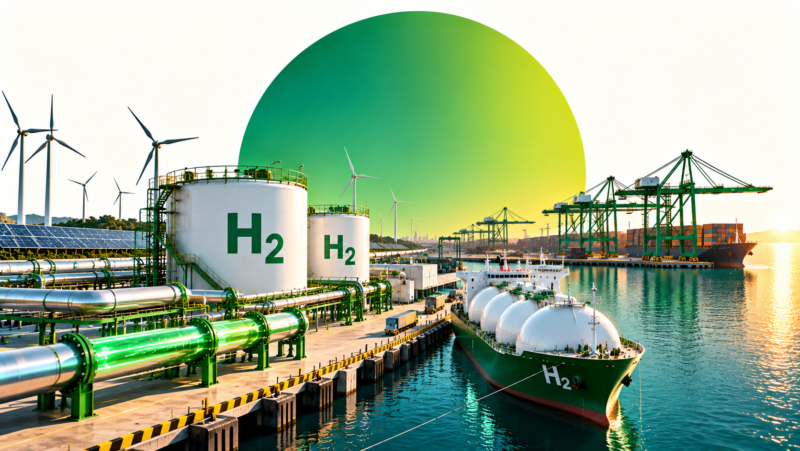
Rather than scattering hydrogen production randomly across the map, most countries are choosing a more deliberate strategy: concentrating production, demand, and infrastructure in specific locations. These concentrated zones are what the industry calls green hydrogen hubs.
A green hydrogen hub typically combines several elements in one geographic cluster — renewable generation capacity, electrolyzer facilities, storage infrastructure, and nearby industrial consumers or export ports. The logic is simple: building all of this in one place is far more efficient than spreading it thin.
India has begun identifying and developing its own green hydrogen hubs, recognizing that concentrated clusters offer meaningful cost and logistics advantages over fragmented, standalone projects scattered across different states.
Why Location Matters So Much
Not every region is equally suited to hosting green hydrogen hubs. Ideal locations combine three things: abundant, low-cost renewable energy, proximity to industrial demand centers, and access to port infrastructure for potential export.
Coastal regions with strong solar and wind resources naturally rise to the top of the list. This is why so many of India’s emerging green hydrogen hubs are concentrated along the western and southern coastlines, where these three conditions overlap most favorably.
As one energy infrastructure planner explained in a recent industry panel, “you don’t build green hydrogen hubs where it’s convenient — you build them where the sun, the wind, and the shipping lanes all happen to agree.” That framing captures why site selection is treated as a strategic decision, not an afterthought.
Port-Based Green Hydrogen Hubs: The Export Gateway
Among the various hub types emerging, port-based green hydrogen hubs have attracted particular attention, since proximity to shipping infrastructure is essential for any serious export ambition. Hydrogen itself is difficult to transport over long distances, which is why most port-based green hydrogen hubs focus on producing derivatives like green ammonia instead.India’s major ports, including those along the Gujarat and Tamil Nadu coastlines, have been identified as candidate locations for port-based green hydrogen hubs, largely due to their existing shipping connectivity and nearby renewable energy potential.
Ready to switch to Solar?
Solar solutions with Anya Green Energy and discover how you can reduce your electricity bills.
Contact UsIndustrial Green Hydrogen Clusters: Pairing Supply With Demand
A different model focuses less on export and more on domestic industrial demand. Industrial green hydrogen clusters are built near existing steel plants, fertilizer facilities, or refineries, allowing producers to supply hydrogen directly to consumers without long-distance transport.
This approach avoids one of the biggest cost barriers facing the hydrogen economy: moving hydrogen itself is expensive and technically challenging. Industrial green hydrogen clusters sidestep that problem entirely by locating production right next to consumption.
Several Indian states with existing heavy industry are exploring industrial green hydrogen clusters as a way to decarbonize steel and fertilizer production without requiring new hydrogen transport infrastructure to be built from scratch.
Quick Comparison: Hub Models
| Hub Type | Primary Purpose | Key Requirement |
|---|---|---|
| Port-based green hydrogen hubs | Export via ammonia/derivatives | Shipping infrastructure, coastal access |
| Industrial green hydrogen clusters | Domestic industrial supply | Proximity to steel/fertilizer plants |
| Renewable-rich inland hubs | Low-cost production base | Abundant solar/wind resources |
Green Hydrogen Production Hubs: The Core Building Block
Underlying both export and domestic models, green hydrogen production hubs form the foundational layer of this entire strategy. Without concentrated, reliable production capacity, neither export nor industrial-supply models can function at meaningful scale.
Green hydrogen production hubs require more than just electrolyzers — they need dedicated renewable generation, water supply infrastructure, and often desalination capacity for coastal sites. Building green hydrogen production hubs therefore involves coordinating multiple infrastructure projects simultaneously, rather than developing a single standalone facility.
India’s approach under the National Green Hydrogen Mission explicitly supports the development of green hydrogen production hubs through targeted incentives aimed at achieving scale efficiently in specific locations rather than diffusely across the country.
Advantages of a Hub-Based Approach
- Infrastructure efficiency — green hydrogen hubs allow shared investment in renewable capacity, water supply, and grid connections.
- Lower logistics costs — port-based green hydrogen hubs minimize the distance hydrogen derivatives need to travel for export.
- Faster industrial decarbonization — industrial green hydrogen clusters connect producers directly to consumers, cutting transport costs.
- Easier policy targeting — concentrating development in green hydrogen production hubs allows more focused regulatory and incentive support.
- Investment attraction — concentrated hubs create clearer, more bankable opportunities for private capital than scattered individual projects.
- Scalability — a successful hub model can be replicated in other regions with similar renewable and industrial characteristics.
Challenges in Developing These Hubs
Despite clear advantages, developing green hydrogen hubs is far from simple. Land acquisition for large-scale renewable generation, electrolyzer facilities, and storage infrastructure within a concentrated area can face local resistance and lengthy approval processes.
Water availability is another significant constraint, since electrolysis requires substantial water input, and many high-potential coastal and arid regions face existing water stress. Desalination can help, but adds considerable cost to green hydrogen production hubs located in water-scarce areas.
Coordinating multiple stakeholders — renewable developers, electrolyzer manufacturers, port authorities, and industrial consumers — within a single hub framework also introduces considerable planning and regulatory complexity compared to standalone projects.
Global Examples Worth Watching
Several countries have pursued broadly similar strategies, designating specific regions as green hydrogen hubs to concentrate investment and infrastructure. Australia, Germany, and parts of the Middle East have all announced hub-style development plans comparable in structure to India’s emerging approach.What distinguishes India’s green hydrogen hubs is the combination of low-cost renewable generation with a large existing domestic industrial base — a pairing that gives Indian hubs a potential dual advantage in both export and industrial-supply models simultaneously.
Looking Ahead
As implementation progresses, the real test for India’s green hydrogen hubs will be whether announced plans translate into operational electrolyzer capacity, signed offtake agreements, and functioning port infrastructure. Early movers among these hubs will likely shape investor confidence for the broader hydrogen sector.
Continued coordination between central policy under the National Green Hydrogen Mission and state-level execution will determine how quickly India’s green hydrogen hubs move from planning maps to commissioned facilities capable of serving both domestic industry and international buyers.
Frequently Asked Questions
Q1: What exactly is a green hydrogen hub?
A1: It’s a concentrated geographic cluster combining renewable energy generation, electrolyzer facilities, and often storage or port infrastructure, designed to produce hydrogen efficiently at scale rather than through scattered, standalone projects.
Q2: Why are coastal locations so popular for these hubs?
A2: Coastal regions often combine strong renewable resources with port access needed for exporting hydrogen derivatives like green ammonia, making them naturally attractive for hub development.
Q3: What’s the difference between port-based hubs and industrial clusters?
A3: Port-based hubs focus on producing and exporting hydrogen derivatives internationally, while industrial clusters locate production near existing steel, fertilizer, or refining facilities to supply domestic demand directly.
Q4: What’s the biggest challenge in building these hubs?
A4: Water availability for electrolysis, land acquisition for large-scale infrastructure, and coordinating multiple stakeholders within one development framework are among the most significant hurdles.
Q5: How does this connect to India’s broader hydrogen policy?
A5: The National Green Hydrogen Mission explicitly supports hub-based development, using targeted incentives to concentrate production capacity in specific high-potential locations rather than spreading investment thinly across the country.
Trusted by 50000+ Customers
Anya Green Energy is a leading solar company and Solar Energy service provider established in 2013. We are recognized by startup India and customer best choice award 2022.
Our Achievements :
Recognized by Startup India.
Purvanchal’s first solar company to operate exclusively with solar products.
Certified by well-known institutions such as MSME, IndiaMart, and Just Dial and many more.
Winner of the Best Customer Choice Award 2022.
Over 50,000 happy customers across India.