PM Kusum Yojna Subsidy : the ultimate guide for 2026
Irrigation is one of the single largest and most unpredictable operational expenses for farmers across India. For decades, agricultural productivity has been constrained by two major obstacles: the high and fluctuating cost of diesel fuel for generators and the erratic, often nocturnal supply of rural grid electricity. To eliminate these operational bottlenecks, the Ministry of New and Renewable Energy (MNRE), in collaboration with state renewable energy development agencies, introduced the PM KUSUM Yojna subsidy scheme (Pradhan Mantri Kisan Urja Suraksha evam Utthaan Mahabhiyan).
The PM KUSUM Yojna subsidy program represents a monumental shift in Indian energy policy, bridging the gap between modern solar engineering and rural agriculture. By offering financial grants that cover the vast majority of equipment and installation costs, the government enables farmers to replace expensive diesel engines and unreliable grid connections with clean, independent, and cost-effective solar-powered pumps.
This comprehensive guide breaks down everything you need to know about the PM KUSUM Yojna subsidy: its foundational components, financial grant structures, eligibility requirements, state-by-state implementations, step-by-step application procedures, and long-term economic returns.
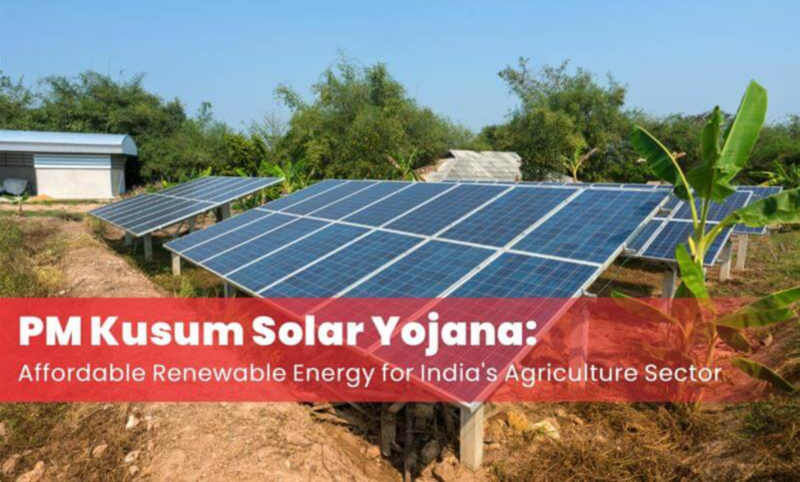
The PM KUSUM Yojna subsidy is a multi-tiered financial support framework designed to make solar technology financially accessible to small, marginal, and commercial farmers across India. Under standard market conditions, setting up a high-capacity solar pumping station requires a significant capital investment—often putting it out of reach for average farming households.
To bridge this financial gap, the Central Government and respective State Governments combine resources to absorb up to 60% (and in certain special regions, up to 90%) of the total benchmark cost of the solar pump or plant.
┌─────────────────────────────────────────────────────────────┐
│                 TOTAL SOLAR SYSTEM COST                    │
├──────────────────────────────┬──────────────────────────────┤
│ Government Grants (60%-90%)  │ Farmer Contribution (10%-40%)│
│  • 30% Central Assistance    │  • 10% Minimum Upfront Cash  │
│  • 30%-60% State Share       │  • ~30% Bank Loan Option     │
└──────────────────────────────┴──────────────────────────────┘
The Financial Split at a Glance:
Central Government Share: The Ministry of New and Renewable Energy (MNRE) provides a baseline direct financial assistance of 30% of the benchmark cost.
State Government Share: The local state government or state nodal agency (such as UPNEDA, MEDA, HAREDA, or RRECL) provides an additional subsidy of 30%. In specific regions—including Northeastern states, Sikkim, Himachal Pradesh, Uttarakhand, Jammu & Kashmir, Ladakh, and Lakshadweep/Andaman & Nicobar Islands—the state and central subsidy combined can reach up to 90%.
Agricultural Bank Loan: Institutional finance options are integrated into the scheme, allowing banks to cover up to 30% of the cost via low-interest agricultural loans.
Farmer Contribution: The individual farmer or group is only required to pay an initial out-of-pocket amount ranging from 10% to 40% of the system cost.
By leveraging the PM KUSUM Yojna subsidy, an agricultural producer can transition to modern, zero-fuel irrigation at a fraction of commercial retail prices.
2. The Three Core Components of the Scheme
The PM KUSUM program is structured into three distinct operational channels, each tailored to different land types, power availability scenarios, and financial goals.
                  ┌─────────────────────────────────┐
                  │    PM KUSUM SCHEME COMPONENTS   │
                  └────────────────┬────────────────┘
                                   │
         ┌─────────────────────────┼─────────────────────────┐
         ▼                         ▼                         ▼
  ┌─────────────┐           ┌─────────────┐           ┌─────────────┐
  │ COMPONENT A │           │ COMPONENT B │           │ COMPONENT C │
  │ Grid Plants │           │ Standalone  │           │ Solarising  │
  │ (0.5-2 MW)  │           │ Pumps       │           │ Grid Pumps  │
  └─────────────┘           └─────────────┘           └─────────────┘
Component A: Decentralized Ground-Mounted Grid-Connected Solar Plants
Objective: Setting up small solar power plants with capacities ranging from 500 kW (0.5 MW) to 2 MW on fallow, barren, pasture, or uncultivable farm land.
Target Audience: Individual farmers, groups of farmers, cooperatives, Farmer Producer Organisations (FPOs), and Water User Associations (WUAs) located within a 5 km radius of a DISCOM sub-station.
How It Works: The power generated by these solar plants is fed directly into the local Distribution Company (DISCOM) grid at a pre-determined Feed-in Tariff (FiT).
Financial Benefit: This component turns infertile or unused agricultural land into a source of steady, monthly cash flow for 25 years through Power Purchase Agreements (PPAs).
Component B: Installation of Standalone Solar Agriculture Pumps
Objective: Replacing off-grid diesel pumps with standalone solar-powered pumps in areas without electrical grid access.
Target Audience: Farmers with no existing grid power connection who rely heavily on diesel generators or liquid fuel engines.
Pump Capacities: Covers pump capacities up to 7.5 HP (while larger pumps can be installed, the PM KUSUM Yojna subsidy calculation is capped at the 7.5 HP benchmark).
Financial Benefit: The installation receives up to 60% direct subsidy support (or 90% in hill and island states), reducing operational fuel costs to zero.
Component C: Solarisation of Grid-Connected Agricultural Pumps
Objective: Converting existing electric grid-connected pumps into solar-powered units, reducing grid dependency and relieving financial strain on power DISCOMs.
Target Audience: Farmers who already have authorized grid-connected electric pump sets.
Two Modes of Implementation:
Individual Pump Solarisation (IPS): The farmer receives panel equipment equivalent to double their pump capacity. Daytime power drives the pump, and any excess generated electricity is pushed back into the grid for revenue.
Feeder Level Solarisation (FLS): Instead of installing solar panels on individual farms, an entire agricultural electricity feeder is solarized through a centralized plant, supplying solar power directly to multiple pumps connected along that grid line.
Financial Benefit: Direct reduction of power bills, coupled with the opportunity to earn income by selling extra solar units back to the utility company.
3. Comprehensive Breakdown: Component B Standalone Pump Costs and Subsidies
To give a clear picture of out-of-pocket costs after applying the PM KUSUM Yojna subsidy, consider the benchmark parameters for standalone surface and submersible pumps under Component B.
Note: Actual benchmark costs are periodically updated by MNRE and vary slightly by state due to logistics, taxation, and state-specific add-on subsidies. The table below illustrates the standard financial ratio.
| Pump Capacity (HP) | System Type | Average Benchmark Cost (Excl. Tax) | Central + State Subsidy (60%) | Bank Loan Option (Up to 30%) | Farmer Out-of-Pocket Contribution (10%) |
| 3 HP | AC/DC Submersible | ₹1,65,000 | ₹99,000 | ₹49,500 | ₹16,500 |
| 5 HP | AC/DC Submersible | ₹2,40,000 | ₹1,44,000 | ₹72,000 | ₹24,000 |
| 7.5 HP | AC/DC Submersible | ₹3,40,000 | ₹2,04,000 | ₹1,02,000 | ₹34,000 |
| 10 HP* | AC/DC Submersible | ₹4,20,000 | ₹2,04,000 (Capped at 7.5 HP) | ₹1,26,000 | ₹90,000 |
*Note for 10 HP Pumps: The PM KUSUM Yojna subsidy amount is capped at the maximum benchmark allowance for a 7.5 HP pump. Farmers installing 10 HP pumps pay the cost difference for the additional capacity.
4. Why You Should Apply for the PM KUSUM Yojna Subsidy
Securing a PM KUSUM Yojna subsidy offers significant, long-term economic and operational advantages over traditional diesel and grid-powered irrigation systems.
┌─────────────────────────────────────────────────────────────┐
│            TRADITIONAL DIESEL VS. SOLAR PUMPING             │
├──────────────────────────────┬──────────────────────────────┤
│ DIESEL PUMPING SYSTEM        │ SOLAR PUMPING SYSTEM         │
├──────────────────────────────┼──────────────────────────────┤
│ • High recurring fuel costs  │ • Zero fuel costs            │
│ • Price rises over time      │ • Predictable operational    │
│ • Maintenance-intensive      │   costs                      │
│ • Carbon emissions           │ • Low maintenance needs      │
│                              │ • Clean energy               │
└──────────────────────────────┴──────────────────────────────┘
Complete Elimination of Fuel Expenses
A standard 5 HP diesel pump running 4 to 6 hours daily can consume anywhere from 4 to 8 liters of diesel per day. Over a single agricultural cropping season, diesel expenses can easily cross ₹40,000 to ₹70,000. Switching to a solar setup subsidized under the scheme eliminates fuel purchases entirely, turning operational overhead into net profit.
Daytime Irrigation Schedule
Rural electricity feeders often operate on rotational schedules, forcing farmers to irrigate their crops during late-night hours. Solar pumps work automatically as soon as sunlight hits the solar arrays, providing daylight irrigation and improving safety and quality of life for farming families.
Low Maintenance and Long Lifecycle
Unlike internal combustion diesel engines that require frequent oil changes, filter replacements, and mechanical overhauls, solar pumping systems have no heavy moving parts outside of the pump itself. Modern solar panels installed under the PM KUSUM Yojna subsidy come with standard 25-year performance warranties, and the smart VFD (Variable Frequency Drive) inverters are built for harsh weather environments.
Turning Farmers into Energy Producers (Anndata to Urjadata)
Through Component A and Component C, farmers are no longer passive consumers of utility power. By generating excess solar electricity and feeding it back into local sub-stations, agricultural landowners can establish a secondary, recurring income stream that balances out crop-yield risks caused by erratic weather patterns.
5. Detailed Eligibility Criteria
To ensure that the PM KUSUM Yojna subsidy reaches its intended beneficiaries and prevents commercial misuse, applicants must satisfy specific land, documentation, and operational criteria.
Who Can Apply?
Individual Farmers: Small, marginal, and large landowners seeking standalone or grid-tied solar pumps.
Farmer Producer Organisations (FPOs): Registered agricultural collectives representing groups of localized cultivators.
Agricultural Cooperatives and Water User Associations (WUAs): Community entities managing shared irrigation channels.
Panchayats and Community Groups: Local administrative bodies installing shared pumping systems for village community lands.
Land and Infrastructure Requirements
Verifiable Ownership: Applicants must hold clear, unencumbered land titles (Khatauni, Jamabandi, or 7/12 land extract records).
Borewell / Water Source Availability: For Component B and Component C, a functional water source (borewell, open well, farm pond, or canal access) must exist at the proposed installation site.
Proximity to Sub-Station (Component A): For ground-mounted plants selling power to DISCOMs, the land must ideally be situated within a 5 km radius of an operational 33/11 kV sub-station to avoid high transmission loss.
6. Required Documentation Checklist
Before starting the online or offline registration process for the PM KUSUM Yojna subsidy, keep the following documents prepared and scanned:
┌─────────────────────────────────────────────────────────────┐
│                    DOCUMENTATION CHECKLIST                  │
├─────────────────────────────────────────────────────────────┤
│  [ ] Proof of Identity: Aadhaar Card / Voter ID             │
│  [ ] Proof of Land Ownership: Khatauni / 7/12 Extract       │
│  [ ] Bank Account Details: Passbook / Cancelled Cheque       │
│  [ ] Passport-sized Photographs                             │
│  [ ] Existing Electricity Bill (For Component C)            │
│  [ ] Mobile Number (Linked to Aadhaar)                      │
└─────────────────────────────────────────────────────────────┘
Identity Proof: Aadhaar Card (mandatory for e-KYC authentication), Voter ID, or PAN Card.
Land Ownership Proof: Certified copy of land revenue records (Khatauni / Jamabandi / 7/12 extract) showing clear landholder name and plot area.
Bank Account Details: Copy of bank passbook or cancelled cheque matching the name on the Aadhaar card (the PM KUSUM Yojna subsidy and feed-in tariffs are disbursed directly via Aadhaar-enabled DBT).
Passport-Sized Photographs: Recent photographs of the primary applicant.
Electricity Bill (For Component C Only): Account copy of the existing agricultural grid connection.
Active Mobile Number: A functional mobile number linked to Aadhaar for receiving OTP alerts, verification calls, and application tracking updates.
7. Step-by-Step Online Application Process
While the central framework is defined by the Ministry of New and Renewable Energy (MNRE), the actual implementation, allocation, and enrollment for the PM KUSUM Yojna subsidy are handled through designated State Nodal Agencies (SNAs).
Follow these steps to submit your application cleanly and avoid processing delays:
┌─────────────────────────────────────────────────────────────┐
│                 APPLICATION PROCESS STEPS                   │
├─────────────────────────────────────────────────────────────┤
│ Step 1: Visit Official Portal (MNRE or State SNA)           │
│ Step 2: Select Scheme Component (A, B, or C)                │
│ Step 3: Complete Aadhaar-based e-KYC                        │
│ Step 4: Fill Land Details & Upload Documents                │
│ Step 5: Physical Inspection & Technical Verification        │
│ Step 6: Deposit Farmer Contribution Share                   │
│ Step 7: Vendor Allotment & Installation                     │
└─────────────────────────────────────────────────────────────┘
Step 1: Access the Designated State Solar Portal
Locate the official portal of your state’s renewable energy agency. Do not use unverified third-party websites. Common official portals include:
-
Uttar Pradesh: UPNEDA (
upneda.org.in) / Agriculture Department (upagriculture.com) -
Maharashtra: MEDA (
mahadiscom.in/solar-kusum) -
Rajasthan: RRECL / RajPusht
-
Haryana: HAREDA (
pmkusum.hareda.gov.in) -
Punjab: PEDA (
peda.gov.in)
Step 2: Register & Perform e-KYC Verification
-
Click on the registration link for PM KUSUM Scheme.
-
Enter your Aadhaar number and submit the One-Time Password (OTP) sent to your registered mobile phone.
-
Fill in basic personal information, including name, village, block, district, and category (General, SC/ST, OBC).
Step 3: Fill in Agricultural Land & Irrigation Details
-
Input land identification metrics: Khasra/Khatauni numbers, plot size (in acres or hectares), and crop types.
-
Select your required pump capacity (e.g., 3 HP, 5 HP, or 7.5 HP) and specify whether you need a surface or submersible pump (AC or DC motor).
Step 4: Upload Supporting Documents
Attach clear, legible PDF or JPEG scans of your land ownership extract, bank passbook, Aadhaar card, and passport photo.
Step 5: Site Survey & Technical Verification
Once your digital application passes initial scrutiny, a technician or surveyor from the state nodal agency or empaneled vendor will visit your agricultural site to verify:
-
Water table depth and borewell condition.
-
Adequate, shadow-free space for solar panel mounting.
-
Accuracy of land coordinates.
Step 6: Payment of Beneficiary Share
Upon receiving site PM KUSUM Yojna subsidy approval, you will receive an official notification to deposit the farmer contribution share (typically 10% to 40% of the cost, depending on the state and loan selection).
Crucial Safety Tip: Payments should always be made directly through the official online payment gateway of the state portal or via demand draft issued to the official state nodal agency account. Never hand cash to private individuals or unregistered agents.
Step 7: Vendor Allocation, Delivery, and Commissioning
After your payment PM KUSUM Yojna subsidy is confirmed, an empaneled vendor is assigned to deliver and install the solar panels, mounting structure, VFD controller, and pump. Once the system is tested and commissioned, a joint inspection certificate is signed, and the remaining PM KUSUM Yojna subsidy funds are released directly to the system provider.
8. Technical Components of a Subsidized Solar Pumping System
When you receive a solar pumping kit subsidized under the PM KUSUM scheme, the installation includes specialized components built to withstand agricultural field conditions:
           ┌──────────────────────────────────────────────┐
           │        SOLAR PUMP SYSTEM SCHEMATIC           │
           └──────────────────────┬───────────────────────┘
                                  │
      ┌───────────────────────────┼───────────────────────────┐
      ▼                           ▼                           ▼
┌──────────────┐          ┌──────────────┐            ┌──────────────┐
│ SOLAR PANELS │ ───────> │ VFD DRIVE    │ ─────────> │ PUMP MOTOR   │
│ (MNRE/DCR)   │  [DC]    │ CONTROLLER   │   [AC/DC]  │ (Sub/Surface)│
└──────────────┘          └──────────────┘            └──────────────┘
-
Domestic Content Requirement (DCR) Solar Panels: To qualify for the PM KUSUM Yojna subsidy, all installed solar PV modules must be manufactured in India using domestic cells and modules. These panels are typically Mono-PERC or advanced N-Type TOPCon modules offering high efficiency, even during overcast winter days.
-
Variable Frequency Drive (VFD) Inverter/Controller: The controller regulates the electrical power coming from the solar panels and feeds it smoothly to the pump motor. Modern VFD controllers adjust power output automatically based on sunlight intensity, protecting the motor from voltage spikes and dry-running conditions.
-
Hot-Dip Galvanized Mounting Structures: Solar panels are mounted on heavy-duty, corrosion-resistant steel structures designed to withstand high winds and severe weather. Many systems include manual seasonal tracking mechanisms, allowing farmers to adjust panel angles toward the sun for maximum daily output.
-
Safety & Protection Gear: Installations include chemical grounding/earthing pits, surge protection devices (SPDs), and lightning arresters (LA) to guard the electronic controller against direct lightning strikes or power surges.
9. Avoiding Fraud: Critical Consumer Protection Advice
Due to the popularity of the PM KUSUM Yojna subsidy, several fraudulent websites and fake mobile applications attempt to trick farmers into paying registration fees or security deposits.
┌─────────────────────────────────────────────────────────────┐
│                    ANTI-FRAUD WARNINGS                      │
├─────────────────────────────────────────────────────────────┤
│  [!] ONLY use official government domain portals (.gov.in)  │
│  [!] DO NOT pay registration fees to unofficial websites    │
│  [!] DO NOT transfer cash to personal bank accounts         │
│  [!] VERIFY vendors via State Nodal Agency (SNA) listings   │
└─────────────────────────────────────────────────────────────┘
Check the Web Address Carefully: Official government websites end strictly in
.gov.inor.nic.in(such aspmkusum.mnre.gov.in). Be cautious of sites ending in.com,.org,.in, or.netthat mimic official government designs.Never Pay Cash to Agents: No private agent, contractor, or middleman is authorized to collect cash payments for the PM KUSUM Yojna subsidy. All financial transactions occur transparently via official state portal payment gateways or bank demand drafts.
Verify Empaneled Vendors: Work only with solar companies listed on the official portal of your state’s renewable energy department.
10. Frequently Asked Questions (FAQs)
Q1: Can I apply for the PM KUSUM Yojna subsidy if I already have an electric connection?
Yes. Under Component C, existing grid-connected electric pump owners can solarize their pumps. You can use solar energy during the day and sell any excess power back to your local DISCOM, helping reduce overall electricity expenses.
Q2: What happens to the standalone solar pump during cloudy or rainy days?
Modern DCR solar modules used under the PM KUSUM Yojna subsidy scheme can generate power under diffuse sunlight. While overall water discharge may drop on dark, cloudy days, the system continues operating. If you need high-volume water pumping in prolonged low-light conditions, you can integrate a dual-source switch or hybrid backup controller where permitted.
Q3: Is there a warranty provided on the solar pumping system?
Yes. Complete solar pumping systems installed under the scheme come with a 5-year full system warranty provided by the empaneled vendor, which covers the pump, controller, and mounting hardware. The solar photovoltaic panels themselves carry a 25-year performance warranty.
Q4: Can I run other farm equipment using my solar pump system?
Yes. By adding a Universal Solar Pump Controller (USPC) or selector switch, farmers can direct electricity generated by their solar panels to run other agricultural machinery—such as micro-irrigation systems, fodder cutters, grain sorters, or PM KUSUM Yojna subsidy small flour mills—during times when irrigation pumping is not required.
Q5: How long does it take from application to final installation?
After submitting your application for the PM KUSUM Yojna subsidy, the verification, site survey, beneficiary contribution payment, and installation process typically takes between 45 to 90 days, depending on state allocation targets, vendor logistics, and regional processing speeds.
Summary
The PM KUSUM Yojna subsidy remains one of the most effective agricultural schemes available to Indian farmers today. By combining central grants, state support, and integrated bank financing, the program lowers the upfront capital needed to install modern solar equipment down to a manageable fraction of its retail price.
By taking advantage of the PM KUSUM Yojna subsidy, you can eliminate monthly fuel and power bills, secure reliable daytime irrigation, protect your farm against fluctuating diesel prices, and build long-term operational resilience for years to come.
To begin your application, visit the official MNRE portal (pmkusum.mnre.gov.in) or log into your state renewable energy agency’s registration system today.
Trusted by 50000+ Customers
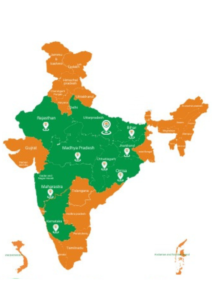
Anya Green Energy is a leading solar company and Solar Energy service provider established in 2013. We are recognized by startup India and customer best choice award 2022.
Our Achievements :
Recognized by Startup India.
Purvanchal’s first solar company to operate exclusively with solar products.
Certified by well-known institutions such as MSME, IndiaMart, and Just Dial and many more.
Winner of the Best Customer Choice Award 2022.
Over 50,000 happy customers across India.